The Complete Guide to Creating Custom Basketball Jerseys That Bring Your Team Together
What turns a group of skilled players into one powerful team on the court? Often, it begins before the first game starts—it begins with a uniform that shows unity and team identity. A jersey is more than just cloth and ink; it’s your team’s protective gear, a symbol of your shared dreams and team spirit. This article is your complete guide to making high-quality custom basketball jerseys. We will take you through every important step, from basic design ideas and fabric knowledge to picking the right company. Our aim is to give you the information to create a jersey your team will be proud to wear, a jersey that shows who you are and makes your game better.
More Than Just a Uniform
A great custom jersey is an investment in your team’s heart. It goes beyond a useful piece of clothing to become the very foundation of your identity, creating a strong mental advantage both on and off the court. We see it as an important team-building activity, making the time and money you spend worth it.
Building a United Identity
A shared uniform instantly creates a feeling of belonging and team unity. When every player puts on the same jersey, individual differences fade away, replaced by a powerful visual unity. This shared look strengthens a shared purpose. It quietly tells players that they are part of something bigger than themselves, creating an environment of mutual support and shared responsibility. This bond, formed in the locker room, leads directly to better communication and teamwork during high-pressure moments in a game.
The Professional Advantage
There’s an undeniable truth in sports: look good, feel good, play good. We’ve seen it ourselves. A team that steps onto the court in a sharp, well-designed, professional-looking uniform carries itself differently than a team in mismatched t-shirts. The first team shows confidence, seriousness, and commitment. This professional appearance not only intimidates opponents before the game even begins but also creates a deep sense of self-belief within the players. It’s a mental edge that can be the difference between winning and losing.
A Canvas for Your Brand
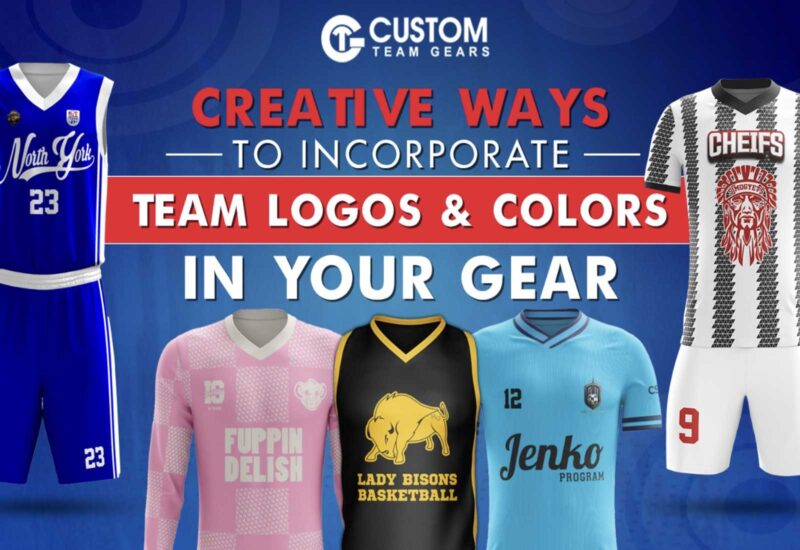
Beyond the mental benefits, a custom jersey serves an important practical purpose. It is the main canvas for your team’s brand. This is your chance to proudly show your team logo, clearly present player names and numbers for officials and fans, and provide valuable space for sponsors who support your journey. A well-designed jersey ensures all these elements are combined cleanly, improving your professional image.
Jersey Design Master Class
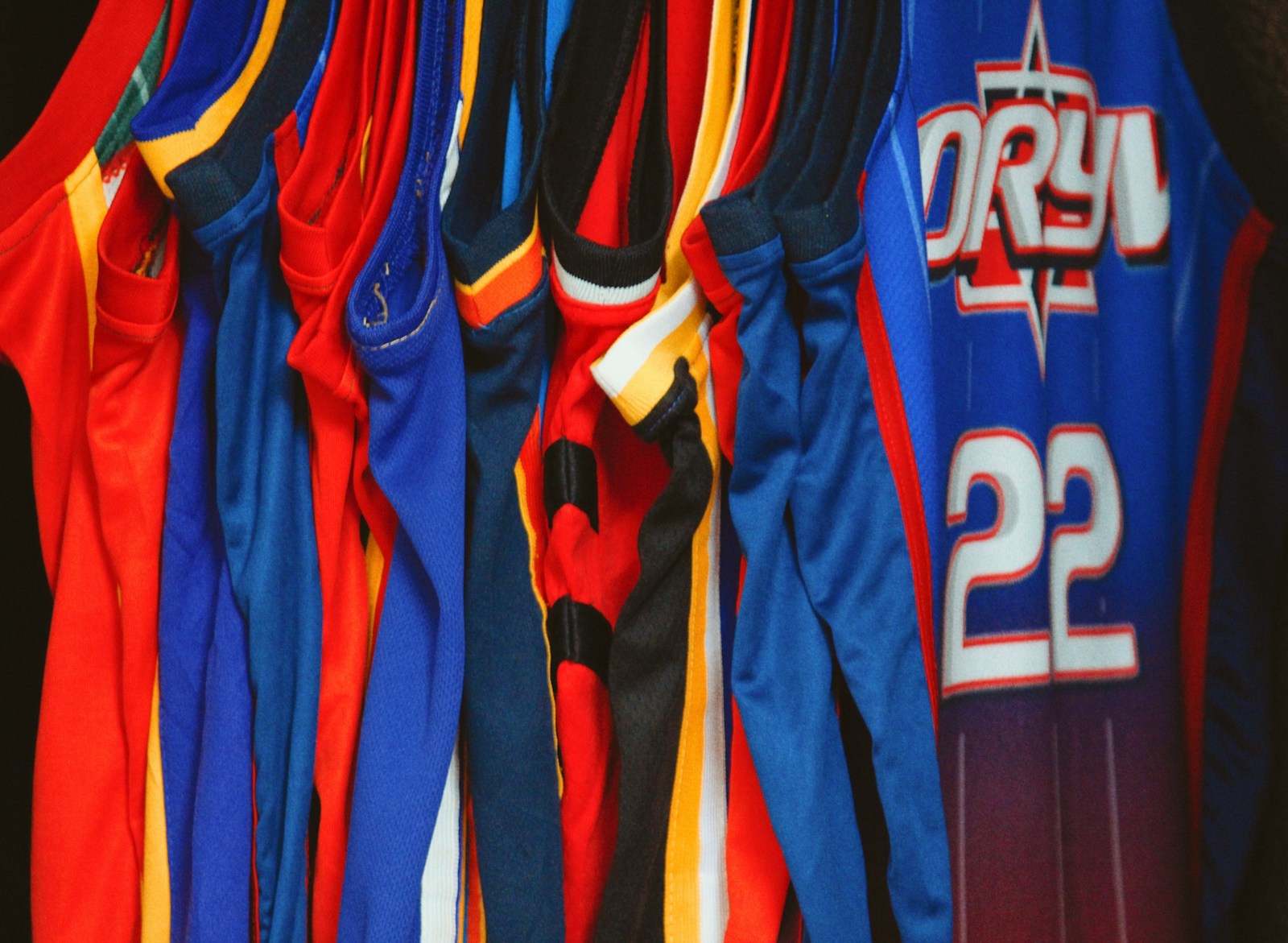
Creating a visually stunning jersey requires more than just picking a color and a logo. It’s a mix of art and science. A great design is memorable, functional, and representative of your team’s spirit. We will guide you through the process step-by-step, empowering you to make informed choices that result in a professional, beautiful jersey.
Step 1: Core Color Palette
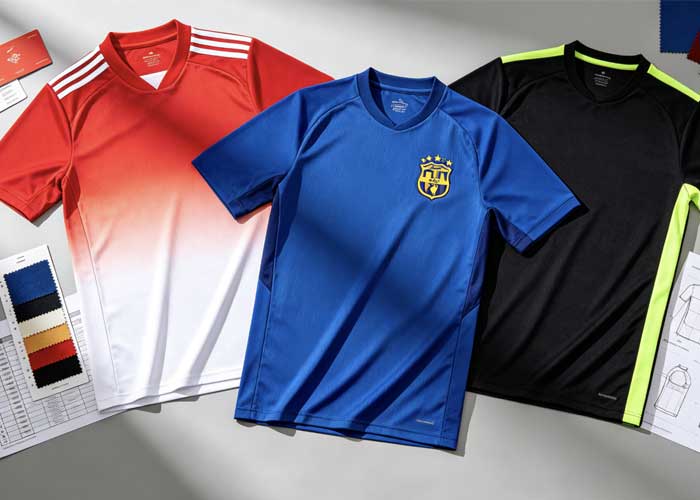
Your color choice is the foundation of your design. Go beyond simply picking your favorite color and consider the impact of your palette. We recommend the rule of three: a primary color that dominates the jersey, a secondary color for contrast, and a small accent color for pop. Think about basic color theory. High-contrast combinations, like navy and gold or black and red, ensure your numbers and team name are visible from the stands. Also, consider the psychology of color; red can create feelings of aggression and energy, while blue can suggest calmness and control.
Step 2: Typography and Readability
The font you choose for player names and numbers is critical for on-court visibility. The main goal is readability from a distance. For this reason, bold, clean, sans-serif fonts (like Helvetica or Impact) are almost always a better choice than fancy serif fonts. Consider the font weight; a thicker font is easier to see. To further improve visibility, especially on patterned jerseys, using a contrasting outline or a subtle drop shadow on the numbers and letters can make them pop. Always test your font choice by viewing the mock-up from a distance.
Step 3: Logo and Graphic Placement
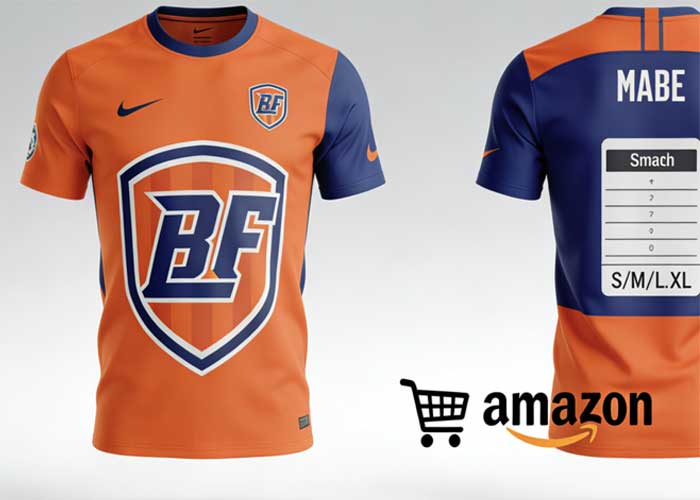
Standard placements for logos and graphics exist for a reason: they work. The team name or logo is traditionally placed on the center chest. The player number is large on the back and often smaller on the front. Player names sit above the number on the back. When adding sponsor logos or other graphics, consider proportion and balance. A jersey can quickly look cluttered. Keep secondary logos smaller and place them on the sleeves, upper chest, or the back below the collar to maintain a clean, professional look.
Design Like a Pro
To create a truly eye-catching jersey, we need to think like professional designers. Modern customization methods open up a world of possibilities beyond simple block colors.
- Visual Hierarchy: Your design should guide the viewer’s eye. The most important element, whether it’s your team’s logo or name, should be the most prominent. Use size, color, and placement to ensure it draws attention first.
- Symmetry vs. Asymmetry: While traditional jerseys are symmetrical, an asymmetrical design can create a modern, dynamic feel. Consider a single-shoulder design, a diagonal stripe across the body, or offset side panels. This can make your jersey unique and memorable.
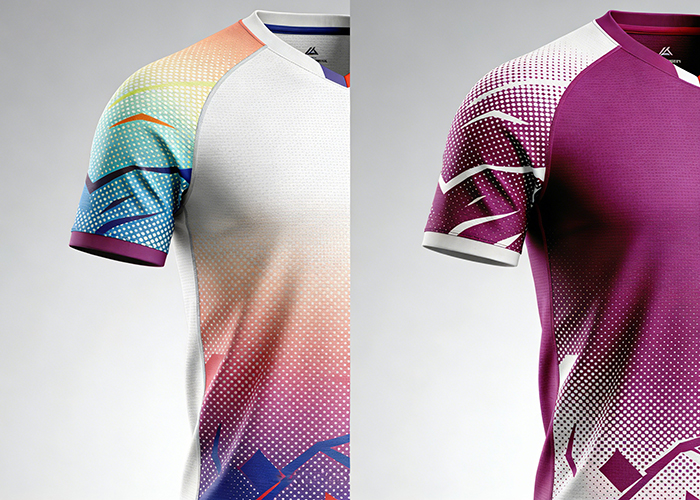
- Textures and Gradients: Sublimation printing allows for incredible detail. You can incorporate subtle textures, like a honeycomb pattern or a carbon fiber look, into the fabric’s design. Similarly, smooth color gradients can add depth and visual interest that screen printing can’t replicate.
- Storytelling: The best designs tell a story. Weave elements that reflect your team’s history, mascot, or city into the design. This could be a subtle watermark of your city’s skyline, a pattern inspired by your mascot, or a patch commemorating a championship season.
Performance Fabric Science
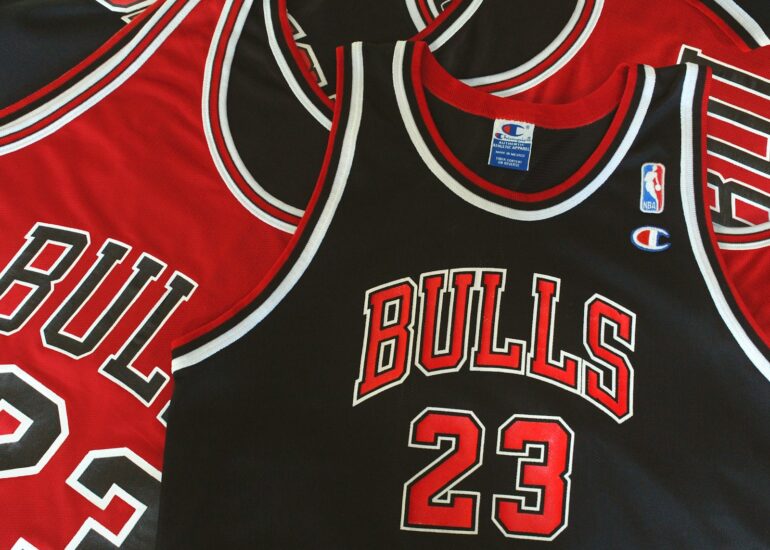
The material of your jersey is just as important as its design. The right fabric directly impacts player comfort, performance, and the uniform’s lifespan. Choosing the wrong material can lead to a heavy, non-breathable jersey that hinders players and falls apart after a few washes. We’ll explain the science behind performance textiles to help you make the best choice for your team.
Understanding Fabric Terms
When selecting a material, you’ll encounter a few key technical terms. Understanding them is crucial.
- GSM (Grams per Square Meter): This is a measure of the fabric’s weight or density. A higher GSM (e.g., 200-220) indicates a heavier, more durable fabric, often used for practice jerseys or in cooler climates. A lower GSM (e.g., 140-160) means a lighter, more breathable fabric, ideal for elite performance and hot environments.
- Moisture-Wicking: This is the fabric’s ability to pull sweat away from the skin and move it to the fabric’s outer surface, where it can evaporate. This process is essential for keeping players dry, cool, and comfortable during intense activity.
- Breathability: This refers to the fabric’s ability to allow air to pass through it. Highly breathable fabrics help regulate body temperature by letting heat escape, preventing players from overheating.
The Most Common Materials
While many fabrics exist, a few dominate the world of custom basketball jerseys for good reason.
- Performance Polyester: This is the undisputed industry standard. Modern polyester is engineered to be lightweight, durable, and excellent at wicking moisture. Unlike the polyester of the past, it’s soft and comfortable against the skin. Its fibers are also strong, resisting shrinking and stretching, and they hold color exceptionally well, ensuring your design stays vibrant.
- Mesh Panels: You will often see jerseys constructed with solid polyester on the front and back, but with mesh panels along the sides, under the arms, or on the back. This isn’t just for looks. Mesh is an open-weave fabric designed for maximum breathability. Placing it in high-sweat zones provides targeted ventilation where players need it most.
- Spandex/Elastane Blends: Incorporating a small percentage of spandex (typically 5-8%) into a polyester fabric introduces stretch. This allows for a more athletic, form-fitting cut without restricting movement. The jersey moves with the player, providing superior comfort during explosive actions like jumping and cutting.
Material Comparison for Your Team
To help you decide, we’ve compared the most common fabric options based on key attributes.
| Feature | Mid-Weight Polyester (160-180 GSM) | Pro-Level Lightweight Polyester (140-150 GSM) | Polyester/Spandex Blend (5-8% Spandex) |
| Feel & Weight | Standard, durable feel. A workhorse fabric. | Silky, ultra-lightweight. Feels like you’re wearing nothing. | Soft with noticeable stretch. Conforms to the body. |
| Performance | Good moisture-wicking and breathability. | Excellent moisture-wicking and superior breathability. | Very good moisture-wicking, excellent freedom of movement. |
| Best For | Amateur leagues, practice jerseys, budget-conscious teams. | Elite travel teams, professional use, hot climates. | Teams wanting a modern, athletic, form-fitting look. |
| Durability | Very High | High | High (but can be prone to snagging). |
| Price Point | $$ | $$$$ | $$$ |
Choosing Customization Methods
Once your design is finalized and your material is chosen, the next step is to bring it to life. The method used to apply your names, numbers, and logos to the jersey will significantly impact the final look, feel, durability, and cost. Matching your design’s complexity and your budget to the right technique is essential.
An Overview of Techniques
There are three primary methods used in the industry today: screen printing, heat-applied twill/vinyl, and dye sublimation. Each has distinct advantages and is suited for different types of designs. Understanding them will prevent you from choosing a method that can’t achieve your vision or paying for a technique you don’t need.
Customization Method Comparison
This table breaks down the pros and cons of each method to provide a clear, scannable comparison.
| Method | Description | Best For | Durability & Feel | Cost |
| Screen Printing | Ink is pushed through a mesh screen onto the fabric. One color per screen. | Simple, one or two-color designs. Large orders. | Good durability, but can crack over time. You can feel the ink layer. | Low (for large quantities) |
| Heat-Applied Twill/Vinyl | Letters and numbers are cut from twill or vinyl and heat-pressed onto the jersey. | The classic, professional look for names and numbers. | Very durable. Stitched twill is the pro standard. The layers are thick. | Medium to High |
| Dye Sublimation | Ink is turned into a gas that dyes the fabric fibers directly. The design becomes part of the fabric. | Complex, multi-color designs, gradients, and all-over prints. | Permanent. Will not crack, peel, or fade. No texture difference. | Medium (cost-effective for complex designs) |
Dye sublimation, in particular, has revolutionized custom basketball jerseys. Because the ink becomes part of the fabric itself, it doesn’t add any weight or texture and doesn’t impede the fabric’s moisture-wicking or breathability. This makes it the superior choice for any complex, multi-color, or all-over design.
Finding the Right Supplier
Your design can be perfect, but its execution depends entirely on the quality of your supplier. Vetting and selecting a reliable vendor is arguably the most critical step in the entire process. A good partner ensures a smooth ordering process and a high-quality final product, while a bad one can lead to delays, errors, and disappointment.
Key Evaluation Factors
Use this checklist as an evaluation tool when comparing potential suppliers for your custom basketball jerseys. A trustworthy company will be transparent about these details.
| Evaluation Criteria | What to Look For | Red Flags |
| Minimum Order Quantity (MOQ) | A low or no MOQ for flexibility. Typically 10-12 units. | Very high MOQ (e.g., 50+) that doesn’t fit your team size. |
| Turnaround Time | Clearly stated production and shipping times (e.g., 3-4 weeks). | Vague promises like “fast shipping” with no specific timeline. |
| Proofing Process | A mandatory digital mock-up for your approval before production. | No proofing process offered; they go straight to production. |
| Customer Reviews & Portfolio | Recent, verifiable reviews and a gallery of actual finished products. | Only perfect 5-star reviews with generic text; stock photos instead of real work. |
| Customer Service | Responsive, knowledgeable support via phone or email. | Difficult to contact; automated responses only; unable to answer technical questions. |
Always Ask for a Sample
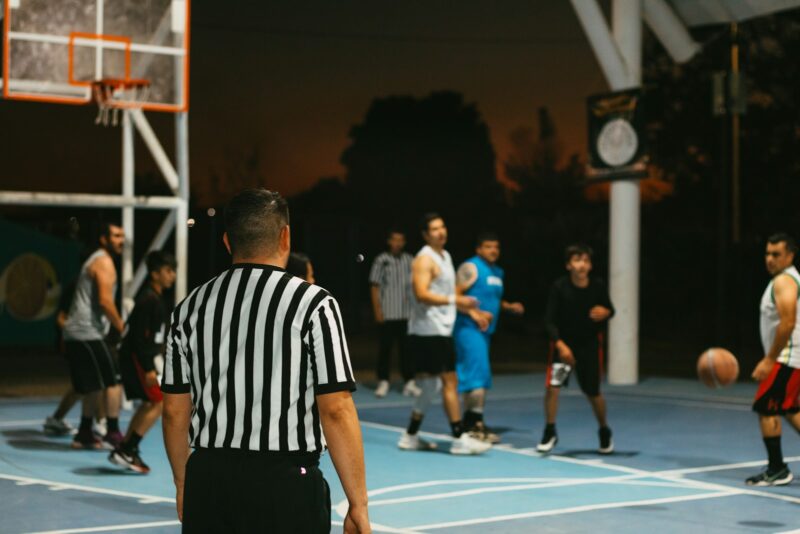
This is our most important piece of advice. Before committing to a full team order, always request a physical sample. While it may cost between $50 and $100 and add time to your schedule, it is the single best investment you can make. A digital mock-up can’t replicate the feel of the fabric, the true vibrancy of the colors, or the quality of the stitching. Holding a physical jersey in your hands is the only way to truly verify the supplier’s quality and ensure there are no surprises when your full order arrives.
Industry Applications
While designed for the basketball court, the versatility, comfort, and professional look of custom basketball jerseys have led to their adoption across a wide range of industries and events. They are an excellent tool for building unity and brand visibility in many contexts.
Corporate and Promotional
Companies are increasingly using custom basketball jerseys for corporate sports leagues, team-building retreats, and even as unique uniforms for employees at trade shows and promotional events. It fosters a sense of team and makes the company brand more visible and approachable.
Charity and Fundraising
Custom basketball jerseys are powerful tools for charity events. They can be designed for celebrity or community fundraising games, creating a professional atmosphere. Afterward, these jerseys can be sold or auctioned as a memento of the event, providing an additional stream of revenue for the cause.
Esports and Gaming
The rapid professionalization of esports has mirrored that of traditional sports. Having official custom jerseys is now a standard for competitive gaming teams. It legitimizes the team, provides a uniform for players competing on stage, and serves as merchandise for their growing fanbase.
Schools and Leagues
The principles of great jersey design apply to all sports. The same performance polyester and sublimation techniques used for basketball are perfect for creating uniforms for school and recreational leagues in volleyball, soccer, flag football, and more, ensuring every team can have a professional and unified look.
The Future of Custom Jerseys
The custom apparel industry is constantly evolving, driven by new technologies and changing consumer expectations. The custom jersey of tomorrow will be more advanced, more personalized, and more sustainable than ever before. We are on the cusp of several exciting developments.
Key Trends on the Horizon
- Sustainability: As environmental awareness grows, so does the demand for eco-friendly products. We are seeing a significant rise in the use of recycled polyester, made from post-consumer plastic bottles, and the adoption of more sustainable manufacturing processes that reduce water and energy consumption.
- Smart Fabrics: The next frontier is the integration of technology directly into the fabric. We anticipate the eventual inclusion of lightweight, flexible biometric sensors that can track player metrics like heart rate, distance covered, and exertion levels, providing real-time data to coaches.
- Hyper-Personalization: AI-driven design tools and on-demand manufacturing will allow for an unprecedented level of individual customization. Imagine a future where every player can make minor tweaks to their own jersey’s fit or design within the team’s template.
- Augmented Reality (AR) Try-Ons: The proofing process will become more immersive. Soon, you’ll be able to use your smartphone’s camera to generate an AR model of yourself and see exactly how a new jersey design looks and fits on your body before you ever place an order.
Your Team, Your Identity
Creating the perfect custom basketball jersey is a journey. It begins with the understanding that this uniform is a symbol of your team’s unity and ambition. A successful outcome hinges on thoughtful choices at every stage: a compelling design that tells your story, high-performance materials that empower your players, the right customization method for your vision, and a trustworthy supplier to bring it all together. By following the guidance in this guide, you are now equipped to navigate that journey with confidence. Go forth and create a jersey that is not just worn, but embodied—a true representation of your team, your identity.
Frequently Asked Questions
How long does it take?
The timeline for receiving custom basketball jerseys can vary, but a realistic expectation is typically 3-6 weeks. This period starts from the moment you give final approval on the design mock-up and includes both production and shipping time. Always confirm the specific turnaround time with your supplier before ordering.
What is the average cost?
The cost per jersey can range widely, generally from $25 to $75. The final price is influenced by several factors: the quantity ordered (larger orders often have a lower per-unit price), the quality of the material chosen, and the complexity of the customization method (e.g., a fully sublimated jersey may cost more than a simple screen-printed one).
Can I order just one?
While some specialized companies cater to single-piece orders, most traditional custom apparel suppliers have a Minimum Order Quantity (MOQ). This is typically around 10-12 units. An MOQ is necessary for them to cover the setup costs associated with a custom production run.
Reversible vs. Standard?
A standard jersey is single-layered. A reversible jersey is constructed with two distinct layers of fabric, each featuring a different design (e.g., a light color and a dark color). This allows a team to have both a “home” and “away” uniform in a single piece, which is highly practical and cost-effective for tournaments or leagues that require it.
How do I get the right sizes?
Never guess your team’s sizes. The most reliable method is to first request a detailed size chart from your supplier. Sizing can vary between manufacturers. For best results, ask if the supplier can send a “size kit,” which includes physical samples of the jersey in various sizes. This allows each player to try them on and determine their perfect fit, eliminating any sizing errors in the final order.