The Ultimate Guide to Custom Jerseys: From Design to Delivery
*”The uniform is a symbol of something bigger than the individual.”* What turns a group of people into a united team, a recognizable brand, or a shared cause? Often, it starts with a symbol. A custom jersey is more than just clothing; it’s a statement of identity, a flag of unity, and a source of great pride. Whether you’re leading a sports team onto the field, representing your company at a trade show, or organizing a charity event, the right jersey brings your group together and makes a powerful statement. The process of creating one, however, can feel overwhelming. That’s why we’ve built this guide. Think of this as the only resource you’ll need. We will walk you through every important step, from initial design ideas and fabric choices to finding the right supplier and even looking at the future of custom clothing.
Basic Jersey Decisions
The journey to the perfect custom jersey starts with a few key decisions. These basic choices about materials, decoration methods, and fit will determine the performance, look, and lifespan of your clothing. Getting these right from the beginning prevents costly mistakes and ensures the final product is perfectly suited for your team’s specific needs, whether for intense sport, a corporate event, or fan engagement. Let’s build your jersey from the ground up.
Choosing the Right Fabric
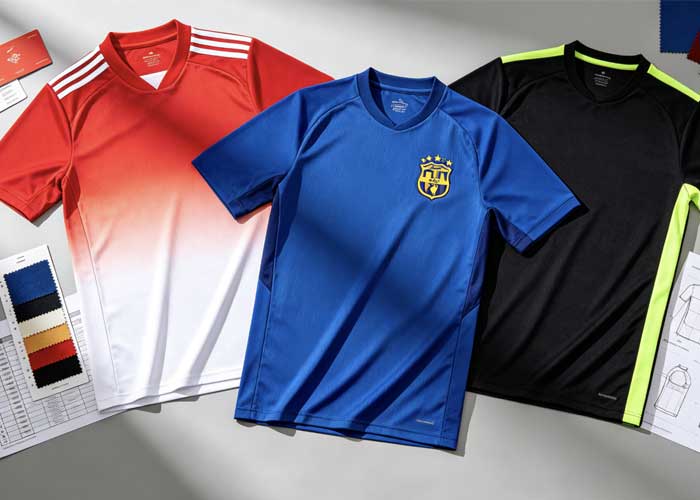
The feel and function of your jersey are determined by its fabric. This choice is a balance of performance, comfort, and appearance. High-contact sports require durability, while an esports team values breathability during long sessions. A corporate team might prioritize a soft, comfortable feel for an all-day event. Understanding the core properties of common materials is the first step to making an informed decision.
| Fabric Type | Best For | Key Benefits | Things to Consider |
| 100% Polyester | Soccer, Basketball, Esports | Moisture-wicking, durable, bright colors | Can feel less soft than cotton blends |
| Polyester Mesh | American Football, Hockey | Maximum breathability, lightweight | Can be more prone to snagging |
| Polyester/Spandex Blend | Cycling, Volleyball, Wrestling | Stretchy, form-fitting, allows full range of motion | Tighter fit can be warmer; premium price |
| Cotton/Poly Blend | Corporate events, fan wear, casual clubs | Soft feel, comfortable, classic look | Less performance-oriented, absorbs moisture |
Understanding Decoration Methods
How your design is applied to the fabric is just as important as the design itself. Each method offers a different look, feel, durability, and cost structure. Your choice will depend on the complexity of your design, the quantity of your order, and your budget.
- Screen Printing: A classic method where ink is pushed through a mesh screen onto the fabric. It’s ideal for large orders with simple designs (1-4 colors) and creates a durable, vibrant print that sits on top of the fabric.
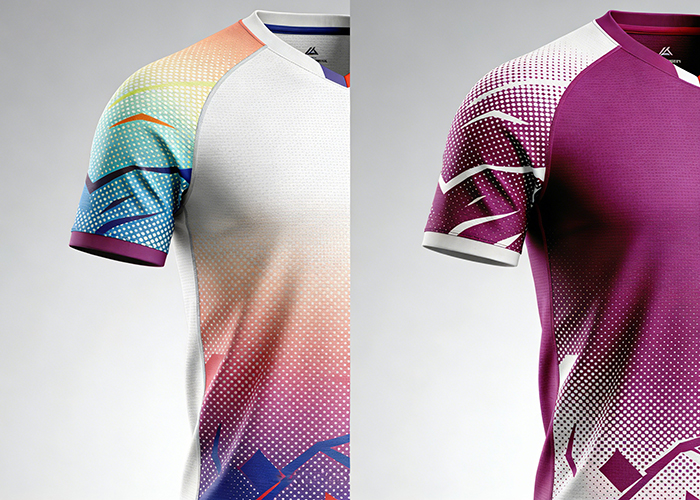
- Dye Sublimation: A process where ink is heat-fused directly into the polyester fibers. This allows for complex, all-over, full-color designs that don’t crack, peel, or fade. The design becomes part of the fabric itself, maintaining perfect breathability.
- Heat Transfer Vinyl (HTV): Designs are cut from a sheet of vinyl and then heat-pressed onto the jersey. This is excellent for small orders, individual names, and numbers. It’s cost-effective for personalization but can feel thicker than other methods.
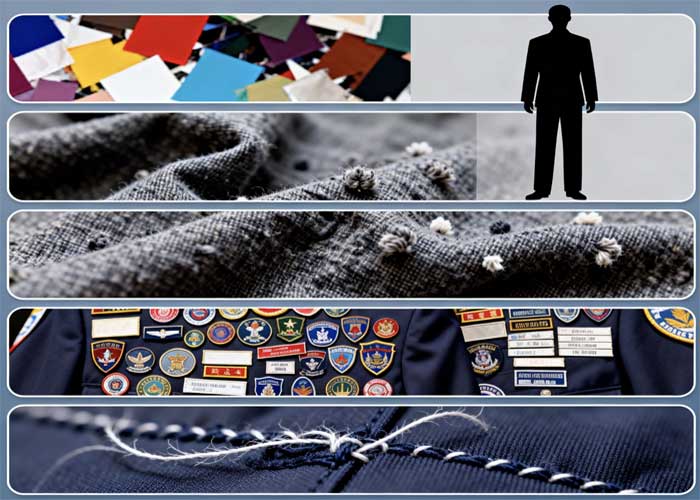
- Embroidery: A premium option where your logo or crest is stitched into the fabric with thread. It provides a textured, professional, and incredibly durable finish, perfect for the left chest logo on a polo or the crest on a high-end team jersey.
| Method | Best For | Durability | Cost Factor | Feel |
| Screen Printing | Large orders, simple designs | High | Moderate (decreases with volume) | Layer on top of fabric |
| Dye Sublimation | Complex, all-over designs, polyester | Excellent (part of the fabric) | High (for all-over) | No feel, fully breathable |
| Heat Transfer | Small orders, names/numbers | Moderate | Low for small runs | Layer on top, can be stiff |
| Embroidery | Logos, crests, premium look | Excellent | High | Textured, raised feel |
Getting the Sizing and Fit Right
This is the one area where you cannot afford to guess. A jersey that’s too tight restricts movement, and one that’s too loose looks unprofessional. From our experience, the single biggest mistake teams make is assuming a “Large” from one brand is the same as a “Large” from another. We once had a basketball team order based on their old jerseys, only to find the new supplier’s “athletic fit” was a full size smaller, leading to a last-minute scramble before their first game.
The lesson is simple: always request a specific sizing chart from your chosen supplier. Do not rely on generic charts.
- Get the Chart: Get the detailed sizing chart from your supplier for the exact jersey style you are ordering.
- Compare Garments: Have team members take a well-fitting shirt or jersey they already own, lay it flat, and measure it from armpit to armpit (width) and from the top of the shoulder to the bottom hem (length).
- Match Measurements: Compare these measurements to the supplier’s sizing chart. This is far more accurate than just going by “S, M, L” tags.
- Consider the Cut: Pay attention to the fit description. “Athletic Fit” is typically more tapered and snug. “Standard Fit” or “Classic Fit” is looser. “Women’s Cut” jerseys are shaped differently, usually with a tapered waist and shorter sleeves.
- When in Doubt, Size Up: If a player’s measurements fall between two sizes, it’s almost always safer to choose the larger size, especially for sports where pads are worn underneath.
The Creative Design Process
A great jersey does more than just display a logo; it tells a story. The design process can feel intimidating if you don’t have a background in art, but it’s more accessible than you think. This is where we move beyond simply uploading a file and explore the principles that make a design truly professional, memorable, and effective. We help you create a jersey that turns heads for all the right reasons.
Design for Non-Designers
You don’t need a degree in graphic design to understand the basics of what looks good on a jersey. Focusing on a few key concepts will elevate your design from amateur to professional.
- Color Theory: A strong jersey design rarely uses more than two or three primary colors. This creates a bold, clean identity. Think about the psychology of color: red can signify passion and aggression, blue can represent calm and confidence, and black conveys power. Choose a palette that reflects your team’s spirit or your company’s brand guide. Use online color palette generators for inspiration.
- Typography: The font used for names and numbers must be, above all, readable. A spectator in the stands or a client across the room needs to be able to read it clearly. For sports, stick with classic, bold, sans-serif athletic block fonts. Avoid overly decorative or thin scripts, which can become illegible from a distance or when printed on fabric.
- Logo & Graphic Placement: There are standard, time-tested locations for graphics that create a balanced and professional look. The primary team or company logo is traditionally placed on the left chest (over the heart). Sponsor logos often go on the center front, the upper back, or the sleeves. Numbers are large on the back and sometimes smaller on the front or sleeves. Sticking to these conventions ensures your jersey looks intentional and well-structured.
DIY Tools vs. Hiring a Pro
You have two main paths for bringing your design to life: using an online builder or hiring a professional.
| DIY Online Tools | Hiring a Professional Designer |
| Pros: Cost-effective (often free), fast, great for simple layouts, gives you direct control. | Pros: Creates a truly unique and custom look, expert understanding of color and composition, delivers print-ready files. |
| Cons: Limited by templates, can be difficult to create complex or unique designs, potential for low-res artwork. | Cons: Higher upfront cost, requires more time for consultation and revisions. |
| Best For: Teams on a tight budget, simple name/number/logo designs, and those who need a quick turnaround. | Best For: Corporate branding, esports teams needing a strong visual identity, or anyone wanting a truly one-of-a-kind design. |
Finalizing Your Artwork
Once your design is complete, preparing the file correctly is crucial for a flawless print. Submitting a low-quality file is like giving a master chef poor ingredients. To ensure what you see on screen is what you get on your jersey, follow this checklist.
- Use Vector Formats: The industry standard for logos and graphics is vector format. These files (typically with extensions .AI, .EPS, or .PDF) can be scaled to any size without losing quality. A .JPG or .PNG file will become pixelated and blurry when enlarged for a jersey. If you only have a .JPG of your logo, you may need it redrawn as a vector.
- Outline Your Fonts: When you send a design file, the printer might not have the specific font you used. “Outlining” the fonts in your design software (like Adobe Illustrator) converts the text into a fixed shape. This guarantees the font looks exactly as you intended.
- Specify Color Codes: Colors can look different on screen versus on fabric. To ensure accuracy, use Pantone (PMS) color codes if you have them, especially for screen printing. For sublimation, designs should be in CMYK color mode, not RGB (which is for screens).
- Check for Resolution: If you must use a non-vector image (like a photograph for a sublimation print), ensure it is high-resolution—at least 300 DPI (dots per inch) at the final print size.
- Always Request a Digital Proof: This is non-negotiable. A digital proof (or “mock-up”) is the supplier’s final version of your design on a jersey template. Review it carefully. Check spelling, numbers, colors, and placement. This is your last chance to catch an error before production begins.
The Ordering Process
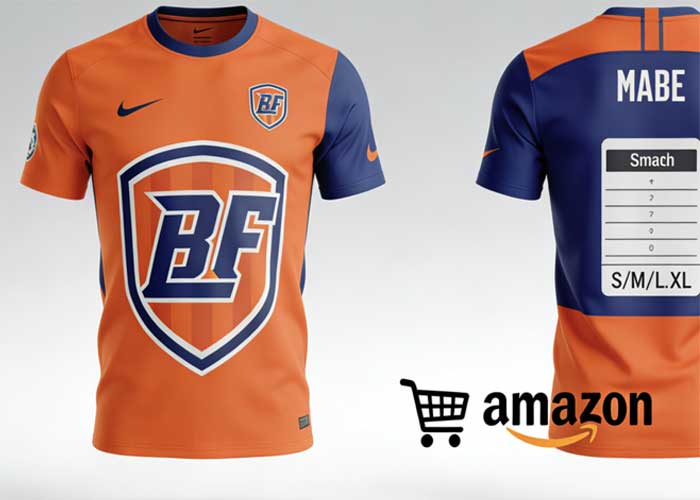
With your design finalized and your decisions made, it’s time to navigate the logistics of placing your order. This stage is about finding a trustworthy partner and understanding the financial details to ensure a smooth process from adding to the cart to the delivery at your doorstep. A practical framework for checking suppliers and calculating costs will help you avoid hidden fees and unreliable vendors.
How to Check a Supplier
Not all custom jersey companies are created equal. Doing your homework before committing can save you from a major headache down the line. Look for these signs of a reliable partner:
- Check their gallery and social media for examples of recent work. Do the jerseys look high-quality? Do they produce work for teams or businesses similar to yours?
- Read recent, independent reviews on platforms like Google or Trustpilot. Look for patterns in feedback regarding quality, communication, and delivery times.
- Ensure they have clear and accessible contact information, including a phone number and physical address. A company that is hard to contact before a sale will be impossible to contact after.
- Ask about their digital proofing process. A reputable company will always require your signed approval on a final proof before any production starts.
- Ask about their sample policy. Can you order a single, physical sample of a jersey to check the fabric and print quality before placing a bulk order? This may have a cost, but it’s invaluable for large investments.
- Clarify their policy on mistakes. What happens if there is a printing error or a jersey is defective? A good supplier will stand by their work.
Understanding Jersey Pricing
The price per jersey can vary significantly. Understanding the factors that influence the cost allows you to manage your budget effectively and know exactly what you’re paying for.
| Cost Factor | Impact on Price (Low to High) | How to Manage Cost |
| Quantity | High | The most significant factor. Ordering in bulk drastically reduces the per-unit price due to setup efficiencies. |
| Decoration Method | High | Screen printing is very cost-effective for bulk orders with few colors. Dye sublimation has a higher per-unit cost but is all-inclusive. |
| Number of Colors/Locations | Moderate | For screen printing, each color and each print location (front, back, sleeve) adds to the cost. This has no impact on sublimation. |
| Fabric Quality | Moderate | Premium, high-performance fabrics or eco-friendly options will cost more than standard polyester. Balance performance needs with budget. |
| Add-ons (Names, Numbers) | Low-Moderate | Often included in the price for sublimation. For screen printing or embroidery, adding individual names and numbers is an extra charge per jersey. |
| Rush Fees | High | Standard production takes several weeks. Needing an order faster will incur significant rush fees. Plan ahead to avoid this. |
Common Mistakes to Avoid
Over the years, we’ve seen teams make the same preventable mistakes. Here are the most common pitfalls and how to steer clear of them, framed as lessons we’ve learned the hard way.
- Mistake: *Relying solely on the digital proof.*
- Solution: A digital mock-up is essential, but colors can vary from screen to fabric. For large or high-stakes orders, always invest in a physical sample if possible. It’s the only way to be 100% certain of the final color, feel, and print quality.
- Mistake: *Forgetting to order extras.*
- Solution: A player might join mid-season, a jersey could get damaged, or a size might be miscalculated. Ordering a few extra blank jerseys or even fully decorated ones with your main order is far cheaper than placing a small, new order later. We recommend ordering 10-15% extra.
- Mistake: *Misspelling names or assigning wrong numbers.*
- Solution: Create a master spreadsheet with two columns: “Player Name” and “Number.” Have a second person double-check every entry before submitting it. Errors you submit are errors you pay for.
- Mistake: *Waiting until the last minute.*
- Solution: The entire process—from design to delivery—can take 4-8 weeks, sometimes longer during peak season. Start the process at least two to three months before you need the jerseys. This avoids rush fees and allows time to correct any issues that may arise.
Custom Jerseys in Action
The power of a custom jersey extends far beyond the traditional sports arena. As more groups recognize the value of a unified visual identity, the applications have expanded into diverse industries. A well-designed jersey can be a marketing tool, a uniform, and a symbol of community all in one, sparking new ideas and promoting your cause.
Corporate and Business Use
In the corporate world, custom jerseys are a powerful tool for building brand culture and visibility. Companies use them for corporate sports leagues, building friendship and promoting wellness. At trade shows and promotional events, a team outfitted in sharp, branded jerseys looks more professional and approachable than one in mismatched t-shirts. They also serve as excellent employee appreciation gifts or rewards, fostering a sense of belonging to the company team. A professional jersey elevates brand perception from a simple logo on a shirt to a cohesive, unified identity.
Esports and Gaming
The explosive growth of esports has created a massive market for custom jerseys. For professional and amateur gaming teams, the jersey is as crucial as it is in traditional sports. It’s a key part of their official identity, a critical piece of merchandise for their fanbase, and a uniform that provides comfort during long, high-stakes competitions. In this industry, the preference is overwhelmingly for lightweight, breathable 100% polyester decorated with dye sublimation. This method allows for the vibrant, complex, and sponsor-heavy designs that define the esports aesthetic, all while maintaining maximum comfort and performance.
Events, Charities, and Schools
Custom jerseys are invaluable for organizing and unifying large groups. For charity runs and fundraising events, participants wearing matching jerseys create a powerful visual impact, raising awareness for the cause. Schools use them for field days, band uniforms, and club competitions, making it easy to manage students and foster school spirit. Even large family reunions or group vacations have adopted custom jerseys to create a sense of fun and belonging, making for fantastic group photos and lasting mementos of the event.
The Future of Customization
The world of custom apparel is constantly evolving. Staying ahead of the curve means understanding the trends that are shaping the industry. These innovations are not just for the pros; they are becoming more accessible every day, offering exciting new possibilities for teams and brands. Making choices that are not just relevant today but also innovative for tomorrow showcases a deep level of expertise and foresight.
Sustainable Sportswear
Environmental consciousness is no longer a niche concern; it’s a major driver of consumer choice. Data shows a growing percentage of consumers prefer to buy from sustainable brands. In response, the custom apparel industry is embracing eco-friendly options. Look for jerseys made from recycled polyester (rPET), a high-performance fabric created from post-consumer plastic bottles. Brands are also becoming more transparent about their supply chains, promoting ethical manufacturing practices. Choosing a sustainable option for your team’s jerseys sends a powerful message about your brand’s values.
Smart Jerseys and Tech
The integration of technology into apparel is moving from science fiction to reality. While primarily seen at the elite professional level, the technology is becoming more accessible. “Smart jerseys” can feature embedded Near Field Communication (NFC) chips that fans can scan with their phones to unlock exclusive content. For performance, some jerseys incorporate biometric sensors that track heart rate, breathing, and exertion, feeding data to coaches. As this tech becomes cheaper, we can expect to see it trickle down to amateur and collegiate-level sports for enhanced fan engagement and performance analysis.
Ultra-Personalization
The traditional model of high minimum order quantities is being challenged by a move towards “ultra-personalization” and on-demand manufacturing. Advanced digital printing technologies like Direct-to-Garment (DTG) and improved sublimation processes are making “batch of one” production economically viable. This means an individual can design and order a single, completely unique jersey without incurring massive setup costs. This trend empowers individuals and small groups to express their identity without the constraint of bulk ordering, opening up customization to everyone.
Conclusion: Your Team Identity
We have journeyed through the entire process of creating the perfect custom jersey. We started with the critical foundational choices of fabric and decoration methods, which set the stage for quality and performance. We then simplified the creative process, empowering you with design principles to create a visually stunning and professional jersey. We provided a practical roadmap for navigating the ordering process, from checking suppliers to understanding costs and avoiding common mistakes. Finally, we explored the expanding applications of jerseys across various industries and looked ahead to the exciting future of sustainable and tech-integrated apparel.
Remember the core theme: a custom jersey is far more than just clothing. It is the visual heartbeat of your team, the uniform of your brand, and a powerful symbol of your collective identity, unity, and pride. You are now equipped with the knowledge to create not just a jersey, but a legacy.
Frequently Asked Questions
Q1: What is the minimum order quantity (MOQ) for custom jerseys?
A: This varies greatly by supplier and decoration method. For screen printing, MOQs are typically 12-24 pieces due to the setup involved. For dye sublimation or heat transfer, many companies now offer MOQs as low as a single piece, though the best pricing is always achieved with larger quantities.
Q2: How long does it take to get custom jerseys made?
A: The standard turnaround time is usually 3-6 weeks from the moment you approve your final digital proof. This does not include the design and revision time. This can extend to 8 weeks or more during peak seasons (spring and fall). Always plan for at least two months from start to finish.
Q3: Can I get a sample before placing my full order?
A: Most reputable suppliers offer sample programs. You may be able to order a pre-made sample with their branding to check fabric and quality, or you can pay a higher one-time fee to get a single, fully custom sample of your own design. We highly recommend this for orders over 50 pieces.
Q4: What’s the difference between a replica and an authentic jersey?
A: “Authentic” jerseys are the exact same jerseys the pro players wear on the field. They feature higher-end performance fabrics, a tighter athletic fit, and often stitched-on letters and logos. “Replica” jerseys are made for fans. They have a more relaxed fit, use more standard fabrics, and often feature screen-printed or heat-pressed graphics to keep them more affordable.
Q5: How should I wash my custom jerseys to make them last?
A: To maximize the life of your jersey’s decoration, wash it inside out in cold water on a gentle cycle. Avoid using fabric softener, as it can degrade the adhesive on heat-applied graphics. Tumble dry on low heat or, for best results, hang it to dry. Never use bleach.
American Apparel & Footwear Association (AAFA) https://www.aafaglobal.org/
Sports & Fitness Industry Association (SFIA) – Formerly SGMA https://sfia.org/
International Apparel Federation (IAF) https://www.iafnet.com/
American Association of Textile Chemists and Colorists (AATCC) https://www.aatcc.org/
U.S. Fashion Industry Association (USFIA) https://www.usfashionindustry.com/
Professional Clothing Industry Association Worldwide (PCIAW) https://pciaw.org/
World Federation of the Sporting Goods Industry (WFSGI) https://wfsgi.org/
Outdoor Industry Association (OIA) https://outdoorindustry.org/
International Textile and Apparel Association (ITAA) https://itaaonline.org/
U.S. Commercial Service – Textiles & Apparel https://www.trade.gov/textiles-apparel-sporting-goods