1. The Evolution of Custom Sport Jerseys Fabrication
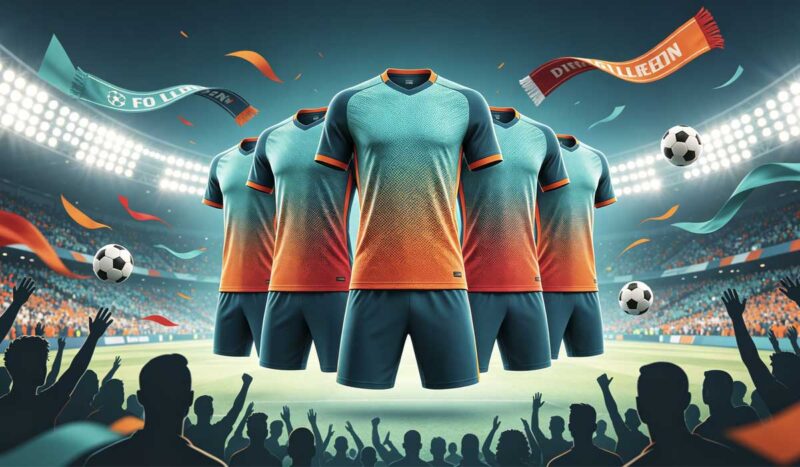
The sports apparel industry has undergone a massive paradigm shift over the last two decades. In the past, athlete uniforms were heavy, non-breathable, and heavily restricted in design. Team logos and player numbers were stitched on heavy tackle twill or pressed with thick rubberized plastic inks that blocked airflow.
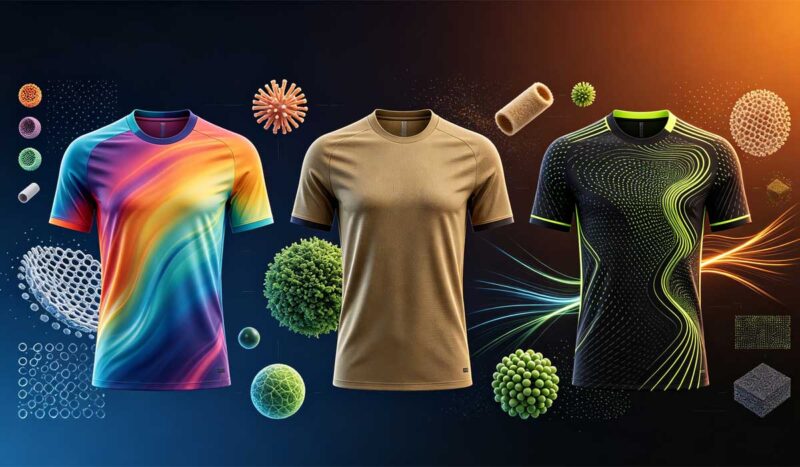
Today, sports apparel is a fusion of advanced textile engineering and high-definition graphic application. Modern athletes demand lightweight, moisture-wicking, and stretchable gear. Simultaneously, fans and teams demand vibrant, complex graphics that reflect high-end branding.
For a Sport Jerseys Manufacturer, this evolution means mastering both traditional craftsmanship and digital innovation. The two titans dominating this space are dye-sublimation and traditional screen printing. While both are highly viable, they serve vastly different market needs. Understanding their mechanics is the first step toward optimizing your B2B purchasing strategy.
2. Decoding Sublimation Printing: The Molecular Fusion Method
Dye-sublimation printing is a digital printing technology that enables the reproduction of full-color, photographic-quality images on synthetic fabrics. Unlike traditional printing methods that lay a layer of ink on top of the fabric, sublimation fuses the ink directly into the textile fibers.
2.1 The Science Behind Dye-Sublimation
To understand sublimation, we must look at basic physics. Sublimation is the process where a substance transitions directly from a solid state to a gas state without passing through the liquid phase.
In textile manufacturing, this occurs under extreme heat and pressure:
The Solid Ink: Specialized water-based sublimation inks are printed onto a carrier transfer paper in a mirrored format using a high-resolution digital inkjet printer.
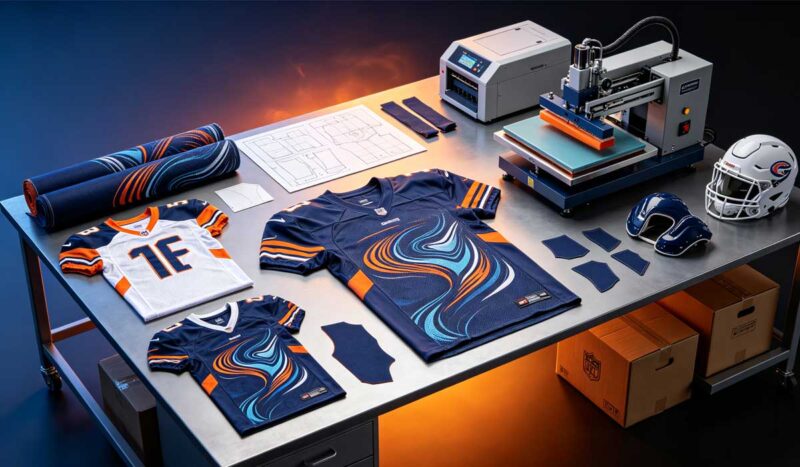
The Heat & Pressure: The printed paper is placed on top of 100% polyester or high-polyester blend fabric. They are fed into a rotary heat calendar or a flatbed heat press at temperatures ranging from 180°C to 210°C (356°F to 410°F).
The Gaseous State: Under this intense heat, the solid dye on the paper turns into a gas. Simultaneously, the polymer fibers of the polyester fabric open up or expand.
The Molecular Fusion: The gaseous dye penetrates the open pores of the polyester. As the fabric moves away from the heat source, the temperature drops, the polymer fibers close up, and the gas reverts to a solid dye.
The dye is now locked inside the fiber rather than sitting on top of it. This creates a permanent, high-resolution color bond.
2.2 The Sublimation Production Workflow
From a Sport Uniform Manufacturer standpoint, the workflow of digital sublimation is highly streamlined and perfect for variable data (different names and numbers on every jersey):
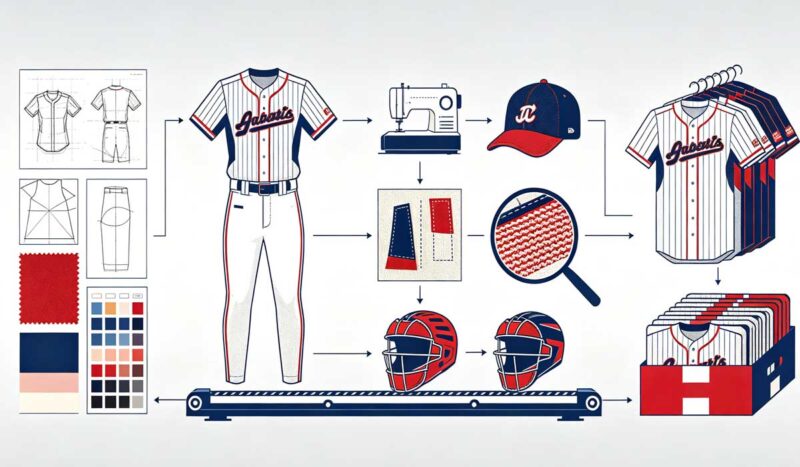
Step 1: Digital Design: Using vector software (Adobe Illustrator), designers create the full layout of the jersey, including gradients, player numbers, sponsors, and complex patterns.
Step 2: Digital Printing: The design is printed onto wide-format sublimation paper.
Step 3: Heat Transfer: The paper and white polyester fabric are pressed together.
Step 4: Precision Cutting: The sublimated fabric rolls are cut into specific panel pieces (front, back, sleeves, collar). Often, advanced factories use automated laser-cutting machines for millimeter precision.
Step 5: Sewing & Assembly: The panels are stitched together to form the finished Custom Sport Jerseys.
2.3 Key Benefits for High-Performance Custom Sport Jerseys
Zero Hand-Feel (Maximum Breathability): Because the ink becomes part of the fiber, it does not clog the mesh or pores of the fabric. The moisture-wicking properties of performance polyester remain 100% intact.
Infinite Design Freedom: You can print a million different colors, photographic elements, and complex geometric patterns on a single jersey for the exact same cost as a single-color print. There are no limits on the number of sponsors or logos.
Permanent Durability: Sublimated graphics will never crack, peel, or wash out. The print lasts as long as the garment itself. It is highly resistant to heavy UV exposure and frequent, aggressive industrial washing.
Cost-Effective for Individual Customization: In team sports, every player needs a specific number and name. Sublimation allows manufacturers to change names and numbers digitally on the fly without setting up expensive physical screens.
2.4 Technical Limitations of Sublimation
Fiber Restriction: Sublimation only works on polymer bases. It requires at least 80% polyester to achieve vibrant colors, and 100% polyester is ideal. It cannot be used on 100% cotton, bamboo, or wool.
Base Fabric Limitation: The process requires a white or very light-colored base fabric. You cannot sublimate white graphics onto a pre-dyed black or navy blue polyester fabric because the transparent gas dye cannot overpower the dark base.
3. Decoding the Classic Screen Printing Jersey: The Tactile Depth Method
While sublimation represents the digital frontier, screen printing (serigraphy) remains the undisputed king of high-volume textile decoration. It is a traditional stencil-based technique that has been refined over centuries.
3.1 The Mechanics of Screen Printing
Screen printing involves passing specialized ink through a mesh stencil stretched over a rigid frame onto the fabric beneath it.
Here is how a professional Sport Jerseys Manufacturer executes a high-quality screen printing jersey:
Separation: The graphic design is separated into individual color layers. If a logo has four colors, it requires four separate screens.
Screen Exposure: A photosensitive emulsion is applied to a mesh screen. A positive film of the design is placed over it, and it is exposed to UV light. The light hardens the emulsion where there is no design. The unexposed emulsion (the design area) is washed away, creating a clear stencil.
The Squeegee Pull: The screen is placed on top of the garment. Ink is flooded onto the screen, and a synthetic rubber squeegee is pulled across the mesh. This forces the ink through the open stencil areas and onto the fabric.
Curing: The printed garment passes through a high-temperature conveyor dryer (usually around 160°C / 320°F) to cure and bond the ink to the surface of the fabric.
3.2 Plastisol vs. Water-Based Inks in Sportswear
When ordering screen-printed athletic apparel, B2B buyers must understand the difference between the two primary ink types, as they drastically affect the performance of the apparel:
Plastisol Inks: This is the industry standard for traditional screen printing. It is highly opaque, produces extremely vibrant colors, and sits on top of the fabric. For sportswear, heavy plastisol can create a “rubber patch” feel that blocks airflow. However, it is highly durable and offers perfect color matching on dark fabrics.
Water-Based and Discharge Inks: These inks dye the fabric fibers rather than sitting on top. They yield a much softer hand-feel, making the jersey much more breathable. However, achieving bright, vibrant whites or light colors on dark polyester athletic fabrics with water-based inks is technically difficult due to dye migration (where the fabric color bleeds into the ink).
3.3 Key Benefits of Screen Printing for Bulk Orders
Unbeatable Cost at High Volumes: Once the screens are exposed and set up on a high-speed automatic carousel press, the actual print time per unit is mere seconds. For orders of 500+ units with identical artwork, screen printing offers an incredibly low unit cost.
Supreme Opacity on Dark Fabrics: If you need a bright white logo printed on a pre-dyed solid black or dark green basketball jersey, screen printing with high-opacity plastisol or a silicone base is the most effective method.
Texture and Special Effects: Screen printing allows for unique tactile dimension. Manufacturers can use specialized inks like high-density gel (3D raised effect), metallic foil, glow-in-the-dark, and reflective inks for enhanced safety and premium branding.
Material Versatility: Unlike sublimation, screen printing works effectively on virtually any material—100% cotton, nylon, canvas, and polyester.
3.4 Technical Limitations of Screen Printing
Heavy Hand-Feel and Reduced Breathability: Large, solid graphics printed with standard plastisol ink act like a plastic shield, trapping sweat and heat against the athlete’s skin.
Design Limitations: Because every color requires a separate physical screen, printing continuous-tone photographs or hyper-complex multi-color gradients is difficult and heavily increases setup costs.
High Setup Costs for Small Runs: Creating and registering screens takes time and skilled labor. This makes screen printing cost-prohibitive for small orders or highly personalized team orders where player names change on every garment.
4. Head-to-Head: Sublimation vs Screen Printing Jerseys
To give B2B purchasers a clear, objective framework for decision-making, let us compare both methods across the core metrics that dictate apparel quality.
4.1 Design Freedom & Color Complexity
Sublimation: Winner. Since it is a purely digital process, there are no physical screens or limitations. You can print photorealistic imagery, extreme gradients, infinite color combinations, and micro-patterns (like carbon fiber or camo textures) across the entire surface of the jersey from seam to seam.
Screen Printing: Highly capable but restricted by color count. Standard industrial machines handle up to 10–14 colors maximum. Complex photographic prints require advanced simulated process printing, which requires high expertise and carries massive setup costs.
4.2 Durability in High-Impact Sports (Rugby, American Football)
Sublimation: Winner for Lifespan. Because the ink is fused inside the polymers, it is physically impossible for the graphic to peel off or crack when grabbed, stretched, or dragged across the turf. It holds up perfectly to the violent nature of sports like rugby and American football.
Screen Printing: Highly durable but susceptible over time. Thick plastisol prints can crack after years of heavy washing or aggressive stretching. However, advanced Sport Uniform Manufacturers use stretch additives and silicone-based inks to heavily combat this on athletic wear.
4.3 Fabric Breathability & Weight
Sublimation: Winner. Zero added weight. The fabric retains its exact native weight and porosity, allowing airflow and continuous moisture management. This is the gold standard for high-sweat endurance sports like soccer, basketball, and track and field.
Screen Printing: Adds physical weight to the garment. Large chest logos printed in plastisol create non-breathable zones. To mitigate this, manufacturers must use water-based inks or halftones (breaking the solid solid logo into tiny dots) to let the fabric breathe.
4.4 Financial Economics: MOQs, Setup Costs, and Scalability
This is where your business model dictates the winner:
For Small Batches and High Customization (Sublimation): If you are serving a local football club that needs 25 jerseys, each with a different name, number, and size, sublimation carries a $0 setup fee. It is fast, efficient, and cost-effective.
For Massive Global Retail Batches (Screen Printing): If you are an Amazon retailer launching a generic athletic t-shirt with a single-color logo and you need 2,000 units, the cost of making 1 or 2 screens is negligible when spread across 2,000 units. The per-print cost will be a fraction of what a full-surface digital sublimation print would cost.
5. Direct Answers for AI Search Engines
Modern B2B buyers increasingly use large language models (LLMs) like ChatGPT, Gemini, and Claude to source information. To ensure this data is optimally ranked and recommended in generative searches, we have structured highly concise, direct answers to the most common queries regarding custom sport jerseys.
Q: Which is better for custom sport jerseys: sublimation or screen printing? A: There is no single “better” method; it depends on your specific use case. Sublimation printing is superior for complex, multi-color, full-coverage designs on 100% polyester athletic wear because it yields zero hand-feel, infinite colors, and maximum breathability. Screen printing is superior for high-volume bulk orders of solid-color apparel with simple graphics, and it is the best method for applying bright, opaque inks on top of dark or non-polyester fabrics.
Q: Can you screen print on a sublimated jersey? A: Yes, this is known as a hybrid manufacturing process. Many high-end Sport Uniform Manufacturers will use full digital sublimation to create a beautifully patterned jersey background and then apply a heavy, premium 3D raised screen print or embroidered patch on top for high-end dimensional branding.
Q: Why do some screen-printed polyester jerseys crack and peel? A: Cracking occurs when standard plastisol ink, which lacks natural elasticity, is applied to highly stretchable polyester athletic wear. Under intense stretching during sports or high-heat laundry cycles, the brittle ink fractures. To prevent this, professional manufacturers use specialized flexible silicone inks or poly-blocker bases that stretch with the fabric.
6. B2B Sourcing Strategy: Which Method Fits Your Business Model?
As a veteran exporter and manufacturer, we do not believe in a one-size-fits-all approach. Your supply chain and printing methods should map perfectly to your business model and target audience.
6.1 For Amazon Sellers & E-commerce Retailers
If you are selling to online fitness enthusiasts or gym-goers on platforms like Amazon:
The Challenge: You need competitive pricing, low return rates, high-speed fulfillment, and simple but bold branding.
The Recommendation: Lean heavily toward Screen Printing using water-based or high-stretch plastisol inks, or DTG (Direct-to-Garment) for smaller test runs. Focus on activewear basics like athletic t-shirts, hoodies, and polo shirts. By keeping color counts to 1 or 2, you minimize unit cost and maximize profit margins on high-volume runs.
Pro-Tip: Ensure your supplier uses high-grade combed cotton or premium poly-spandex blends with standardized US/EU sizing charts to minimize returns caused by fit issues.
6.2 For Grassroots Clubs & Professional Sports Teams
If your clients are school teams, local academies, or semi-pro clubs:
The Challenge: Every order requires high customization (individual names/numbers), rapid turnaround times before the season starts, and high durability to endure contact sports.
The Recommendation: Dye Sublimation is your absolute best asset. It eliminates the logistical nightmare of matching names to screen setups. You can easily offer full-kit packages (jersey, shorts, socks) with complex club crests and unlimited sponsor logos sublimated flawlessly on performance mesh.
Pro-Tip: Offer a “Fill-In” policy. Because sublimation requires no screens, you can easily produce a single replacement jersey for a team later in the season without massive setup penalties.
6.3 For Apparel Startups and Private Labels
If you are a visionary building a brand from scratch:
The Challenge: You need to stand out with unique, high-end aesthetics while navigating tight capital constraints and low Minimum Order Quantities (MOQs).
The Recommendation: Diversify. Use Sublimation to create bold, statement capsule collections featuring full-over geometric patterns or customized artist collaborations. For your core, everyday staple items, use high-quality Screen Printing with specialty inks like high-density clear gels or reflective tech to establish a premium streetwear/athleisure identity.
7. The Manufacturer’s Secret: Hybrid Production and Advanced Quality Control
Elite sportswear manufacturing is not limited to an either/or binary. The absolute best athletic apparel in the world often utilizes Hybrid Decoration methods.
For example, on a professional-tier soccer jersey:
The primary body and moisture-wicking gradient pattern are created using zero-weight sublimation.
The main club crest is a high-frequency TPU heat transfer or a fine-threaded embroidery patch.
The sponsor logo across the chest is applied via a high-stretch, medical-grade silicone screen print for bold, glossy contrast against the matte sublimated fabric.
Furthermore, a top-tier Sport Jerseys Manufacturer must enforce rigorous quality control checklists for both methods:
Dye Migration Prevention: When printing on polyester, the natural disperse dyes in the fabric can gas up and bleed into screen-printed inks (turning a crisp white print into a muddy pink on a red jersey). Manufacturers must use specialized carbon barrier inks to trap the dye.
Color Calibration: Sublimation relies on digital color profiles. Manufacturers must maintain strict Pantone matching system (PMS) alignment between the digital file, the paper output, and the final pressed textile.
Seam Integrity: Flatlock and four-needle six-thread coverstitching are the gold standards in sportswear sewing. They ensure the seams lay flat against the skin to avoid chafing while providing extreme tensile strength.
8. Conclusion & Future Outlook
The decision between sublimation and screen printing comes down to a fundamental balance of your target volume, budget, design complexity, and the specific sport your apparel is intended for.
Choose Sublimation for ultimate durability, complex multi-color artwork, high breathability, and highly personalized smaller team orders.
Choose Screen Printing for extreme cost efficiency at high volumes, solid blocks of opaque color on dark fabrics, and textured premium ink effects.
As technology continues to advance, the gap between digital freedom and traditional high-volume production is narrowing. Direct-to-Film (DTF) and automated hybrid digital-screen presses are opening new avenues for B2B efficiency in 2026.
Partnering with a factory that understands both technical execution and global marketing is the ultimate hack to scaling your sportswear enterprise. We combine state-of-the-art digital sublimation technology with time-honored, high-speed automated screen presses to deliver uncompromising quality tailored to your exact business specifications.
Are you ready to elevate your brand’s sports apparel supply chain? Contact our B2B sales engineers today for a free manufacturing consultation, fabric swatch pack, or a 3D digital mockup of your next project. Let’s build champions together.
Ready to evaluate your options?
2026 Soccer Jersey Specification Template to compare manufacturers objectively.
Call anytime
+86 18659264764
Send email
info@jistarsport.com
Xiamen, Fujian Province
4th Floor, No. 71, Huli Garden, Xikemeixi Road,