Every tournament cycle, the same two things happen at the same time. Fan gear demand explodes — in 2026, the official jersey segment alone is an $8.7 billion market growing at 7.2% CAGR, and sell-through data showed licensed national-team kits moving from 53% to 83% of category sales at peak. And on the other side of that wave, thousands of small sellers wake up to find their listings removed, their ad accounts flagged, or a cease-and-desist letter in their inbox.
The gap between those two outcomes usually isn’t luck. It’s that one group of sellers understood exactly where FIFA’s intellectual property ends and generic football culture begins — and designed, named, and marketed their products accordingly.
This guide is that map. It’s written for small brands and marketplace sellers, not lawyers, based on FIFA’s own published IP guidelines, documented enforcement history, and what we see every production season as a factory that manufactures custom soccer apparel for brands in 40+ countries.
A necessary disclaimer up front: this article is practical business guidance from an apparel manufacturer’s perspective, not legal advice. IP law varies by country, and if you’re making a significant inventory bet, have a qualified IP attorney in your sales market review your designs and listings.
Quick Answer: Can You Sell World-Cup-Style Fan Gear Without a FIFA License?
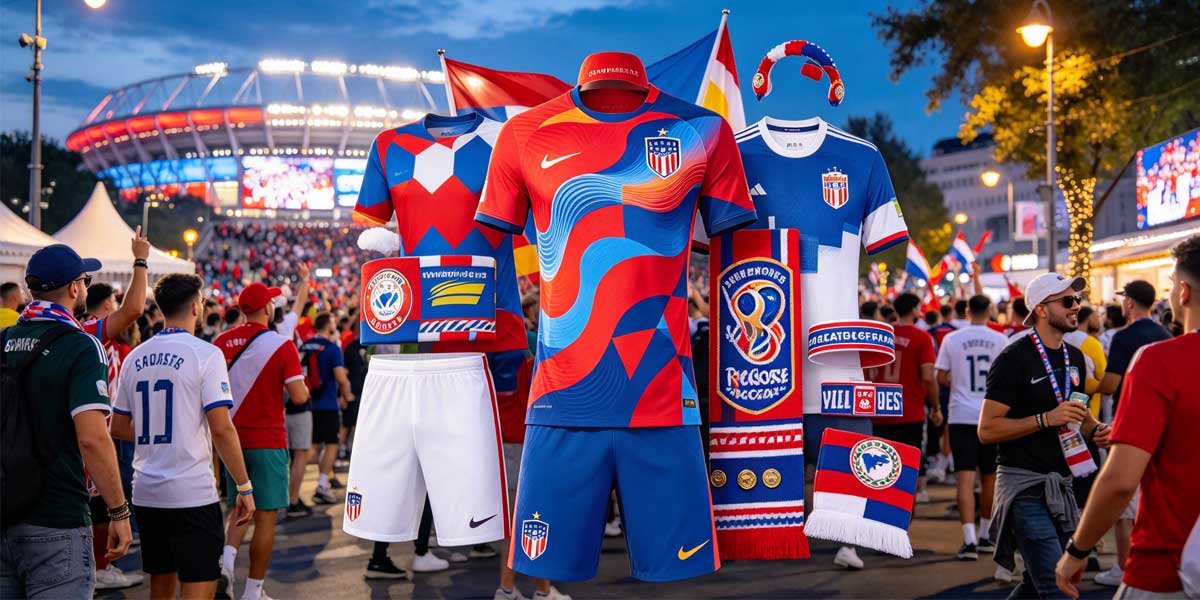
Yes — if your product and marketing use only generic football elements, country names, national flags, and your own original designs, and avoid every piece of FIFA’s protected IP. FIFA’s own 2026 IP Guidelines state it directly: generic football terms combined with country names or national flags do not infringe FIFA’s rights. What you cannot do is use the FIFA name, “World Cup” branding, official emblems, mascots, slogans, tournament look, or anything that creates a “commercial association” with the event — including, for business accounts, using official hashtags on social media.
The workable formula: your original design + national colors/flag + generic soccer language = legal fan gear. The moment official marks, tournament identifiers, or implied endorsement enter the picture, you’re in infringement or ambush-marketing territory.
What Does FIFA Actually Own? The Protected IP List
Before you can avoid FIFA’s intellectual property, you need to know precisely what’s in the fence. FIFA registers and actively protects a large portfolio of marks worldwide, and its brand protection operation monitors trademark registries, online marketplaces, and social media, and works with customs authorities to seize infringing goods at borders.
The protected categories include:
- Words and names: “FIFA,” “FIFA World Cup,” “World Cup” in a football-event context, tournament-specific designations like “FIFA 2026,” “Qatar 2022”-style host-year combinations
- Official emblems and logos: the tournament emblem, the FIFA logo, event-specific marks
- Mascots: official tournament mascot names and images
- Slogans and taglines: official tournament slogans
- The “official look”: the distinctive visual identity package of the tournament (colors, graphic devices, type treatments used as a system)
- Trophy images: depictions of the FIFA World Cup trophy
- Ticketing and domain uses: tickets can’t be used in promotions; domains and website designs can’t incorporate official IP
Equally important is what FIFA does not own — and this is where your entire legitimate business lives.
What the Law Actually Allows: FIFA’s Own Safe Zone
Here is the sentence that should be taped above the desk of every fan-gear seller. FIFA’s official IP Guidelines (section 5, as published for recent tournaments) state:
“There are legitimate ways to celebrate the Tournament without using FIFA’s intellectual property… FIFA encourages businesses and the public to use general football or country-related imagery and/or terminology.”
And under the merchandise guidelines (G3), FIFA confirms that generic football terms combined with country names and national flags do not constitute infringement. In-store decoration using generic football and national elements is explicitly acceptable. Editorial use — journalism, commentary, criticism — is also protected territory.
So the legal safe zone is not a gray area FIFA grudgingly tolerates. It is a space FIFA itself defines and publicly encourages, because fan culture benefits the sport. Your job is to stay visibly, audibly inside it.
The safe zone, itemized
| Safe to use | Why it’s safe |
|---|---|
| Country names (“Mexico,” “Japan”) | Geographic terms; FIFA confirmed non-infringing in G3 |
| National flags and flag colors | National symbols are not FIFA property |
| Generic football terms (“soccer,” “football,” “the beautiful game,” “match day,” “game day”) | Generic sports vocabulary |
| Generic football imagery (balls, goals, pitches, boots in your own illustration style) | Generic sports imagery |
| Fan culture language (“supporter,” “ultras,” “12th man” style phrasing) | Culture, not IP |
| Cultural patterns and heritage motifs (aztec geometry, adinkra, sashiko, batik) | Your original art or public-domain cultural heritage |
| City/region themes and local pride designs | Local identity, not tournament identity |
| Your own brand name, logo, slogans | Your IP |
| Generic event references (“the big tournament this summer,” “soccer’s greatest event”) | No official designation used |
The red zone, itemized
| Do NOT use | Risk |
|---|---|
| “FIFA,” “World Cup,” “FIFA World Cup” in product names, listings, or tags | Trademark infringement; automated marketplace takedowns |
| Tournament emblem, FIFA logo, mascot, official poster art | Copyright + trademark infringement |
| “FIFA 2026,” “2026 World Cup” as commercial branding | Protected host-year designation |
| Replicas of official national team kits (the actual federation designs) | The federation’s (and kit manufacturer’s) IP, separate from FIFA |
| Team crests/federation badges | Federation trademarks |
| Player names, numbers with names, or likenesses | Player image rights; separate licensing regime |
| “Official,” “licensed,” “authentic,” “approved” claims without a license | False association / passing off |
| Official tournament hashtags in commercial social posts | FIFA treats this as creating commercial association |
| Trophy imagery | Protected |
| Tickets in giveaways/promotions | Explicitly prohibited |
Ambush Marketing: The Three Ways Sellers Get Burned
Even without touching a protected mark, sellers can still get in trouble through ambush marketing — creating an unauthorized commercial association with the event. Legal analysts break it into three types, and understanding them explains most real-world enforcement:
1. Direct ambush — using protected IP outright. “World Cup 2026 Fan Jersey” as your product title. This is the easy case; takedowns are fast and mostly automated.
2. Ambush by association — no protected mark, but your marketing implies a connection. Showing your shirt next to tournament footage, timing ad copy to suggest endorsement, using visual combinations that mimic the official look. This is where judgment matters: a Mexico-green shirt with an eagle-and-serpent heritage pattern is fine; the same shirt photographed in a stadium tunnel with copy like “as seen on the world’s biggest stage” is courting an association claim.
3. Ambush by intrusion — physically inserting your brand into the event environment. The famous 2010 case: 36 women in orange mini-dresses at a Netherlands match turned out to be a Bavaria beer stunt, and two organizers were arrested under South Africa’s tournament-specific anti-ambush laws. South Africa literally criminalized ambush marketing for that World Cup. You’re unlikely to intrude physically as an e-commerce seller — but note that host-country law matters: Mexico amended its Industrial Property Law ahead of 2026 to explicitly restrict ambush marketing, while the US and Canada rely on general trademark, copyright, and competition law. Selling into Mexico with borderline marketing carries more specific statutory risk than it used to.
One more data point for calibration: enforcement isn’t omnipotent. FIFA’s own challenge to a third-party “Qatar 2022” trademark application failed in court — the gray zone is real. But “FIFA sometimes loses” is a courtroom argument, not a business strategy. Marketplaces don’t wait for courtrooms.
Platform Reality: Where Enforcement Actually Hits You
As an online seller, FIFA itself is rarely your first problem. The enforcement layer you’ll actually meet:
- Amazon: brand-registry and automated IP-complaint systems remove listings on keyword matches alone. “World cup” in a title is a known trigger during tournament windows. Suspensions compound — a handful of IP complaints can threaten the account, not just the listing.
- eBay / VeRO program: rights holders file, listings disappear, strikes accumulate.
- TikTok Shop and social commerce: commercial posts using official hashtags or tournament footage are flagged; FIFA’s guidelines explicitly state that business accounts using official IP hashtags create commercial association.
- Customs: FIFA works with customs authorities in host countries and major markets to seize physical shipments of infringing goods. If your inventory is visibly infringing, the risk travels with the container, not just the listing.
The practical consequence: compliance isn’t only about avoiding lawsuits. It’s about keeping listings alive through the exact 8-week window when fan gear demand peaks. A listing killed in week two of the tournament is worth close to zero, whatever its legal merits.
Compliant Marketing Language: What to Write in Titles, Listings, and Posts
The design can be perfectly legal and the listing copy can still sink you. Here’s the working vocabulary split we give our brand clients.
Words and phrases you can build listings on:
- “soccer fan jersey,” “football supporter shirt,” “game day shirt,” “match day tee”
- Country names and flag descriptors: “Mexico soccer fan shirt,” “green white red jersey”
- Culture and identity angles: “aztec pattern soccer jersey,” “samba style football shirt”
- Generic event framing in editorial contexts (blog posts, gift guides): “tournament season,” “the big summer of soccer,” “international football season”
Words to keep out of commercial copy entirely:
- “FIFA,” “World Cup,” “World Cup 2026,” “FIFA 2026,” official slogans, mascot names — in titles, bullet points, backend keywords, A+ content, and ad copy
- “Official,” “licensed,” “authentic tournament,” “as worn by” claims
- Backend search terms are not a loophole. Amazon indexes backend keywords for IP complaints too.
Social media rules for business accounts:
- Don’t use official tournament hashtags on commercial posts. FIFA’s guidelines treat this as creating commercial association.
- Don’t repost tournament footage, broadcast stills, or official graphics — that’s copyright territory, and automated detection is good at finding it.
- You can talk about football, your country’s campaign, and fan culture in your own voice with your own content. Editorial commentary (“our take on the group stage”) sits in the protected editorial lane; “buy our shirt, it’s tournament time 🏆 #WorldCup” does not.
- Don’t place your logo next to official marks in any graphic. Juxtaposition reads as association.
A useful internal test: could a customer reasonably conclude that FIFA or a national federation endorses, sponsors, or is connected to this product? If yes, rewrite until the answer is clearly no.
The Winning Play: Original Heritage Design Beats Risky Imitation
Here’s the part most compliance guides miss: the safe zone isn’t just legally safer — in 2026 it was commercially better.
The sell-through data from the tournament tells the story. Licensed replica kits surged, but so did culture-driven designs: Mexico-themed product captured a reported 55% share of its national category at peak, and the standout sellers weren’t near-copies of the federation kit — they were original designs built on aztec geometry, green-white-red palettes, and fan-culture slogans. Jamaica proved the same point with a look rooted in national visual identity rather than federation property. Meanwhile, plain generic product — jerseys with no story — declined roughly 22% year over year during the same window.
The pattern is consistent with what we wrote in our design trends analysis: heritage pattern work and retro references (the 1994-style wave being the clearest example) drove the tournament’s most talked-about kits. Buyers rewarded identity, not imitation.
Why original heritage design is the optimal strategy for an unlicensed brand:
- It’s unambiguously yours. A jersey built from aztec geometry or sashiko stitching motifs is your original artwork on generic/national elements. No federation, no FIFA, no player rights in the picture.
- It can’t be “taken down” out from under you. Licensed sellers compete on allocation and price; you compete on a design nobody else has.
- It survives the tournament. A “World Cup 2026” shirt is dead inventory on July 20. A Mexico heritage jersey sells through 2027 — which is exactly the restock logic in our post-tournament restocking guide.
- It photographs better for ads. Distinctive original art stops the scroll; a flag slapped on a blank does not.
From the Factory Floor: How We De-Risk Client Designs Before Production
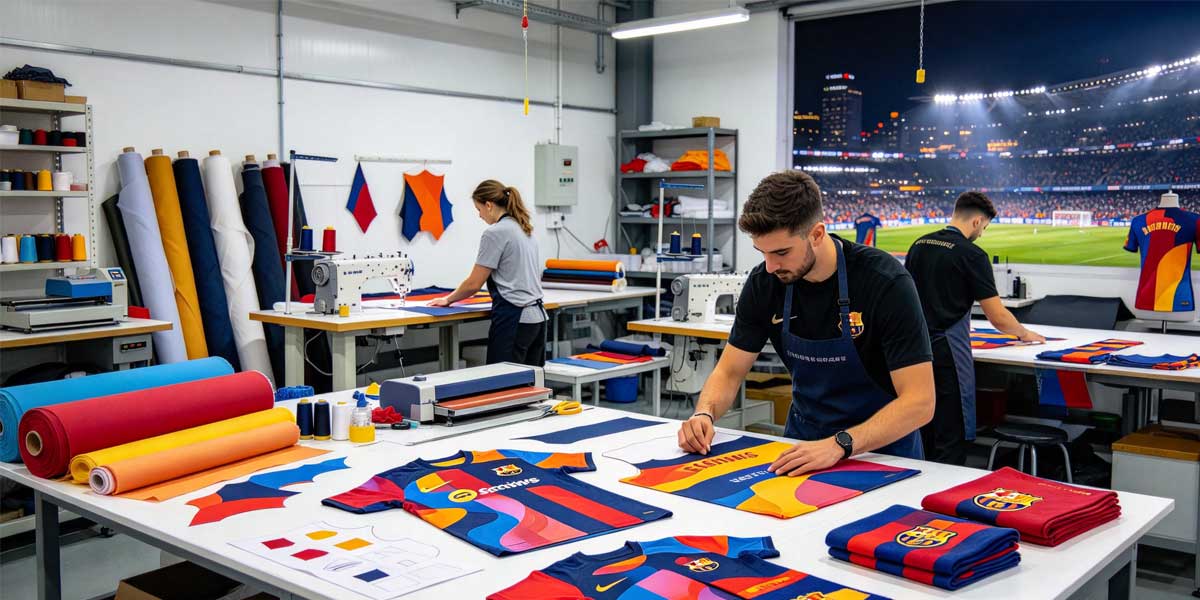
This is where a manufacturer’s experience becomes part of your compliance process. As an OEM factory producing custom soccer apparel for brands in more than 40 countries, we review thousands of client-submitted designs every tournament cycle. Our internal pre-production check catches the recurring problems:
- Embedded protected marks. Clients send mood boards containing official emblems or federation crests “for reference.” Our design team flags anything that reads as a protected mark and proposes an original alternative in the same visual language.
- Accidental replicas. A client asks for “the Mexico home kit but with my logo.” We don’t produce federation kit replicas, and we tell the client why: that’s the federation’s and its kit partner’s IP, and marketplace detection of replica product is aggressive. Instead we build an original design on the national palette — which usually ends up selling better anyway.
- Artwork that can’t be produced cleanly. IP aside, we check whether the file is 300 DPI vector-grade art suitable for 200°C dye-sublimation, whether fine pattern lines will hold at production scale, and whether the color gamut of the reference image is achievable on 140–160 GSM polyester. A design that’s legally clean but technically unprintable is still a failed launch.
- Naming and hang-tag review. When clients ask, we check product names and hang-tag copy against the red-zone list before anything goes to print — it’s far cheaper to fix a name at sampling than after 2,000 units are bagged.
Because we offer free design service with 24-hour mockups and a 1-piece MOQ, brands can test a compliant original design with a single sample, photograph it, run the listing, and validate demand before committing to volume. That sampling loop is the practical answer to “how do I know my design is safe and sellable” — you test it small, fast, and cheap.
If you want to see how this review process works in practice, our pattern design service page walks through the artwork-to-production workflow.
Pre-Launch Compliance Checklist: 7 Steps Before You List
Run every fan-gear SKU through this before it goes live:
- Mark scan. Search your design, product name, listing copy, backend keywords, and ad copy for every red-zone term: FIFA, World Cup, host-year combinations, official slogans, mascot names, trophy imagery, “official/licensed/authentic.”
- Crest and kit check. Confirm nothing reproduces a federation badge, an official kit’s distinctive design, or a player name/number/likeness.
- Originality file. Keep your artwork source files, designer agreements, and creation dates. If a platform ever asks you to prove originality, this file is your defense.
- Juxtaposition test. Look at your product photos, graphics, and ads: does anything place your brand next to official marks, footage, or tournament imagery? Remove it.
- Social audit. Strip official hashtags and reposted tournament content from planned posts. Rewrite commercial captions to generic football language.
- Market check. If you sell into Mexico, remember its amended Industrial Property Law specifically targets ambush marketing — keep association-style marketing extra clean there.
- Attorney review for scale. If the inventory commitment is material (say, a five-figure production run), spend a few hundred dollars on an IP attorney’s design review in your primary sales market. It’s the cheapest insurance in the entire launch.
Frequently Asked Questions
Can I use the phrase “World Cup” anywhere in my business?
Not in commercial use. You can’t put it in product names, listings, tags, ads, or promotional copy. Editorial use — a blog post analyzing the tournament, commentary, news-style content — is generally protected, which is why content marketing (like the article you’re reading) can discuss the event while a product page cannot brand itself with it.
Is it legal to sell a jersey in my country’s colors with the flag on it?
Yes. FIFA’s own merchandise guidelines confirm that generic football terms combined with country names and national flags do not infringe its rights. A green-white-red “Mexico soccer fan jersey” using your original artwork is squarely in the safe zone — provided you don’t reproduce the official federation kit design or crest.
Can I print a famous player’s name and number on a shirt?
No — not without a license from the player (image rights) and, for official kit contexts, the federation. Player names, squad numbers paired with names, and likenesses are a separate licensing regime entirely. This is one of the most common ways small sellers get permanently banned from marketplaces.
What happens if I just say “inspired by the World Cup”?
“Inspired by” doesn’t cure infringement. If the protected phrase appears in your commercial copy, the disclaimer makes no difference — and the phrase itself signals you knew the association you were creating. Use generic framing instead: “tournament season,” “international soccer summer.”
Can I use #WorldCup on my brand’s Instagram posts?
FIFA’s IP guidelines treat business accounts using official hashtags as creating commercial association with the event. Skip official hashtags on commercial posts. You can build your own campaign hashtags and use generic ones.
I saw other sellers listing “World Cup” products. Why are they still up?
Enforcement is a lagging, probabilistic filter, not a wall. Some listings get caught in days; some survive a full cycle; some sellers absorb the takedown as a cost of business. Their survival tells you nothing about your listing’s odds — and nothing about account-level risk, which compounds silently until suspension. Building on safe-zone product is the strategy that still exists in 2027.
Does buying from a factory that claims “World Cup designs” protect me?
No. IP liability attaches to the seller and brand, not just the manufacturer. If a supplier offers you ready-made “official style” designs with protected marks, walk away — that’s product built to get your account flagged. Work with a factory that will flag risky artwork and build original designs with you instead.
I’m selling into the US, Canada, and Mexico. Is the law the same everywhere?
Not exactly. All three protect FIFA’s registered trademarks, but Mexico amended its Industrial Property Law ahead of 2026 to specifically restrict ambush marketing, while the US and Canada rely on general trademark, copyright, and unfair-competition law. The safe-zone rules in this guide are conservative enough for all three — but for market-specific campaigns, get market-specific legal advice.
The Bottom Line
Small brands didn’t need a FIFA license to win the 2026 tournament cycle. The sellers who captured the wave did three things: they designed original product on national and cultural identity instead of protected marks, they wrote listings and ads in generic football language, and they treated compliance as a launch requirement rather than legal trivia.
The safe zone is real, FIFA itself defines it, and the demand data says it’s where the durable money is — licensed spikes fade in weeks, while identity-driven designs keep selling into the next season.
If you’re planning a compliant fan-gear line, the fastest path from idea to validated product is a factory that reviews artwork for both IP risk and production quality, turns designs around in 24 hours, and lets you test with a single piece before you commit. That’s exactly how we work with small brands and marketplace sellers — get a free design mockup and quote here, and have your attorney give the final legal sign-off before your big inventory bet.