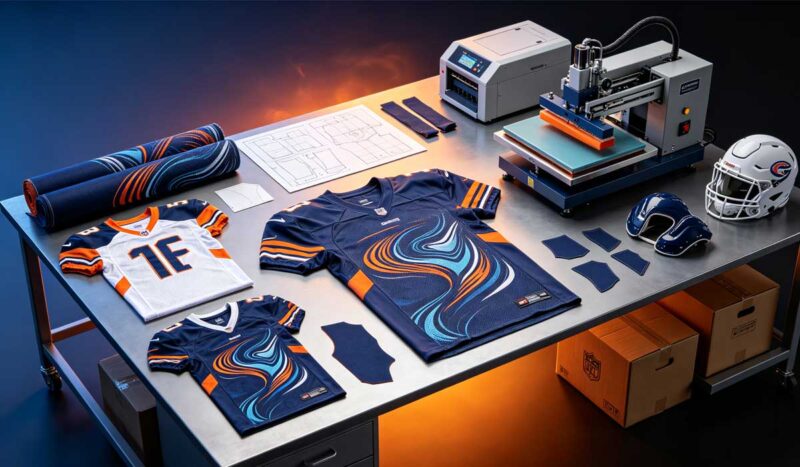
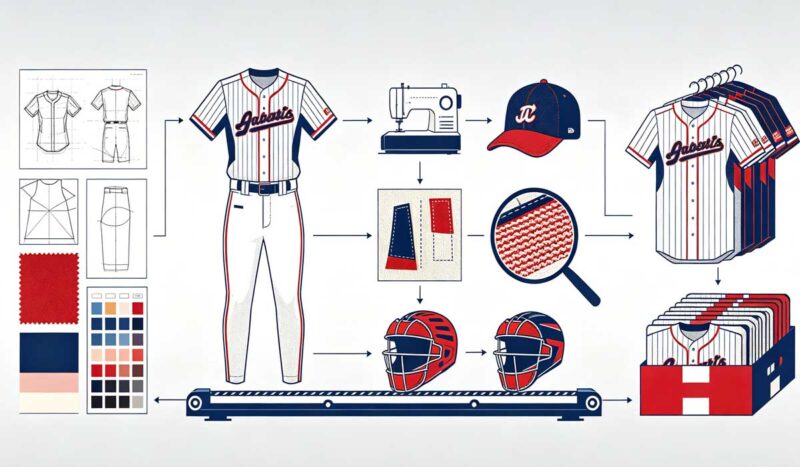
Every World Cup sells jerseys. The 2026 edition did something no tournament has done before: it permanently enlarged the market that buys them.The numbers are now familiar — 48 teams instead of 32, 104 matches across 39 days in the United States, Canada, and Mexico, a global audience of roughly six billion, and FIFA’s four-year commercial revenue projected at $11 billion against $7.5 billion in the Qatar 2022 cycle. But for Amazon sellers and online retailers, the tournament’s real legacy is not those headline figures. It is a set of structural changes in who buys soccer apparel, how they buy it, and what they are willing to pay — changes that will still be paying out when the 2030 World Cup arrives.
This analysis is written from an unusual vantage point: we are a sportswear factory with 17+ years of OEM experience, and we watched this tournament from the production side — through the surge in custom orders from sellers, the styles that moved, and the inventory mistakes that cost real money. Here is what the biggest World Cup ever actually means for your business.
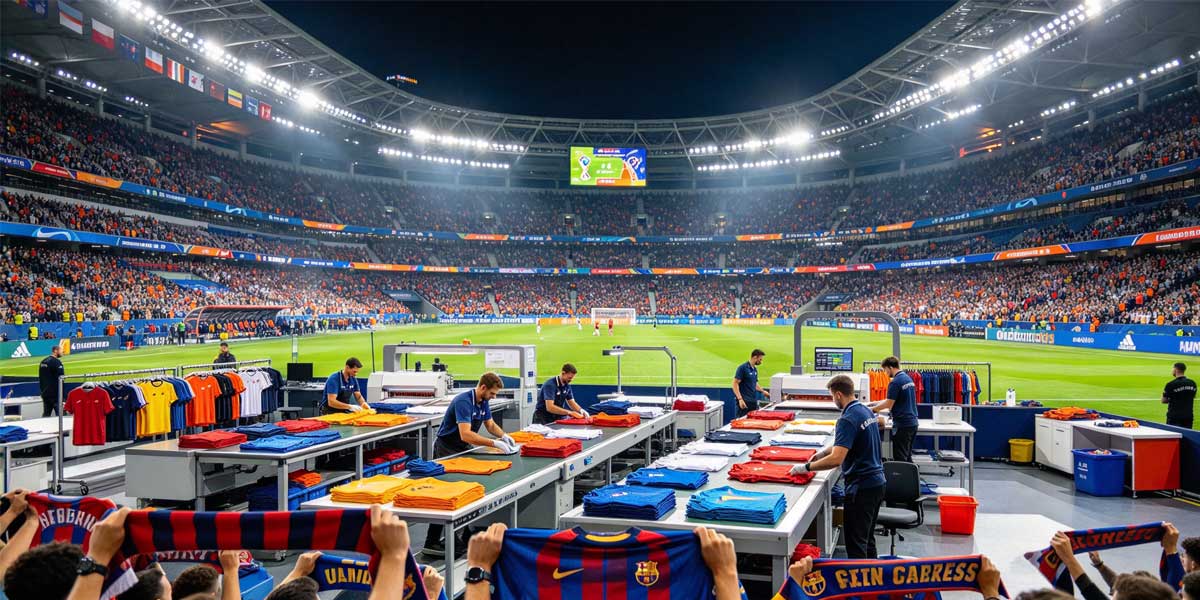
Quick Answer: What Does World Cup 2026 Mean for Custom Apparel Sellers?
The one-paragraph version:
The 2026 World Cup converted soccer jerseys from a fan product into a mainstream apparel category in the world’s largest consumer market. Full-price sell-outs across major retailers proved demand is limited by availability, not price sensitivity. Licensed-style identity products grew while generic apparel declined, which means private-label sellers must compete on original design and cultural storytelling. And the buyers the tournament created — new fans, Gen Z streetwear customers, youth players — do not disappear after the final; they enter a demand runway that extends through the 2028 Los Angeles Olympics to the 2030 World Cup. For sellers, the opportunity is structural, not seasonal.
The rest of this article is the evidence and the playbook.
By the Numbers: Why 2026 Was Structurally Different
Every statistic about this tournament points at scale, but three of them changed the mechanics of the market itself.
| Metric | 2026 | Qatar 2022 | Why it matters to sellers |
|---|---|---|---|
| Participating teams | 48 | 32 | 16 more national fan bases buying merchandise |
| Matches | 104 | 64 | 40 more demand-triggering broadcast moments |
| Tournament length | 39 days | 29 days | A selling season over a third longer |
| FIFA cycle commercial revenue | ~$11B (projected) | ~$7.5B | Licensing and merchandise infrastructure scaled accordingly |
| Sponsorship revenue | ~$2.7B | — | Record brand investment driving category awareness |
| Viewing | Digital projected to overtake linear TV for the first time | TV-dominant | Purchase moments now happen on the same screen as the match |
Sixteen new teams means sixteen new niche markets. The 32-team era concentrated merchandise demand in a dozen major federations. The 48-team tournament created viable micro-markets — Norway’s run turned a $175 authentic jersey into a $300+ resale item; Jamaica’s Bob Marley-themed away shirt became a fashion phenomenon. For private-label sellers, this is the most important structural fact of the tournament: demand is no longer only about the big ten nations. Smaller fan bases are underserved, passionate, and far less competed-for on Amazon.
A North American tournament means prime-time demand. Qatar 2022 was played in November–December, sharing attention with the NFL and NBA, in time zones awkward for American viewers. The 2026 tournament ran through the North American summer in home time zones — every match a potential primetime purchase trigger. Soccer.com’s merchandising director told amNewYork the peak exceeded expectations by 15–20 percent, with “almost 100 percent full price sell-out.”
The same screen that shows the match now takes the order. With digital viewing overtaking linear TV, the path from goal celebration to checkout collapsed into minutes. Retailers reported that a major player performance produced five to ten times normal sales for the following 24–48 hours. Demand now arrives in spikes, and spikes reward sellers whose supply chains are built for speed.
The Inventory Lesson: Nike’s 28 Percent Problem
The most instructive business story of the tournament had nothing to do with design. It was a stockout.
Within the first two weeks, 28 percent of Nike’s World Cup merchandise had sold out, versus just 7 percent for Adidas, according to LSEG and Centric Market Intelligence data. Nike ran dry on authentic jerseys for the United States, France, Brazil, and Norway. Its USMNT restock arrived more than a week after the team was eliminated — launched with a 17 percent markdown that disappeared within days. Adidas, with shelves still full, captured full-price sales through the entire tournament.
Three lessons transfer directly to sellers of any size:
- Availability is the conversion rate. The world’s most sophisticated demand-forecasting company under-ordered by roughly 4x against its rival. If Nike cannot perfectly predict tournament demand, neither can you — which is why small-batch ordering with fast replenishment beats one heroic pre-season bet. (We break down the full replenishment math in our post-World-Cup restock playbook.)
- Full price is the norm, not the exception. Neither giant discounted during the tournament, and marketplace data showed full-price sell-outs across the category. Sellers who reflexively discount jersey inventory are leaving margin on a product consumers have proven they will pay full price for.
- Late inventory is worse than no inventory. Nike’s late restock needed a markdown to move. In a moments-driven market, the cost of a stockout is visible; the cost of late replenishment is hidden but just as real.
The Identity Shift: Licensed Grew, Generic Died
If there is one dataset that should reorganize how a private-label seller thinks, it is this one from YipitData’s tracking of U.S. soccer apparel:
Licensed products grew from 53 percent of category sales in January 2025 to 83 percent by March 2026. Over the same period, generic branded soccer apparel — plain training wear without team identity — declined 22 percent year over year. When the 2026 national kits launched in November 2025, national teams’ share of licensed sales jumped from 2 percent to 57 percent in a single month.
Read that again: the market did not just grow; it sorted. Buyers increasingly want apparel that declares an identity — a nation, a club, a community — and they are abandoning anonymous product.
For sellers without federation licenses, this sounds like bad news. It is actually the clearest product strategy briefing the market has ever issued:
- Do not sell generic soccer shirts. The declining segment is exactly the undifferentiated blank-with-a-logo product most private-label catalogs are built on.
- Do sell original identity design. Mexico’s tournament-leading green jersey — 55 percent of Adidas’s U.S. national-team licensed sales, growing 59 percent year over year — won on heritage storytelling and streetwear appeal, not just the crest. Jamaica’s Marley shirt won on culture alone. Sublimation printing puts this entire design language within reach of any seller at zero complexity premium: cultural motifs, retro waves, gradient color stories cost the same per unit as a plain shirt.
- Build the identity around communities you can serve. Local clubs, supporter groups, youth academies, diaspora communities, esports-adjacent soccer fans — identity does not require a FIFA license, it requires a story a buyer recognizes as theirs.
The New Buyers the Tournament Created
Tournaments end; converted audiences do not. The 2026 World Cup added at least four durable buyer cohorts to the soccer apparel market:
Casual fans, activated. Six billion viewers watched a tournament staged in North American prime time. A meaningful slice of them bought their first soccer jersey this summer — and first purchases in a category are habit-forming. These buyers are now in the market for club-season and lifestyle apparel.
Gen Z streetwear buyers. The blokecore movement — vintage football shirts worn as everyday fashion — went fully mainstream during the tournament, from Timothée Chalamet in a Mexico ’94 shirt to Adidas building a dedicated blokecore section on its U.S. site. The soccer-jersey-as-streetwear market was valued at $2.81 billion in 2025 and is projected to pass $5.2 billion by 2034. Critically for sellers, these buyers purchase design, not allegiance: they will buy an unknown brand’s jersey if the aesthetic is right. That is a door no other apparel trend opens for private label.
Youth players. Every home-soil World Cup in modern history has produced a measurable surge in youth registrations, and U.S. clubs reported exactly that through summer 2026. New players need team kits — bought by clubs, academies, and parents, in batches of 15–30, with reorders every season. Sellers who add a custom-teamwear offering tap order values ten times larger than single-shirt retail.
Women’s soccer fans. Women’s sports apparel was already the fastest-growing segment of fan merchandise before the tournament; the 2026 cycle accelerated it, and the runway extends directly into the 2027 Women’s World Cup cycle in Brazil. Fit matters here — retailers report strong demand for women’s-specific cuts rather than resized men’s jerseys.
What This Means Specifically on Amazon
The tournament changed the marketplace itself, in ways that reward prepared sellers:
The keyword landscape permanently widened. Searches for “soccer jersey,” country-specific jerseys, and retro football shirts hit all-time highs in 2026 and retain a higher baseline afterward. Long-tail identity keywords — “[country] soccer jersey men,” “retro soccer jersey,” “youth soccer uniform set” — are where private-label sellers can rank, because licensed products cannot occupy every niche.
The review economics improved. Full-price tournament demand means the cohort that bought in 2026 is large and reachable. Post-purchase review requests in the 30–60 days after a demand event convert at the highest rates of the year — and reviews accumulated now compound into organic rank for the 2027 season.
The quality bar visibly rose. Consumers who handled $125–175 authentic jerseys all summer now recognize fabric weight, print quality, and construction. Listings need real specification detail — GSM, sublimation vs. heat-press, size charts with measurements — because buyers have learned to ask. This favors sellers working with real manufacturers over those flipping generic blanks.
IP enforcement intensified. FIFA and federation trademark enforcement ran at unprecedented scale through 2026, and Amazon’s automated systems have not relaxed since. The sellers building original designs are not just more legal — as the licensed-versus-generic data shows, original identity design is where the growth is. Country colors, cultural patterns, and generic football aesthetics are safe territory; wordmarks, crests, and copied kit designs are account-ending territory.
What We Saw From the Factory Floor: Three Order Patterns From the Tournament
Market reports tell you what happened. Purchase orders tell you what sellers actually believed. Three patterns from our own production lines during the 2026 cycle are worth sharing, because they map the gap between sellers who read the moment correctly and those who read it late.
The early testers won twice. The sellers who contacted us in late 2025 — ordering 50-to-200-piece test batches of heritage and country-color designs — had listings ranked and reviewed before the tournament opened. When their designs caught a demand wave, they reordered through it, twice or three times, using air freight for speed and sea freight for margin. They won the spike and then won the post-tournament baseline, because their listings were the established ones when latecomers arrived.
The June arrivals fought for scraps. A second wave of sellers reached out during the tournament’s opening weeks, often with screenshots of sold-out official jerseys and plans to “make something similar.” Two problems: production plus shipping meant their inventory landed after the peak, and “similar to the official kit” is exactly the design territory that triggers IP enforcement. The sellers who survived this wave pivoted to original designs and accepted they were building for the club season, not the tournament.
The team-order pivot was the quiet winner. The highest-margin orders we produced in summer 2026 were not retail at all. They were custom kits for local clubs, supporter groups, and corporate tournament events — batches of 20 to 300 pieces with individual names, placed by buyers who could not find licensed product and did not want it anyway. Several Amazon sellers we work with watched this and added team-order pages to their own operations. Youth registration surges after a home World Cup, and every new team needs a kit no federation will ever sell them.
The meta-lesson: the tournament rewarded speed and originality in that order, and punished hesitation and imitation in the same order. Those two rules do not expire with the trophy.
The Runway: Why This Is a Four-Year Opportunity, Not a Four-Month One
Sellers conditioned to think of World Cups as one-summer events should look at the calendar:
- Now through 2027: club seasons in full swing, holiday retail, and national team kits that stay current until federations refresh for 2028 — a two-year shelf life for national-inspired designs.
- 2027: the Women’s World Cup cycle in Brazil extends the audience the 2026 tournament created, with women’s-fit product as the differentiator.
- 2028: the Los Angeles Olympics puts flag football on the Olympic program and returns a mega-event to U.S. soil — another apparel demand wave in the world’s largest market.
- 2030: the centenary World Cup, with the largest commercial projections FIFA has ever published.
North American soccer demand is no longer cyclical around a single tournament. It is a compounding curve with scheduled accelerants every twelve to eighteen months. The sellers who treat 2026 as year one of a category build — rather than a spike that already happened — are the ones this analysis is for.
Six Moves for Sellers Starting Now
- Audit your catalog against the identity test. Every jersey listing should answer “whose is this?” — a nation, a club, a community, a story. Delist or redesign anything anonymous.
- Launch two or three original heritage designs in small batches (50–200 units), read sell-through for two weeks, and scale the winners. Retro waves, cultural motifs, and gradient color stories lead current conversion.
- Rebuild your listings for educated buyers. Full specifications, real size charts, lifestyle photography off the pitch, and the design story in A+ content.
- Harvest reviews from your 2026 buyers now. They are your ranking capital for the next demand window.
- Add a team-order page. Youth registration surges create bulk custom demand with 10x order values; a factory with single-piece sampling makes this margin-positive from day one.
- Map your inventory to the runway. Club season now, holiday next, Women’s World Cup cycle in 2027, LA28 after that. Book production capacity before each window, not during it.
Frequently Asked Questions
Is it too late to start selling soccer apparel after the 2026 World Cup?
No. The tournament enlarged the buyer base rather than fulfilling it: converted casual fans, Gen Z streetwear buyers, and new youth players all remain in the market. National team designs stay current until the 2028 cycle, and the demand runway continues through the 2027 Women’s World Cup and 2028 Los Angeles Olympics.
Can private-label sellers compete with Nike and Adidas in soccer apparel?
Not on licensed national kits — but the market data shows the growing segments are identity design and lifestyle wear, where original private-label designs compete directly. Jamaica’s cultural-design success and the blokecore trend prove buyers purchase storytelling and aesthetics, not only crests.
What soccer apparel sells best on Amazon after a World Cup?
Identity-driven products: country-color and heritage-inspired jerseys, retro-style shirts, youth team uniform sets, and lifestyle cuts. Generic training wear is the declining segment — down 22 percent year over year through the tournament cycle according to YipitData.
How big is the soccer apparel market opportunity after 2026?
The global football jersey market was valued at roughly $8.7 billion in 2026, growing around 7 percent annually, with World Cup years producing the sharpest spikes. The adjacent soccer-jersey-as-streetwear segment adds $2.8 billion, projected to exceed $5.2 billion by 2034.
What is the biggest mistake sellers make with World Cup-related products?
Two, in order: infringing FIFA or federation trademarks — which gets listings removed and accounts suspended — and selling generic undifferentiated product into a market that has shifted decisively toward identity design. Original artwork solves both problems at once.
How did the 48-team format change merchandise demand?
It created sixteen new national fan bases as viable niche markets. Breakout teams like Norway saw jerseys sell out and resell at premiums, proving smaller federations now generate real commercial demand — niches that are far less competitive than the major nations on marketplaces.
Should I discount soccer jerseys after the World Cup?
The tournament proved full-price demand: major retailers sold out without discounting, and Nike’s markdown on a late restock was needed only because the inventory arrived after the demand moment. Discount for timing failures, not as a default strategy.
What products should sellers prepare for the 2027–2028 cycle?
Women’s-fit soccer apparel for the 2027 Women’s World Cup cycle, refreshed heritage designs for the 2028 national kit launches, and flag football apparel for the Los Angeles Olympics — each mapped to its own production and listing window.
The Bottom Line
The 2026 World Cup was not a sales event to look back on; it was a market expansion to build on. It proved availability beats price, identity beats generic, and original design beats everything else a private-label seller can control. The buyers it created are still here, and the calendar keeps scheduling their next purchase.
Sellers do not need a license to win this market. They need original designs, honest specifications, and a factory that can move at the speed of the demand the tournament created.
At Jistar Sport, we manufacture custom sublimated soccer apparel for Amazon sellers and retailers worldwide — original heritage designs with free 24-hour mockups, sampling from one piece, small-batch production, and 17+ years of OEM experience. Bring us your product idea, and we will return samples and a production plan built for the runway ahead.