Why Baseball Jersey Buying Has Become More Complex Than Ever
Baseball is America’s pastime, but in 2026, the business of outfitting a team has evolved far beyond picking a color and stitching a number. Whether you’re a Little League commissioner ordering 15 uniforms for the spring season, a travel ball club director managing a 40-player roster across three age divisions, or an online retailer building a private-label baseball apparel line, the decisions you make about fabric, decoration method, fit, and design directly impact player performance, team identity, and your bottom line.
The custom baseball jersey market in 2026 is shaped by three converging forces: performance fabric innovation that would have been pro-level technology a decade ago, design democratization through AI-assisted customization and sublimation printing, and aesthetic cross-pollination from MLB’s City Connect program and the broader streetwear movement. Teams no longer want uniforms that merely identify them on the field—they want garments that tell a story, perform under pressure, and look good enough to wear to school or the mall the next day.
At Jistar Sport, we’ve manufactured custom baseball jerseys, pants, and full uniform systems for teams, leagues, and emerging brands across North America, Australia, Europe, and Asia for over a decade. We’ve watched the industry shift from heavy cotton flannels to engineered polyester, from iron-on vinyl to full-body sublimation, and from template-based ordering to AI-driven co-creation. This guide distills everything we’ve learned into actionable intelligence for teams and retailers who refuse to settle for generic.
By the end of this article, you’ll understand: which fabric specifications actually matter (and which are marketing fluff), when to choose sublimation versus tackle twill versus hybrid decoration, how to size a roster accurately without fitting-room drama, what 2026 design trends are worth investing in, and how to structure your order for maximum value whether you’re buying 12 jerseys or 1,200.
Chapter 1: Fabric Science—The Foundation of Every Great Baseball Jersey
Why Fabric Selection Is the Most Underrated Decision in Uniform Buying
Most team managers and retailers focus 80% of their attention on design and 20% on fabric. In our manufacturing experience, that ratio should be reversed. The fabric determines how the jersey performs in 95°F July tournaments, how it holds color after 50 wash cycles, how it drapes over a player’s frame, and whether your $4,000 uniform investment lasts one season or four. A stunning design on the wrong fabric is a waste of money. A simple design on the right fabric is a competitive advantage.
The Five Fabric Categories Defining Baseball Uniforms in 2026
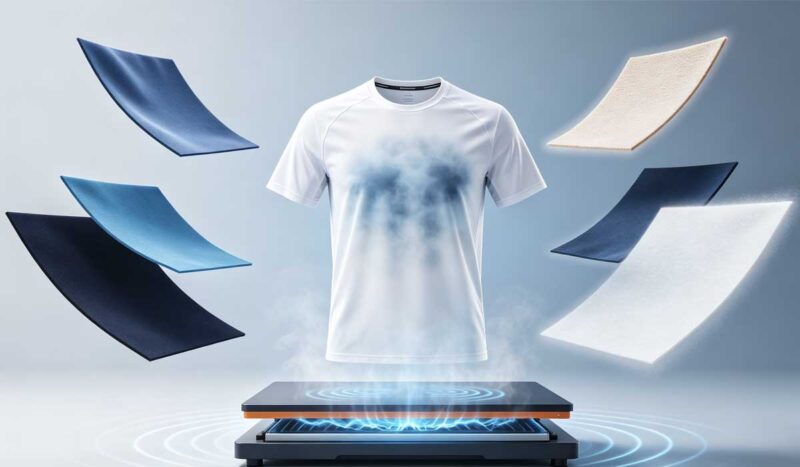
Based on industry specifications and our own production data, here are the fabric types every buyer should understand:
1. Double-Knit Polyester (200–260 GSM)
The industry gold standard for professional, semi-professional, and serious travel ball organizations. At 200–260 grams per square meter, double-knit polyester offers the highest abrasion resistance in the market—critical for a sport that involves base sliding, diving catches, and constant contact with dirt and clay .
Technical characteristics:
- Composition: 100% polyester
- Surface: Smooth, tight weave ideal for heat-transfer numbers and names
- Durability: Retains shape and color through 50+ wash cycles
- Weight: Heavier than mesh alternatives, providing structure and a “pro” feel
- Best for: Primary game uniforms, high-frequency use, teams prioritizing longevity over lightweight breathability
The trade-off: Double-knit is less breathable than mesh options. For teams in hot climates or summer tournament circuits, this can be a significant comfort issue during doubleheaders in August.
2. Birdseye Mesh (140–180 GSM)
The ventilation specialist. Named for its diamond-pattern weave that creates visible air channels, birdseye mesh is engineered specifically for moisture management in high-heat conditions. Many manufacturers brand their birdseye mesh with proprietary wicking technology names (e.g., Koolwick), but the core mechanism is the same: the open weave structure accelerates evaporation by increasing surface area exposure to airflow .
Technical characteristics:
- Composition: 100% polyester with moisture-wicking treatment
- Weight: 140–180 GSM—significantly lighter than double-knit
- Breathability: Maximum airflow; ideal for hot climate regions
- Vulnerability: Open weave can snag on chain-link fences, cleats, or Velcro equipment
- Best for: Practice uniforms, hot-weather game jerseys, teams in southern U.S. states or Southeast Asian markets
Critical insight from our factory: Birdseye mesh performs exceptionally well for practice uniforms where players are doing repetitive drills in direct sun, but we don’t recommend it as a primary game fabric for competitive travel teams. The snag risk is real—every season we see teams return mesh jerseys with pulled threads from fence contact during pre-game warmups.
3. Interlock Polyester (260 GSM)
The sublimation-friendly workhorse. Interlock knit creates a smooth, double-sided fabric with excellent dimensional stability. Its tight, smooth surface is specifically optimized for sublimation printing, producing sharper color reproduction and more consistent dye penetration than double-knit alternatives .
Technical characteristics:
- Composition: 100% polyester
- Weight: ~260 GSM (similar to double-knit but with different knit structure)
- Surface: Ultra-smooth, ideal for all-over graphic designs
- Durability: Good, though slightly less abrasion-resistant than double-knit
- Best for: School teams, recreational leagues, any program prioritizing bold custom graphics over maximum durability
4. Micro Mesh (120–150 GSM)
The budget-conscious entry point. Micro mesh offers the breathability benefits of birdseye mesh at a lower cost and weight, making it the go-to for youth recreational leagues and price-sensitive buyers .
Technical characteristics:
- Composition: 100% polyester
- Weight: 120–150 GSM—the lightest option in the category
- Cost: Entry-level pricing
- Durability: Adequate for single-season youth use; not recommended for multi-year travel programs
- Best for: Youth recreational leagues (ages 5–10), one-season tournament teams, budget-conscious school programs
5. Polyester-Spandex Blend (90/10 or 85/15, 150–200 GSM)
The performance revolution. This is the fastest-growing fabric category in baseball for 2026, driven by demand from softball organizations, adult leagues, and players who want an athletic fit without the boxy drape of traditional polyester. The addition of 10–15% spandex (elastane) creates four-way stretch that moves with the athlete .
Technical characteristics:
- Composition: 90% polyester / 10% spandex (or 85/15)
- Weight: 150–200 GSM
- Stretch: 4-way mechanical stretch with excellent recovery
- Fit: Form-fitting, “second-skin” athletic silhouette
- Best for: Softball uniforms, adult leagues, performance-focused players, programs wanting a modern aesthetic
Manufacturing note: Spandex blends require specialized sewing techniques (stretch needles, zig-zag or cover-stitch seams) and can complicate sublimation printing due to dye migration at high heat. Work with manufacturers who explicitly list spandex-compatible sublimation as a capability, not an afterthought.
The Moisture-Wicking Reality Check
Every fabric supplier claims their polyester is “moisture-wicking.” Here’s what that actually means—and how to evaluate it:
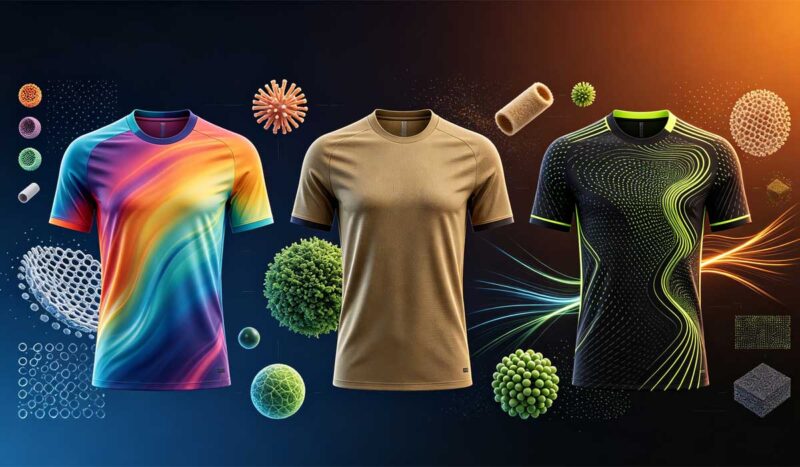
True moisture-wicking fabric operates through capillary action: the fiber shape and yarn structure create microscopic channels that draw sweat from the skin to the outer surface, where it evaporates . The key distinction is between wicking (moving moisture) and evaporation (releasing it). A fabric can wick brilliantly but trap moisture if the outer surface doesn’t allow airflow.
The 2024–2025 MLB uniform controversy—where Nike’s new Dri-FIT ADV jerseys were criticized for visible sweat stains despite moisture-wicking claims—illustrates this perfectly. Textile scientists noted that the problem wasn’t necessarily the recycled content but potentially a formulation issue where moisture was wicked to the surface but failed to evaporate, creating the “reverse wicking” effect .
What to ask your manufacturer:
- What is the fabric’s wicking test result? (Look for AATCC 79 or similar standardized testing)
- What is the evaporation rate or dry time? (Measured in minutes to reach 50% dryness)
- Is the wicking treatment a finish (surface coating) or inherent to the yarn? (Yarn-level wicking lasts longer; finishes wash out over time)
- What is the expected wash cycle performance for moisture management? (Quality treatments maintain 80%+ effectiveness after 50 washes)
Fabric Selection Matrix by Buyer Segment
|
Buyer Segment |
Order Size |
Priority |
Recommended Fabric |
Price Tier |
|---|---|---|---|---|
|
Youth Rec League |
10–20 units |
Low cost, basic durability |
Micro Mesh 120–150 GSM |
Entry |
|
School/High School |
20–40 units |
Balance cost & custom design |
Interlock Polyester 260 GSM |
Mid-Range |
|
Travel Ball Club |
25–50 units |
Durability, performance |
Double-Knit 200–260 GSM or Birdseye Mesh |
Mid-to-Premium |
|
Semi-Pro/Adult League |
30–60 units |
Premium quality, athletic fit |
Polyester-Spandex 90/10 Blend |
Premium |
|
Distributor/Reseller |
100+ units |
Consistent quality, margin |
Multiple fabric options |
Volume Pricing |
Actionable Takeaway: Before you approve a single design element, request fabric specification sheets from your manufacturer. If they can’t provide GSM, composition percentages, and wicking test data, you’re not working with a production partner—you’re working with a middleman who doesn’t understand their own product.
Chapter 2: Decoration Methods Decoded—Sublimation, Tackle Twill, and the Hybrid Revolution
The Decoration Decision Is More Important Than the Design Itself
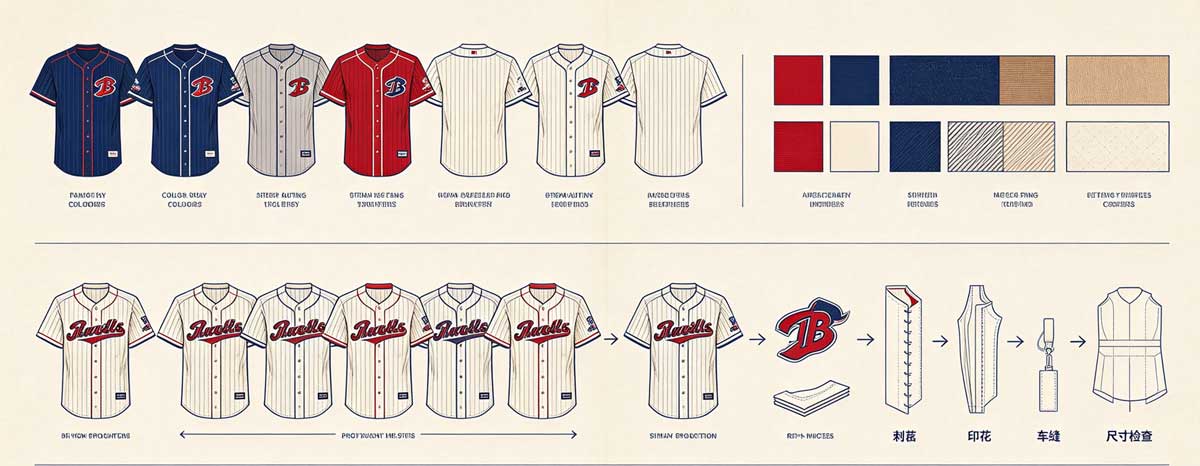
You can have the most beautiful jersey concept in the world, but if the decoration method doesn’t match your usage patterns, budget, and aesthetic goals, the final product will disappoint. In 2026, baseball jersey decoration has evolved into three primary approaches, each with distinct technical profiles, durability characteristics, and cost structures.
Method 1: Full-Body Sublimation
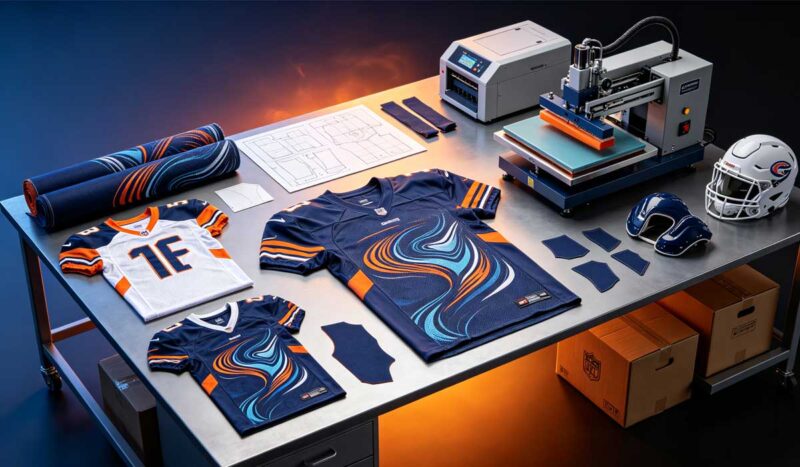
How it works: Sublimation uses heat and pressure to convert solid dye into gas, which permanently bonds with polyester fibers. The graphic doesn’t sit on top of the fabric—it becomes part of the fabric itself .
Advantages:
- Unlimited design freedom: Gradients, photographic images, all-over patterns, unlimited colors—no per-color charges
- Zero added weight: The jersey feels identical whether it’s solid white or covered in a complex graphic
- Permanent durability: Cannot crack, peel, or flake; the only wear is the fabric itself aging
- Lightweight: Ideal for performance-focused programs
- Cost efficiency for complex designs: A 10-color sublimated design costs the same as a 2-color design
Limitations:
- Polyester only: Sublimation doesn’t work on cotton, cotton blends, or natural fibers
- No tactile texture: The design is flat; you can’t achieve the raised, dimensional look of stitched lettering
- Color accuracy: Sublimation uses CMYK process colors, not spot inks. Exact Pantone matching is challenging—typically within 1–2 Pantone steps rather than dead-on
- Minimum order quantities: Most manufacturers require 12–50 piece minimums for custom sublimation
Best for: Teams wanting bold, modern aesthetics; programs with complex logos or gradients; organizations that prioritize lightweight performance; brands building collections with all-over graphic identities.
Method 2: Tackle Twill
How it works: Individual letters and numbers are cut from twill fabric (a woven cotton or polyester material with a diagonal rib pattern), then sewn or heat-pressed onto the jersey body with zig-zag or satin stitching. The result is a raised, textured, three-dimensional appearance .
Advantages:
- Classic aesthetic: The raised, stitched look is what most people picture when they think of a “real” baseball jersey
- Extreme durability: Properly sewn tackle twill can last 5–10 years; the letters are physically part of the garment
- Tactile quality: The dimensional texture conveys premium craftsmanship
- Pantone accuracy: Because twill is dyed as a solid fabric before cutting, color matching is more precise than sublimation
- Versatility: Can be applied to any fabric type, including cotton and cotton blends
Limitations:
- Design constraints: Best for bold, simple marks. Gradients, photographic elements, and intricate patterns are impossible
- Added weight and bulk: Each letter adds material to the jersey surface
- Higher cost for complexity: Multi-color designs require multiple layers of twill and additional stitching, driving up labor costs
- Edge vulnerability: While the center of a tackle twill letter is bulletproof, the stitched edges can loosen after years of heavy washing or contact
- Longer production time: Sewing is labor-intensive; tackle twill orders typically take 1–2 weeks longer than sublimation
Best for: Programs wanting a traditional, professional appearance; teams with simple color schemes and block lettering; organizations that keep uniforms for 4+ seasons; programs where alumni and boosters value the “authentic” look.
Method 3: The Hybrid Approach (Sublimated Base + Tackle Twill Accents)
How it works: The jersey body is fully sublimated with colors, patterns, and background graphics, while team names, player numbers, and crests are applied in tackle twill on top. This combines the design freedom of sublimation with the dimensional texture of twill .
Advantages:
- Best of both worlds: Unlimited background graphics + raised, textured identity elements
- Visual hierarchy: The tackle twill elements “pop” against the sublimated base, creating professional depth
- Durability where it matters: Numbers and names—the elements that see the most wear—are in the most durable format
Limitations:
- Highest cost: You’re paying for both decoration methods
- Weight inconsistency: The jersey body is lightweight while the lettering areas are heavier
- Production complexity: Requires a manufacturer proficient in both sublimation and sewing departments
Best for: Premium travel programs, semi-pro teams, and brands wanting a flagship product that stands out in team photos and on social media.
Decoration Method Comparison Table
|
Factor |
Full Sublimation |
Tackle Twill |
Hybrid |
|---|---|---|---|
|
Design freedom |
Unlimited colors/gradients |
Limited to twill color library |
Unlimited base + limited accents |
|
Durability |
Won’t crack/peel; fabric ages |
Very durable; edges may loosen over years |
Best durability combo |
|
Weight |
Lightest |
Slightly heavier |
Moderate (mixed) |
|
Pantone accuracy |
±1–2 Pantone steps |
Exact match possible |
Base: ±1–2; Accents: exact |
|
Best aesthetic |
Modern, bold, graphic |
Classic, traditional, textured |
Premium, layered, professional |
|
Typical MOQ |
12–50 pieces |
12–24 pieces |
24–50 pieces |
|
Production timeline |
2–3 weeks |
3–4 weeks |
4–5 weeks |
|
Cost for simple 2-color design |
$ |
$$ |
$$$ |
|
Cost for complex 6+ color design |
$ |
$$$$ |
$$$ |
The Price Reality: Complexity Matters More Than Method
A critical insight from the manufacturing floor: there is no universal rule that sublimation is cheaper than tackle twill, or vice versa. A simple one-color tackle twill jersey with block numbers is often less expensive than a fully custom sublimated design with complex graphics. Conversely, a six-color tackle twill design with layered appliqué and a stitched patch can cost significantly more than a moderate sublimation order .
Actionable Takeaway: Always get your specific artwork quoted in multiple decoration methods. A generic “sublimation vs. twill” price comparison is meaningless—you need real numbers for your real design. At Jistar Sport, we routinely quote the same concept three ways (sublimated, twill, hybrid) so clients can make an informed decision based on their actual priorities, not assumptions.
Chapter 3: Design Trends Shaping Baseball Jerseys in 2026
From the Diamond to the Street: The Aesthetic Evolution
Baseball jersey design in 2026 exists at the intersection of three powerful cultural currents: MLB’s City Connect program, which has proven that uniforms can be narrative vehicles for local identity; the 90s retro revival, which has made chunky fonts, bold color blocking, and oversized fits commercially dominant; and the streetwear crossover, which has transformed the baseball jersey from athletic equipment into a lifestyle fashion statement.
Trend 1: The 90s Heritage Revival
The most commercially significant design movement in custom baseball for 2026 is the deliberate return to 1990s aesthetics. This isn’t subtle nostalgia—it’s a full aesthetic reset:
- Chunky serif fonts replacing the thin, minimalist sans-serif lettering of the 2010s
- Thick color blocking on chest panels, sleeves, and side inserts
- Oversized, “street-ready” fits that drape rather than cling
- Heavy chest stripes and structured retro panel builds
- Floppy polo collars and button-front designs that reference vintage baseball card aesthetics
Why this matters for teams: The 90s revival isn’t just about looking cool—it’s about wearability beyond the field. When a jersey is designed with streetwear proportions and vintage graphic language, players wear it to school, to the mall, to parties. That extends your team’s brand visibility exponentially and creates organic social media content without any marketing spend.
Why this matters for retailers: Retro-inspired baseball jerseys are among the highest-margin items in sportswear retail. The “vintage” positioning justifies premium pricing, and the streetwear crossover means you’re selling to fashion consumers, not just athletes. Limited-edition drops with 90s aesthetics consistently sell out faster than modern performance cuts.
Trend 2: City Connect Influence—Local Identity as Design Language
MLB’s City Connect program, now in its fifth year, has fundamentally changed how teams think about uniform identity. The 2026 City Connect releases demonstrate that the most successful designs are those that tell a specific local story:
- The Baltimore Orioles designed their 2026 City Connect uniform as “a love letter to Camden Yards and Baltimore,” with sleeve patches reading “From the stoop to the yard” and orange trim inspired by the brickwork of the warehouse beyond the right-field fence
- The Milwaukee Brewers captured videos of summer sunset sky colors to create the gradient on their “Wisco” jerseys, with wheat and barley imagery referencing Wisconsin’s farm industry
- The Texas Rangers used “Cochineal red” with “Tejas” across the chest, honoring the Caddo language and the state’s Mexican heritage, with piping inspired by Mariachi embroidery
How teams can apply this: You don’t need MLB’s design budget to tell a local story. A high school team in Pittsburgh can incorporate the Three Sisters bridges into its wordmark (as the Pirates did). A youth league in Kansas City can reference local fountain imagery. A rec league in San Diego can use coastal color palettes. The key is intentionality—every design element should answer the question, “Why this, for this team, in this place?”
How retailers can apply this: Private-label brands that build collections around specific regional identities create defensible market positions. A “Coastal California” baseball jersey line with sunset gradients and palm motifs. A “Rust Belt Heritage” collection with industrial color palettes and bridge-inspired typography. These aren’t just products—they’re stories that resonate with local pride and justify premium pricing.
Trend 3: Mixed Media and Dimensional Details
The 2026 custom jersey market is moving beyond single-decoration approaches toward mixed media that combines multiple techniques for maximum visual impact:
- 3D puff embroidery moving beyond caps to jersey chest logos, offering controlled elevation and a refined, tactile quality
- Woven patches replacing basic iron-on patches for crests and sleeve details
- Contrast stitching as a deliberate design element, not just a construction necessity
- Tonal embroidery (tone-on-tone) for minimalist, retail-quality branding on luxury and corporate segments
- Embossed details and debossed patterns for subtle texture without added color
Manufacturing insight: Mixed media requires a production partner with multiple decoration departments under one roof. A factory that only does sublimation can’t execute a jersey with sublimated body + embroidered crest + tackle twill numbers. At Jistar Sport, our in-house capabilities span sublimation, screen printing, DTF, embroidery (including 3D puff), and tackle twill sewing—allowing us to execute complex mixed-media designs without outsourcing, which protects quality control and timeline consistency.
Trend 4: The “Heavier Fabric” Pendulum Swing
After several years of lightweight, almost t-shirt-like baseball uniforms, the market is swinging back toward substantial, structured fabrics that convey quality on camera and in person .
This is particularly relevant for teams that are photographed or filmed frequently—travel ball organizations with social media presence, high school teams with broadcast games, and semi-pro leagues with streaming coverage. A 260 GSM interlock or double-knit jersey simply photographs better than a 120 GSM micro mesh. It holds its shape, doesn’t cling to the body awkwardly, and reads as “professional” rather than “cheap.”
Actionable Takeaway: For 2026, the winning design formula is retro aesthetic + modern performance construction + local storytelling + mixed-media details. Don’t choose between looking good and performing well—demand both.
Chapter 4: Sizing, Fit, and the Roster Ordering Challenge
The Hidden Cost of Poor Sizing
Nothing creates more post-order headaches than sizing errors. A jersey that doesn’t fit can’t be used, and custom orders are almost never returnable. For a 25-player roster, getting three sizes wrong is a 12% loss on your uniform investment. For a retailer, carrying the wrong size curve means dead inventory and missed sales.
The Three Fit Categories in Baseball
Baseball jerseys in 2026 fall into three distinct fit profiles, and choosing the wrong one for your audience is a recipe for disappointment :
1. Loose Athletic Fit (Traditional Baseball Cut)
- Silhouette: Generous cut with room for layering over undershirts and protective gear
- Length: Longer torso to stay tucked in during play
- Sleeve: Typically raglan or drop-shoulder for maximum arm mobility
- Best for: Youth leagues, recreational adult leagues, catchers (who need room for chest protectors), cold-weather programs
- Sizing tip: Players often size down in loose fits; a player who wears a large t-shirt may need a medium jersey
2. Performance Fit (Modern Athletic Cut)
- Silhouette: Slimmer through the torso without being tight; follows the body’s natural lines
- Length: Standard; designed to stay tucked without excess fabric bunching
- Sleeve: Set-in or modified raglan; closer to the arm without restricting motion
- Best for: Travel ball, high school varsity, college clubs, programs wanting a contemporary look
- Sizing tip: True to size for athletic builds; players with broader chests may need to size up
3. Pro Fit (Tailored/Contoured)
- Silhouette: Form-fitting, contoured to the athlete’s physique
- Length: Slightly shorter; designed to be worn untucked or with a very precise tuck
- Sleeve: Tighter set-in sleeves; minimal excess fabric
- Best for: Semi-pro leagues, showcase/tournament teams, programs where appearance is as important as function
- Sizing tip: Requires accurate chest and waist measurements; this fit is unforgiving of sizing errors
Position-Specific Sizing Considerations
Baseball is unique among team sports in that different positions have dramatically different equipment and movement needs:
- Pitchers: Need extra shoulder room and sleeve mobility. A jersey that’s too tight across the shoulders restricts the throwing motion. Raglan sleeves are strongly preferred.
- Catchers: Need the loosest fit to accommodate chest protectors, shin guards, and mask straps. Many catchers prefer jerseys one size larger than their standard fit.
- Infielders: Benefit from shorter jersey lengths that don’t bunch when crouching at fielding position. Performance fit is ideal.
- Outfielders: Need full arm extension for throwing; sleeve construction matters more than torso fit.
- Softball players: Increasingly preferring the athletic fit of polyester-spandex blends with four-way stretch, as the underhand throwing motion and different defensive stances create distinct fit requirements.
The Roster Ordering Protocol
To eliminate sizing disasters, follow this protocol:
Step 1: Create a measurement sheet.
Distribute a simple measurement guide to every player or parent:
- Chest (fullest part, with arms relaxed)
- Waist (natural waistline)
- Hips (for female players, if applicable)
- Height and weight (for cross-referencing with size charts)
- Preferred fit (loose / standard / fitted)
Step 2: Clarify size chart standards.
>Critical: determine whether the manufacturer’s size chart reflects body measurements or garment measurements. A size chart based on body measurements means a “Large” is designed to fit a 42–44 inch chest. A size chart based on garment measurements means the jersey itself measures 44–46 inches across the chest (allowing for ease). This distinction causes 70% of sizing errors .
Step 3: Order a sizing kit.
>If your budget allows, order one sample of each size (youth S through adult 3XL) before placing the bulk order. Have players try them on over their typical undershirts and protective gear. This 200–400 investment eliminates thousands of dollars in replacement costs.
Step 4: Build in buffer sizes.
For every 20 jerseys ordered, include:
- 1 extra youth large (most common youth size)
- 1 extra adult large (most common adult size)
- 1 extra adult XL (for late roster additions or catchers who size up)
Actionable Takeaway: Sizing isn’t a detail—it’s a risk management strategy. The 30 minutes you spend creating a measurement protocol will save you weeks of replacement headaches and player complaints.
Chapter 5: The Buyer’s Playbook—MOQ, Cost Structure, and Supplier Vetting
Understanding the Economics of Custom Baseball Jersey Production
Custom baseball jersey manufacturing operates on economies of scale, but the relationship between quantity and price isn’t always linear. Understanding the cost drivers helps teams and retailers optimize their orders for maximum value.
MOQ Realities in 2026
Minimum order quantities vary dramatically by manufacturer, customization level, and decoration method:
|
Order Type |
Typical MOQ |
Notes |
|---|---|---|
|
Stock blank jerseys with heat-press numbers |
1–6 pieces |
Fastest turnaround; limited design options |
|
Custom sublimated jerseys |
12–50 pieces |
Most common entry point for custom designs |
|
Tackle twill jerseys |
12–24 pieces |
Higher labor content means higher minimums |
|
Hybrid (sublimated + twill) |
24–50 pieces |
Requires coordination between two production departments |
|
Fully custom cut-and-sew |
100–300 pieces |
Pattern-making costs require volume to amortize |
|
Private label/white label |
100–500 pieces |
Includes branded packaging, hang tags, and woven labels |
Industry data shows that many specialized manufacturers now offer flexible, low-MOQ options for smaller teams alongside scalable bulk production for leagues and established brands . At Jistar Sport, our standard MOQ for custom sublimated baseball jerseys starts at 50 pieces per design, with sample orders available at 10–20 pieces for teams testing new concepts.
Cost Breakdown: What You’re Actually Paying For
A typical custom baseball jersey order breaks down as follows:
1. Fabric (25–35% of unit cost)
The fabric choice is the single biggest variable. A 260 GSM double-knit polyester costs 40–60% more per meter than 140 GSM micro mesh. For a 25-jersey order, upgrading from entry-level to premium fabric can add 8–12 per unit.
2. Decoration (30–45% of unit cost)
- Sublimation: Setup costs are front-loaded (design file preparation, printer profiling, heat press calibration). The per-unit decoration cost is relatively flat regardless of design complexity.
- Tackle twill: Labor-intensive; costs scale with the number of letters, numbers, and colors. A single-color name and number set might cost 6–8 in labor. A three-color layered appliqué with a stitched patch can cost 18–25.
- Embroidery: Digitizing the logo file is a one-time cost (30–80), then per-stitch pricing applies. A chest logo might be 4–6; a 3D puff version could be 8–12.
3. Construction & Finishing (15–20% of unit cost)
This includes cutting, sewing, quality control, and packaging. Reinforced stitching at stress points (shoulders, side seams, underarms) adds minimal cost but significant durability.
4. Shipping & Logistics (10–20% of total order value)
Air freight from China to the U.S. typically costs 6–10 per kilogram with a 7–10 day transit time. Sea freight costs 800–1,500 per cubic meter with a 25–35 day transit time. For orders under 100 jerseys, air freight is usually more economical despite the higher per-unit cost.
The Sample-to-Production Timeline
A realistic production timeline for quality custom baseball jerseys:
|
Phase |
Duration |
Critical Actions |
|---|---|---|
|
Design finalization |
3–7 days |
Artwork approval, Pantone confirmation, size curve finalization |
|
Pre-production sample |
7–14 days |
Physical sample production, fit testing, color verification |
|
Sample revisions (if needed) |
3–5 days |
Adjustments based on feedback |
|
Bulk production |
15–25 days |
Fabric sourcing, cutting, decoration, sewing, QC |
|
Shipping |
7–21 days |
Air or sea freight, customs clearance, final delivery |
|
Total timeline |
5–8 weeks |
Rush production available at 3–4 weeks with premium pricing |
Critical warning: The most common delay in custom uniform production isn’t manufacturing—it’s artwork approval bottlenecks. Teams that take two weeks to approve a design mockup push their entire timeline back by two weeks. Assign one decision-maker with authority to approve designs, and establish a 48-hour feedback rule.
How to Vet a Baseball Jersey Manufacturer
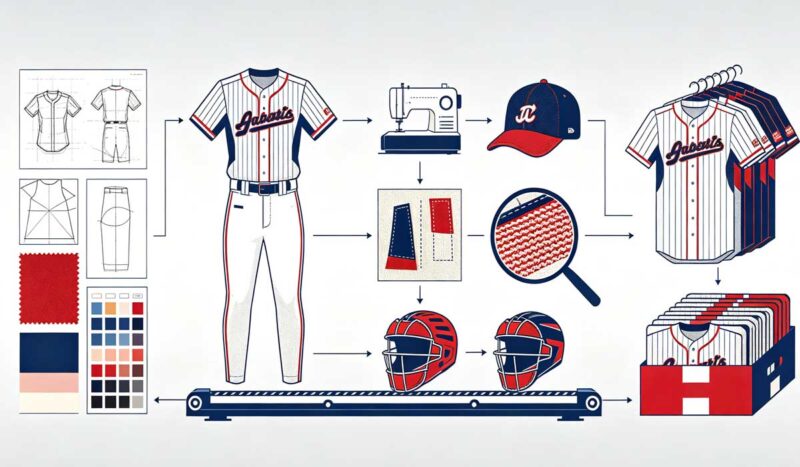
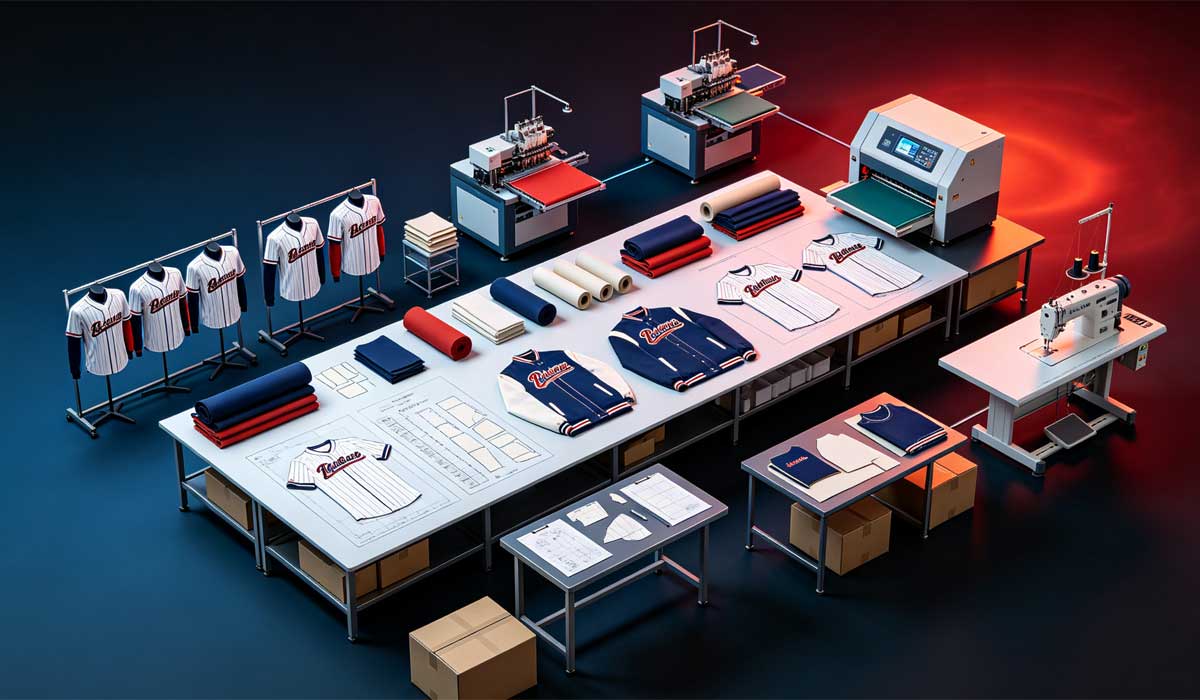
Not all sportswear manufacturers understand baseball. A factory that excels at soccer jerseys may struggle with the specific construction requirements of baseball uniforms (button plackets, set-in sleeves, reinforced stress points). Here’s your vetting checklist:
Technical Capabilities:
- Can they produce button-front and pullover styles?
- Do they offer multiple fabric options with specification sheets?
- Can they execute both sublimation and tackle twill in-house?
- Do they understand baseball-specific sizing (youth vs. adult grading, plus sizes for catchers)?
- Can they provide reinforced stitching at shoulders and side seams?
- Do they offer anti-microbial and UV-protection treatments?
Quality Assurance:
- Do they provide pre-production samples before bulk manufacturing?
- Can they verify color accuracy with Pantone matching (not just “close enough”)?
- Do they conduct wash-testing for colorfastness (ISO 105-B02 standard)?
- What is their defect rate and rework policy?
- Do they offer AQL (Acceptable Quality Level) inspection reports?
Commercial Reliability:
- How long have they been manufacturing baseball-specific apparel?
- Can they provide references from teams or retailers in your market?
- What is their on-time delivery rate?
- Do they offer transparent pricing with no hidden fees?
- What payment terms do they offer (deposit structure, balance on shipment)?
Red flags:
- Vague answers about fabric composition (“premium polyester” without GSM or composition percentages)
- No sample policy or samples that take longer than two weeks
- Inability to provide Pantone matching or color proofs
- No quality control documentation
- Pricing that seems too good to be true (it usually is—compromises on fabric weight, stitching quality, or colorfastness)
Actionable Takeaway: Your manufacturing partner should feel like an extension of your team, not just a vendor. If they’re not asking about your climate conditions, your wash routines, your roster size fluctuations, and your long-term brand vision, they’re not equipped to be a strategic partner.
Chapter 6: The Retailer’s Edge—Strategies for Online Sellers and Private-Label Brands
Why Baseball Jerseys Are a High-Opportunity Category for E-Commerce
Baseball jerseys offer online retailers a unique combination of high perceived value, strong seasonal demand (spring through fall, with holiday gift spikes), and design differentiation potential. Unlike generic t-shirts, custom baseball jerseys carry emotional weight—team loyalty, local pride, nostalgia—that justifies premium pricing and creates repeat purchase behavior.
Strategy 1: The Dual-Product Approach (Performance + Lifestyle)
The most successful private-label baseball apparel brands in 2026 don’t sell one jersey—they sell two versions of the same design:
- The Performance Jersey: Athletic fit, lightweight technical fabric, moisture-wicking, designed for on-field use. Priced at 45–65.
- The Lifestyle Jersey: Relaxed/oversized fit, heavier cotton-touch polyester or cotton-poly blend, streetwear proportions, designed for casual wear. Priced at 55–75.
This strategy doubles your SKU count without doubling your design investment, captures both the athlete and the fan, and creates natural upsell opportunities (“Complete the look with the matching lifestyle jersey”).
Strategy 2: Limited-Edition Drops and Seasonal Collections
Baseball’s seasonal nature creates natural scarcity windows:
- Spring Training Collection: Released in February/March with lighter color palettes and practice-oriented designs
- Opening Day Collection: Bold, high-energy designs released in April
- Summer Tournament Series: Limited colorways for July travel ball season
- Fall Ball Collection: Darker tones, heavier fabrics for autumn leagues
- Holiday Gift Set: Retro-inspired designs packaged as gift bundles in November/December
Each drop should be explicitly limited (“Only 200 units produced”) and never reproduced. This creates urgency, justifies premium pricing, and generates social media buzz through FOMO marketing.
Strategy 3: Niche Positioning Over Generic Competition
Amazon and major retailers are flooded with generic “custom baseball jersey” listings. The brands that win are those that own a specific niche:
- Heritage Series: Jerseys inspired by specific historical teams, eras, or regional baseball history
- City Edition: Designs tied to specific cities, landmarks, or cultural references (the MLB City Connect model applied to amateur and fan markets)
- Position-Specific: Jerseys designed specifically for pitchers, catchers, or infielders with position-optimized features
- Co-Branded Collaborations: Partner with local breweries, coffee roasters, or music venues for crossover designs that appeal beyond traditional sports consumers
Strategy 4: Content-Driven
For online retailers, the product is only half the battle—the content that drives traffic is the other half. Invest in:
- Buying guides (like this one) that rank for high-intent keywords
- Size comparison tools that reduce return rates
- Design inspiration galleries that showcase what’s possible
- Team spotlight features that build community and generate user-generated content
- Fabric education content that positions your brand as the expert source
Actionable Takeaway: The baseball jersey market rewards specialization, not generalization. A brand that owns “vintage-inspired softball jerseys for adult women’s leagues” will outperform a brand that sells “custom sports jerseys for all sports” every time. Pick your niche, own it completely, and expand only after you’ve dominated your core audience.
Frequently Asked Questions (FAQ)
What is the best fabric for custom baseball jerseys?
There is no single “best” fabric—it depends on your priorities. Double-knit polyester (200–260 GSM) is the most durable option for competitive teams that need uniforms to last 3–4 seasons. Birdseye mesh (140–180 GSM) is the best choice for hot-weather practice uniforms where breathability is the top priority. Interlock polyester (260 GSM) offers the smoothest surface for sublimation printing and bold custom graphics. Polyester-spandex blends (90/10, 150–200 GSM) provide the best athletic fit and four-way stretch for performance-focused players and softball organizations. Match your fabric to your usage patterns, climate, and budget.
How many jerseys should our team order?
For a standard roster, order one game jersey per player plus 2–3 extras in common sizes (youth large, adult large, adult XL) to accommodate mid-season roster additions, jersey damage, or sizing errors. If your budget allows, a two-jersey system (home and away, or game and practice) provides rotation that extends the life of each jersey by 50%. For tournament teams playing 40+ games per season, consider a three-jersey rotation (two game jerseys + one practice jersey) to ensure players always have a clean, presentable uniform.
What is the difference between sublimation and tackle twill for baseball jerseys?
Sublimation dyes the design directly into polyester fibers, creating a flat, lightweight graphic that cannot crack, peel, or fade. It offers unlimited color and design freedom but only works on polyester and lacks the raised, textured feel of traditional uniforms. Tackle twill cuts letters and numbers from twill fabric and sews them onto the jersey, creating a raised, dimensional, classic look that lasts for years. It’s more durable in the long run but limited in design complexity and heavier than sublimation. Many teams choose a hybrid approach: sublimated jersey body for design freedom + tackle twill numbers and names for traditional texture and maximum durability.
How long does it take to get custom baseball jerseys made?
A standard custom order takes 5–8 weeks from design approval to delivery: 3–7 days for design finalization, 7–14 days for sample production, 15–25 days for bulk manufacturing, and 7–21 days for shipping (depending on air vs. sea freight). Rush production is available from many manufacturers at a 15–25% premium, reducing the timeline to 3–4 weeks. The most common cause of delays is not production speed—it’s artwork approval delays from the buyer side. Assign a single decision-maker and commit to 48-hour feedback turnaround.
Can you match our exact team colors?
For sublimation: Pantone matching is typically accurate within 1–2 Pantone steps because sublimation uses CMYK process colors rather than spot inks. Most manufacturers will send a digital color proof and a physical fabric swatch for approval before production. For tackle twill: Color matching is more precise because twill fabrics are dyed in solid colors before cutting, and manufacturers can source twill in Pantone-equivalent shades. If exact color fidelity is critical (e.g., matching an established school or brand identity), tackle twill or a hybrid approach with twill accents will deliver better results than full sublimation alone.
What size baseball jersey should I order?
Baseball jerseys come in three fit profiles: loose athletic fit (generous cut for layering and youth leagues), performance fit (slimmer, modern athletic cut for travel ball and high school), and pro fit (tailored, form-fitting for semi-pro and showcase teams). Always check whether the manufacturer’s size chart reflects body measurements or garment measurements—this distinction causes most sizing errors. When in doubt, size up for comfort and layering. For catchers, order one size larger than their standard fit to accommodate chest protectors. If possible, order a sizing kit with one sample of each size before placing your bulk order.
Are custom baseball jerseys returnable?
Almost never. Because custom jerseys are manufactured to your specific design, colors, names, and numbers, they cannot be resold to other customers. This is why the sample approval process is critical—once you approve the pre-production sample, the manufacturer is producing exactly what you approved. The only exceptions are manufacturing defects (incorrect stitching, wrong colors, missing elements), which reputable manufacturers will replace at no cost. Protect yourself by: ordering a pre-production sample, confirming your size curve with a sizing kit, and having one authorized decision-maker approve all design elements.
What is the minimum order quantity (MOQ) for custom baseball jerseys?
MOQs vary by manufacturer and decoration method. Stock blanks with heat-press customization can start at 1–6 pieces. Custom sublimated jerseys typically require 12–50 pieces. Tackle twill jerseys usually start at 12–24 pieces due to higher labor content. Hybrid designs (sublimated base + twill accents) generally require 24–50 pieces. Fully custom cut-and-sew or private-label programs typically need 100–300 pieces to amortize pattern-making costs. Many manufacturers, including Jistar Sport, offer flexible low-MOQ options for smaller teams alongside scalable production for larger orders.
How do I care for sublimated baseball jerseys?
Sublimated jerseys are relatively low-maintenance, but following these guidelines will maximize their lifespan: Wash in cold water (hot water can accelerate fiber degradation); use mild detergent (avoid bleach and fabric softeners, which can coat fibers and reduce breathability); hang dry or tumble dry on low heat (high heat can damage polyester fibers over time); wash inside-out to protect printed surfaces from abrasion; and avoid ironing directly on sublimated graphics (if ironing is necessary, use a pressing cloth). With proper care, a quality sublimated jersey should maintain its appearance for 50+ wash cycles.
Can I create a retro/vintage-style baseball jersey with modern performance fabric?
Absolutely—and this is one of the strongest trends in 2026. The most successful designs combine vintage aesthetics (chunky serif fonts, bold color blocking, button-front styles, floppy collars) with modern technical fabrics (moisture-wicking polyester, lightweight construction, anti-microbial treatments). This “retro look, modern performance” hybrid is the sweet spot for teams that want heritage appeal without sacrificing function. From a manufacturing standpoint, this is straightforward: the retro elements are visual (design, typography, color palette), while the fabric and construction are contemporary. Sublimation printing is particularly effective for retro designs because it can reproduce vintage patterns and distressed textures with photographic accuracy.
Should our team offer both game jerseys and practice jerseys?
Yes, if budget allows. The economics strongly favor a two-jersey system. Game jerseys (typically in premium double-knit or interlock polyester with full custom decoration) are reserved for competition, preserving their appearance and extending their lifespan. Practice jerseys (in lighter, more breathable birdseye mesh or micro mesh with simpler decoration) handle the wear and tear of daily drills. This separation means your game jerseys last 3–4 seasons instead of 1–2, and your players stay cooler and more comfortable during high-intensity practice sessions. For a 25-player roster, the incremental cost of adding practice jerseys is typically 30–40% of the game jersey cost—but the total uniform investment pays for itself over time through reduced replacement frequency.
Custom baseball jerseys in 2026 are no longer commodity purchases—they’re strategic investments in team identity, player performance, and brand equity. The teams and retailers that win are those that understand the technical foundations (fabric science, decoration methods, sizing systems) while embracing the creative possibilities (retro aesthetics, local storytelling, mixed-media details) that differentiate them in a crowded market.
The five decisions that matter most:
- Choose fabric for your climate and usage patterns, not just your budget. A $5 per jersey upgrade to double-knit or birdseye mesh pays for itself in durability and player satisfaction.
- Match decoration method to design complexity and longevity goals. Sublimation for bold graphics and modern teams. Tackle twill for traditional aesthetics and long-term use. Hybrid for programs that refuse to compromise.
- Design with intention. Every color, pattern, and font choice should answer “Why this, for this team, in this place?” Generic templates are forgettable. Story-driven designs are shareable.
- Invest in sizing accuracy. A sizing kit and clear measurement protocol eliminate the most common source of post-order frustration.
- Partner with a manufacturer who understands baseball. Not all sportswear factories understand the specific construction requirements of button plackets, set-in sleeves, and position-specific fits. Vet your partner’s technical capabilities as rigorously as you vet their pricing.
At Jistar Sport, we manufacture custom baseball jerseys, pants, and full uniform systems for teams, leagues, and brands that refuse to settle for generic. From 90s-inspired heritage designs on modern performance fabrics to fully sublimated all-over graphics with tackle twill accents, we build the products that turn your team’s identity into a competitive advantage.
Ready to build your next baseball jersey collection? Request a free quote and design consultation from our team. We’ll provide fabric samples, decoration method comparisons, and a production timeline tailored to your season schedule.
About the Author: This guide was produced by the manufacturing and design team at Jistar Sport, a China-based OEM/ODM sportswear manufacturer with 10+ years of experience producing custom baseball jerseys, basketball uniforms, football kits, and athleisure collections for teams, brands, and retailers worldwide. Our in-house capabilities span sublimation printing, tackle twill sewing, 3D puff embroidery, DTF, and sustainable fabric sourcing.