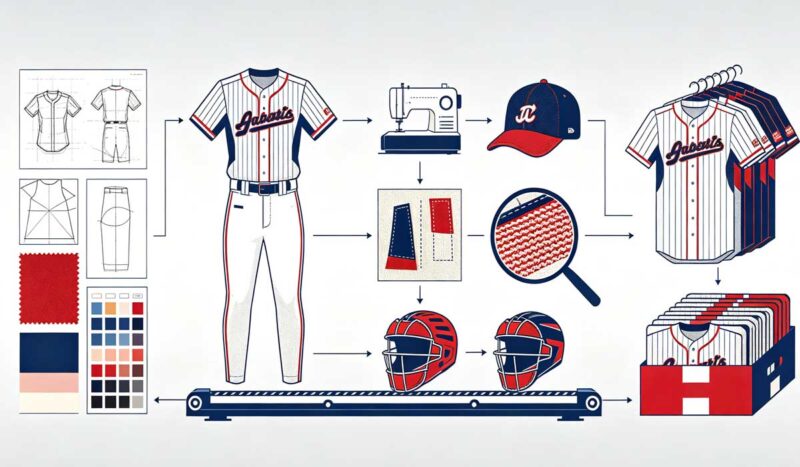
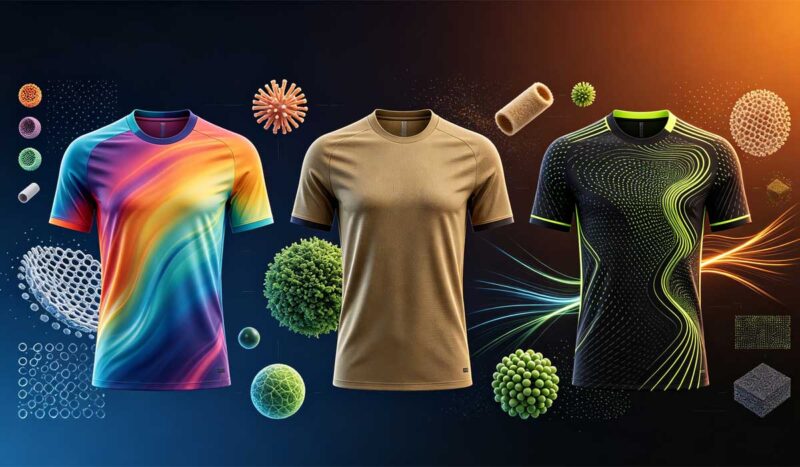
It was supposed to be a great opening day. The U12 team had been practicing for six weeks. The new coach had designed a sharp-looking kit—navy blue with gold accents, the club crest on the chest, every kid’s name and number on the back. The parents had paid their fees. The kids were excited.
Then the box arrived from the supplier.
The “youth large” jerseys fit the smallest kids like tents and the biggest kids like compression shirts. The numbers, which looked solid in the photo, were already peeling at the corners after one wash. The navy blue had faded to something closer to purple after the parents ran them through the dryer on high heat. And one of the goalkeepers—an eight-year-old with severe eczema—broke out in a rash because the fabric had been treated with a harsh chemical finish that nobody had tested.
The club director, a volunteer dad who works in accounting during the week, spent the next three weeks playing email tag with the supplier, trying to get replacements. The supplier, it turned out, was just a guy with a heat press in his garage who bought cheap blanks from a wholesale catalog.
By the time the season was half over, the team was wearing mismatched replacement shirts from a sporting goods store. The parents were annoyed. The kids were embarrassed. And the club lost three registrations for the following season because word got around that “the uniforms were a mess.”
This story happens hundreds of times every fall across the United States, Canada, the UK, and Australia. And it happens because ordering youth soccer jerseys wholesale is not the same as ordering adult teamwear. Kids are not small adults. Their bodies, laundry situation, safety regulations are different. And the stakes—parent satisfaction, club reputation, child safety—are arguably higher.
If you’re a club director, a coach, a team parent, or a league organizer trying to figure out how to order kids’ soccer jerseys that actually work, this guide is for you. We’re going to walk through the real-world stuff that matters: sizing for growing bodies, fabrics that survive grass stains and washing machines, decoration that doesn’t fall off, and how to find a soccer uniform supplier who actually knows what they’re doing when it comes to youth teams.
Why Youth Soccer Uniforms Are a Different Animal
Before we get into fabrics and numbers, let’s talk about why this category needs its own playbook.
Kids grow. That sounds obvious, but it’s the single biggest factor that separates youth uniform procurement from adult procurement. An adult team orders mediums and larges, and those players are still mediums and larges in six months. A U10 team orders youth mediums, and by spring, half those kids are youth larges. If you order a perfect fit in September, you’ve got a problem by April.
Kids are hard on clothes. They slide on grass, fall on turf,stuff their wet, muddy jerseys into gym bags and forget about them for three days. Then their parents wash everything on hot because they’re in a hurry. The fabric and decoration need to survive conditions that would destroy an adult’s careful laundry routine.
Parents are watching. In adult leagues, if the uniform is mediocre, the player deals with it. In youth leagues, the parents paid for it, and they have opinions. A peeling number, a faded color, or a shirt that shrinks two sizes becomes a group chat complaint that can damage a club’s reputation for years.
Safety regulations are real. In the United States, children’s apparel (ages 12 and under) is regulated by CPSIA—the Consumer Product Safety Improvement Act. That means lead testing, tracking labels, and specific rules about drawstrings and small parts. A soccer jersey factory that only works with adult teams may have no idea what you’re talking about when you mention this.
The budget is tight. Most youth clubs are nonprofits or volunteer-run organizations. They need to keep costs down while still delivering something that looks professional. That means understanding where to spend and where to save.
Fabric: What Actually Works for Kids on the Field
Let’s cut through the marketing fluff. When you’re ordering youth soccer jerseys wholesale, you’ll see terms like “moisture-wicking,” “performance fabric,” and “premium polyester.” What does that actually mean for a ten-year-old running around on a Saturday morning?
The Basics: 100% Polyester vs. Blends
For sublimated jerseys (the kind with all-over designs and bright colors), you need 100% polyester. Period. Sublimation dye only bonds with polyester fibers. If a supplier tries to sell you a “cotton-feel” sublimated jersey, they’re either lying about the sublimation or they’re using a blend that will fade and crack.
But here’s the thing: not all polyester feels the same.
-
Standard 160gsm polyester is the workhorse. It’s lightweight, breathable, and affordable. For most youth rec leagues, this is fine.
-
Birdseye mesh has a slightly textured, waffle-like surface. It breathes better than smooth polyester because the texture creates tiny air pockets. Great for hot climates and summer tournaments.
-
Microfiber (50D/72F) is softer and silkier. It feels nicer against the skin, which matters for kids who complain about “itchy” shirts. It also prints more vibrantly. The downside is it’s slightly less durable for rough play.
-
Pique knit is heavier and more structured. It holds its shape well but runs warmer. Better for cooler climates or fall/spring seasons.
Our recommendation for most youth clubs: Go with 160gsm birdseye mesh or 160gsm standard polyester for match kits. It’s the sweet spot of durability, breathability, and cost. If you’re in Texas or Florida, lean toward birdseye. If you’re in the Pacific Northwest or the UK, standard polyester or even 180gsm interlock works fine.
The “Cotton-Feel” Trap
Some suppliers push “cotton-feel polyester” for youth teams because parents like the idea of natural fiber. Be careful. True cotton-feel polyester is usually a mechanical softening process that wears off after 10–15 washes. After that, you’re back to standard polyester feel anyway. And if it’s actually a cotton-poly blend, you can’t sublimate it properly.
If parents want natural fiber for sensitivity reasons, order a separate set of cotton practice shirts. Don’t compromise the match kit.
The Eczema and Allergy Factor
This is something adult guides never mention. Kids have sensitive skin. Cheap polyester from unverified mills can be treated with formaldehyde or other chemical finishes that trigger reactions.
A responsible soccer uniform supplier should be able to provide OEKO-TEX Standard 100 certification, which proves the fabric has been tested for harmful substances. If you’re outfitting a team with kids who have known skin sensitivities, ask for this specifically. It’s not paranoia. It’s due diligence.
Sizing: The Part Where Most Orders Go Wrong
If there’s one thing that destroys a youth uniform order, it’s sizing. Here’s why.
The “Youth” Size Chart Problem
There is no universal “youth medium.” One factory’s youth medium is a 28-inch chest. Another’s is a 32-inch chest. A third doesn’t even use chest measurements—they use age ranges, which are basically useless because a tall nine-year-old and a short nine-year-old are completely different humans.
When you’re ordering youth soccer jerseys wholesale, you cannot just say “send me 10 smalls, 15 mediums, and 5 larges.” You need to know the actual measurements and how they correspond to your roster.
How to Size a Youth Team Properly
Step 1: Measure the kids. Don’t guess. Don’t ask parents to guess. Have a coach or parent volunteer measure every player with a soft tape measure:
-
Chest: Measure around the fullest part of the chest, with arms relaxed.
-
Length: Measure from the base of the neck (where a collar would sit) to the waistline.
-
Current shirt size: Note what size they normally wear in brands like Nike, Adidas, or Under Armour. This gives you a reference point.
Step 2: Compare to the factory’s size chart. Every legitimate soccer jersey factory should provide a detailed size chart with chest, length, and sometimes sleeve measurements. If they don’t, don’t order from them.
Step 3: Order one size up. This is the golden rule of youth sizing. Kids grow. A jersey that fits perfectly in September will be a belly shirt by March. Order one full size larger than the current measurement. Yes, they’ll look slightly baggy at first. But they’ll grow into them, and you’ll get two seasons instead of one.
Step 4: Order a “fit set” first. If you’re ordering 50+ jerseys, spend the extra $100 to get one sample of each size before you commit to the bulk. Have the kids try them on. You’ll catch sizing disasters before they become expensive mistakes.
The Gender Factor
Girls and boys have different body proportions, even at young ages. Girls’ jerseys need slightly different grading—more room in the hips, adjusted shoulder width, and sometimes a shorter torso length. If your club has a girls’ team, don’t just order “unisex” and hope for the best. Ask the factory if they have a girls’ or women’s youth block. If they look at you like you’re speaking another language, find another soccer uniform supplier.
Decoration: Numbers, Names, and Logos That Survive
Kids’ jerseys need decoration that can survive the apocalypse—or at least a season of grass stains, aggressive washing, and being left in the trunk of a minivan.
Sublimation: The Best Option for Youth
If your design is all-over color, gradients, or complex patterns, sublimation is the way to go. The dye becomes part of the fabric. It can’t peel, crack, or fade. It adds zero weight. And it breathes the same as the undecorated fabric.
For youth teams, this is especially valuable because parents wash these jerseys constantly. A sublimated number will outlast the shirt itself.
Heat Transfer Vinyl (HTV): Good for Rosters
If you need individual names and numbers on the back, HTV is the most practical method for youth teams. It’s affordable, allows for mid-season roster changes (when the kid who got #7 quits and a new kid joins), and comes in reflective options for safety.
Important: Make sure the factory uses stretch-compatible HTV. Standard vinyl will crack at the shoulders after a few matches because kids stretch their jerseys more than adults do when they raise their arms.
Tackle Twill: Overkill for Most Youth Teams
Tackle twill looks amazing. It’s the sewn-on fabric numbers you see on college and pro jerseys. But it’s expensive, adds weight, and is permanent. If a kid outgrows #7 and you need to reuse the jersey, you’re stuck. For most youth rec leagues, tackle twill is overkill. Save it for high school varsity or travel teams with stable rosters.
Embroidery: Great for Club Crests, Bad for Large Areas
Embroidered club logos look professional and last forever. But don’t embroider large areas on youth jerseys. The dense stitching creates stiff patches that irritate skin and restrict stretch. Keep embroidery to small chest logos (maximum 3–4 inches wide).
Safety and Compliance: The Boring Stuff That Can Shut You Down
This is the part nobody wants to think about, but if you’re ordering youth soccer jerseys wholesale in the United States, it’s legally mandatory.
CPSIA: What You Need to Know
The Consumer Product Safety Improvement Act applies to all children’s products, including apparel, for kids ages 12 and under. Key requirements:
-
Lead content: Surface coatings and substrates must contain less than 100 parts per million of lead.
-
Phthalates: Certain plasticizers are restricted in children’s products.
-
Tracking labels: Every garment must have a permanent label stating the manufacturer name, location, date of production, and batch information.
-
Third-party testing: For most soccer jerseys, the fabric itself needs to be tested by a CPSC-accepted lab if you’re importing for resale.
What this means for you: If you’re a club director buying jerseys for your team, you’re probably not “reselling” them, so the burden is lighter. But if you’re a league organizer buying jerseys and selling them to families, or if you’re a startup brand selling youth soccer gear online, you absolutely need CPSIA-compliant products.
A soccer jersey factory that regularly exports to the US should know this. If you ask about CPSIA and they say “what’s that?”—run.
Drawstring Regulations
For youth hoodies and jackets (not jerseys, but related), the CPSC has specific rules about drawstrings at the neck and waist. They must be short, breakaway, or absent entirely. If you’re ordering warm-up hoodies as part of your kit, verify this.
OEKO-TEX and Skin Safety
Even if CPSIA doesn’t apply to your specific situation, OEKO-TEX Standard 100 certification is worth asking for. It ensures the fabric is free from harmful chemicals like formaldehyde, heavy metals, and allergenic dyes. For kids with sensitive skin, this isn’t optional—it’s essential.
Budget Strategy: Where to Spend and Where to Save
Youth clubs run on tight budgets. Here’s how to allocate your money wisely.
Spend Money On:
-
Fabric quality: A cheap jersey that pills and fades after five washes costs more in the long run than a slightly more expensive one that lasts two seasons.
-
Sublimation: If you have a complex design, sublimation is actually cheaper than screen printing for multi-color art because there are no per-color setup fees.
-
Sizing accuracy: Order a fit set. The $100 you spend on samples will save you $500 in replacements.
Save Money On:
-
Tackle twill: Use HTV for numbers instead. It’s 60% cheaper and more practical for changing rosters.
-
Individual names: If your budget is tight, skip the names and just do numbers. Parents can write names on the bag.
-
Fancy packaging: Kids don’t care if their jersey comes in a custom box. A simple polybag is fine.
The Real Cost of “Cheap”
We’ve seen clubs order jerseys for $8 each from a discount supplier, only to replace half of them mid-season because the fabric tore or the numbers fell off. Their actual cost per usable jersey was $14, not $8. Meanwhile, the club that spent $12 on a proper jersey from a real soccer uniform supplier used them for two full seasons.
Rule of thumb: For a complete kit (jersey + shorts), budget $15–$25 per player for a decent rec league setup. For a travel team with higher expectations, $25–$40 is reasonable. Below $15, you’re cutting corners that will show up by mid-season.
How to Find a Soccer Jersey Factory That Actually Gets Youth Teams
Not every factory that makes soccer jerseys understands youth soccer. Here’s how to separate the real suppliers from the middlemen.
Red Flags to Avoid
-
No youth-specific size chart: If they only offer “S, M, L, XL” without age ranges or chest measurements, they don’t work with kids.
-
No CPSIA knowledge: If they export to the US and don’t know what CPSIA is, they are not a legitimate youth supplier.
-
“One size fits all” approach: If they try to sell you adult unisex jerseys and tell you to “just order smaller,” they don’t understand the biomechanics of children.
-
No sample policy: A factory that won’t send you a fit set before bulk production is a factory that doesn’t stand behind their sizing.
-
Vague fabric specs: If they say “polyester” but can’t tell you the GSM, the knit structure, or whether it’s OEKO-TEX certified, they’re buying commodity fabric from a trading market.
Green Flags to Look For
-
Dedicated youth blocks: They have separate patterns for youth boys, youth girls, and adult unisex.
-
Compliance documentation ready: They can send you OEKO-TEX, CPSIA, and BSCI certificates without being asked twice.
-
Sublimation expertise: They can explain the difference between rotary drum and flat press sublimation, and why 200°C matters.
-
Realistic timelines: They tell you 15–20 days for production, not “we can do it in a week.”
-
Proactive communication: They ask about your climate, your league rules, your budget, and your timeline before they quote.
The Direct vs. Trading Company Decision
You can buy youth jerseys from a trading company (a middleman who sources from multiple factories) or directly from a soccer jersey factory. Trading companies are easier to communicate with and sometimes offer lower MOQs, but you pay a markup and lose technical control. Direct factories give you better pricing and more customization, but you need to know enough to ask the right technical questions.
For youth clubs ordering 50–200 pieces, a direct factory with a dedicated export team is usually the better value. For orders under 50 pieces, a trading company or domestic decorator might be more practical.
Timing: When to Order So You’re Not Panicking in August
The biggest mistake youth clubs make is waiting until two weeks before the season starts.
The ideal timeline:
-
12 weeks before season: Start design discussions. Get quotes from 2–3 suppliers.
-
10 weeks before: Order fit samples. Have kids try them on.
-
8 weeks before: Approve samples and place bulk order.
-
6 weeks before: Production should be underway.
-
4 weeks before: Final inspection and shipping.
-
2 weeks before: Jerseys arrive. Distribution to families.
If you’re ordering from overseas (China, Vietnam, Pakistan): Add 2–3 weeks for shipping. Air freight is faster but expensive. Sea freight is economical but takes 25–35 days.
Rush orders are expensive and risky. A factory that promises to produce 100 custom jerseys in 7 days is either cutting quality control or charging you 50% more. Plan ahead.
Frequently Asked Questions
Q1: What is the best way to order youth soccer jerseys wholesale for a large club?
A: Start with a roster measurement. Have every player measured for chest and length. Order a fit set (one of each size) from your soccer uniform supplier before committing to bulk. Choose 160gsm polyester or birdseye mesh for durability and breathability. Use sublimation for all-over designs and HTV for individual numbers. Order one size up to account for growth. Plan 8–10 weeks ahead of your season start.
Q2: What is the difference between a soccer jersey factory and a soccer uniform supplier?
A: A soccer jersey factory owns the production facility and controls the entire process—from knitting the fabric to cutting and sewing the garments. A soccer uniform supplier may be a trading company that sources from multiple factories. Factories offer better pricing and technical customization but may have higher MOQs. Suppliers offer more flexibility and easier communication but add markup. For youth clubs ordering 50–200 pieces, a direct factory with an export team usually offers the best balance of price and service.
Q3: What size youth soccer jerseys should I order for a team of 10-year-olds?
A: Don’t guess by age. Measure every child’s chest and compare it to the factory’s specific size chart. Then order one size larger than their current measurement. Kids grow fast, and a jersey that fits perfectly in September will be too small by spring. If the factory’s youth large measures 32 inches at the chest, and your player has a 30-inch chest, order the large. It will look slightly big at first but will fit correctly within a few months.
Q4: How much do youth soccer jerseys cost when ordered wholesale?
A: For a standard 160gsm polyester sublimated jersey with a number on the back, expect $8–$12 per jersey at quantities of 50–100 pieces. At 200+ pieces, prices drop to $6–$9. Add $1.50–$2.50 for individual player names (HTV). Complete kits (jersey + shorts) typically run $15–$25 per player for rec league quality, or $25–$40 for travel team quality. Prices below $6 per jersey usually indicate inferior fabric or decoration that won’t last the season.
Q5: What is CPSIA compliance, and do I need it for youth soccer jerseys?
A: CPSIA (Consumer Product Safety Improvement Act) is a US law regulating children’s products for ages 12 and under. It requires lead testing, phthalate restrictions, and tracking labels on garments. If you are a club providing jerseys directly to players as part of registration, your liability is lower. But if you are reselling jerseys to families, operating as a league, or importing for commercial sale, you absolutely need CPSIA-compliant products. Ask your soccer jersey factory for CPSIA test reports before ordering.
Q6: What fabric is best for kids’ soccer jerseys in hot weather?
A: 160gsm birdseye mesh polyester is the best choice for hot climates. The textured knit creates tiny air pockets that allow heat to escape, keeping players cooler than smooth polyester. Avoid cotton or cotton blends—they absorb sweat and become heavy. Avoid heavyweight fabrics (200gsm+) for summer play. If you’re in Florida, Texas, or Southern California, birdseye mesh is non-negotiable.
Q7: How do I keep jersey numbers from falling off or cracking?
A: If you’re using sublimation, the numbers are permanent and won’t crack. If you’re using heat transfer vinyl (HTV), make sure the factory uses stretch-compatible vinyl that can handle the shoulder stretching that happens when kids raise their arms. Standard non-stretch vinyl will crack after 5–10 matches. Also, instruct parents to wash jerseys inside-out on cold and hang dry. High heat from dryers is the fastest way to destroy HTV.
Q8: Can I get individual names on youth soccer jerseys without breaking the budget?
A: Yes, but individual names add cost. HTV names cost roughly $1.50–$2.50 per jersey. For a team of 15 kids, that’s $22.50–$37.50 extra. If your budget is tight, skip the names and use only numbers. Alternatively, some clubs use iron-on name labels that parents apply at home—these cost pennies and can be replaced if a kid changes teams. For high school and travel teams where identity matters more, individual names are worth the investment.
Q9: What should I look for in a youth soccer jersey factory?
A: Look for four things: (1) Youth-specific sizing with detailed measurement charts, not just “S, M, L”; (2) Compliance knowledge—they should know CPSIA and OEKO-TEX without you having to explain it; (3) Sublimation expertise with proper heat press equipment (200°C rotary or vacuum press); and (4) Sample policy—they should offer a fit set before bulk production. If a factory can’t show you a physical sample of a youth jersey with proper neck sizing and armhole depth, don’t order from them.
Q10: How far in advance should I order custom youth soccer uniforms?
A: Plan 8–10 weeks before your season starts. This allows time for sampling (1–2 weeks), production (2–3 weeks), and shipping (1–5 weeks depending on method). If you’re ordering from overseas, add 2–3 weeks for sea freight or pay for air freight. Last-minute orders are expensive, rushed, and prone to errors. The clubs that get the best results are the ones that start planning in May for a fall season.
Q11: Are sublimated jerseys better than screen-printed jerseys for youth teams?
A: For youth soccer, sublimation is almost always better. Here’s why: the dye becomes part of the fabric, so it can’t crack, peel, or fade. It allows unlimited colors and complex designs without per-color setup fees. It breathes the same as the undecorated fabric. Screen printing sits on top of the fabric, adds a rubbery layer that traps heat, and cracks when the fabric stretches. The only time screen printing makes sense is for simple one-color designs on cotton shirts—and even then, sublimation is usually competitive on price.
Q12: What do I do if half the jerseys don’t fit when they arrive?
A: Prevention is the only real solution. If you skipped the fit set and ordered bulk based on guesses, you have limited options. Some factories will offer a size exchange program where you return unworn jerseys for a different size, but you’ll pay shipping both ways. If the jerseys were produced to the approved size chart and the issue is that you guessed wrong, the factory is not at fault. This is why the $100 fit set is the best insurance policy you can buy.
Always measure your kids,order sample and check the size chart.
Conclusion: The Kids Don’t Care About the Logo, But the Parents Do
At the end of the day, a youth soccer jersey is just a shirt. The kids will spill juice on it, leave it in the grass, and grow out of it in six months. But the experience of receiving a professional-looking kit that fits, that holds up, and that makes them feel like part of a team—that sticks.
Parents remember which clubs are organized and which ones are chaotic. They remember which club delivered sharp-looking uniforms on time, and which one handed out mismatched replacements three weeks into the season.
If you’re the person responsible for ordering youth soccer jerseys wholesale for your club, your job isn’t just procurement. It’s reputation management. Get the fabric,sizing, compliance right. And find a soccer uniform supplier who treats your order like it matters, not like it’s an afterthought between adult league contracts.
The kids won’t notice the 160gsm birdseye mesh or the OEKO-TEX certification. But they’ll notice that their jersey still looks good in the championship photo. And that’s what they’ll remember.
About the Author:
Team at a custom sportswear manufacturing facility specializing in youth and amateur team uniforms. 17 years of experience working with soccer clubs, school athletic departments, and league organizers across the US, UK, and Australia.
Team at a custom sportswear manufacturing facility specializing in youth and amateur team uniforms. 17 years of experience working with soccer clubs, school athletic departments, and league organizers across the US, UK, and Australia.
Last Updated: June 2026
Related Reading: