Introduction: The Championship Game That Never Should’ve Happened
Mike’s a high school athletic director in Ohio. Last August, he ordered sixty bulk basketball uniforms for the boys’ varsity and JV teams. He found a supplier online with decent photos, a quick chat response, and a price that beat everyone else by fifteen percent. The jerseys looked fine in the team photo. The kids were pumped.
Then the season started.
By game three, three players had numbers peeling off the back. The white home jerseys were already turning grey because the fabric couldn’t handle the school’s industrial washing machines. The “large” size fit the point guard like a dress and the center like a crop top. And in the third quarter of the rivalry game, the shooting guard’s jersey ripped at the shoulder seam when he went up for a layup.
Mike spent the rest of the season duct-taping numbers back on and apologizing to parents. He blew his uniform budget on a replacement order from a local sporting goods store at retail prices. And he learned a hard lesson: ordering basketball uniforms in bulk isn’t about finding the cheapest jersey online. It’s about finding a basketball jersey manufacturer who actually understands what happens to a uniform during forty minutes of full-court pressure.
If you’re a coach, an athletic director, a league organizer, or a retailer looking to stock team gear, this guide is for you. We’re going to walk through the real-world stuff: the fabric weights that matter, the decoration methods that survive a season, the sizing traps that destroy budgets, and how to spot a bulk basketball uniforms supplier who knows what they’re doing versus one who’s just selling you decorated T-shirts.
Why Basketball Uniforms Are a Completely Different Beast
Let’s get one thing straight. A basketball uniform is not a soccer jersey without sleeves. It’s not a football jersey with shorter sleeves. Basketball puts unique mechanical stress on fabric that most other sports don’t.
Think about what a basketball player actually does in a game:
-
Constant overhead motion: Shooting, rebounding, blocking. The armholes need to allow full 180-degree arm elevation without the seam cutting into the armpit.
-
Explosive lateral movement: Defensive slides, crossovers, fast breaks. The fabric needs horizontal stability so it doesn’t twist around the torso.
-
Body contact: Box-outs, screens, charges. The shoulder seams and side panels get grabbed, pulled, and abraded.
-
Sweat volume: Basketball is a high-intensity, stop-and-start sport played in gyms that can hit eighty degrees. The fabric needs to move moisture fast.
If your basketball jersey manufacturer doesn’t account for these four things, you’re not buying basketball uniforms. You’re buying generic athletic shirts that happen to have numbers on them.
The Fabric Breakdown: What Actually Works on the Court
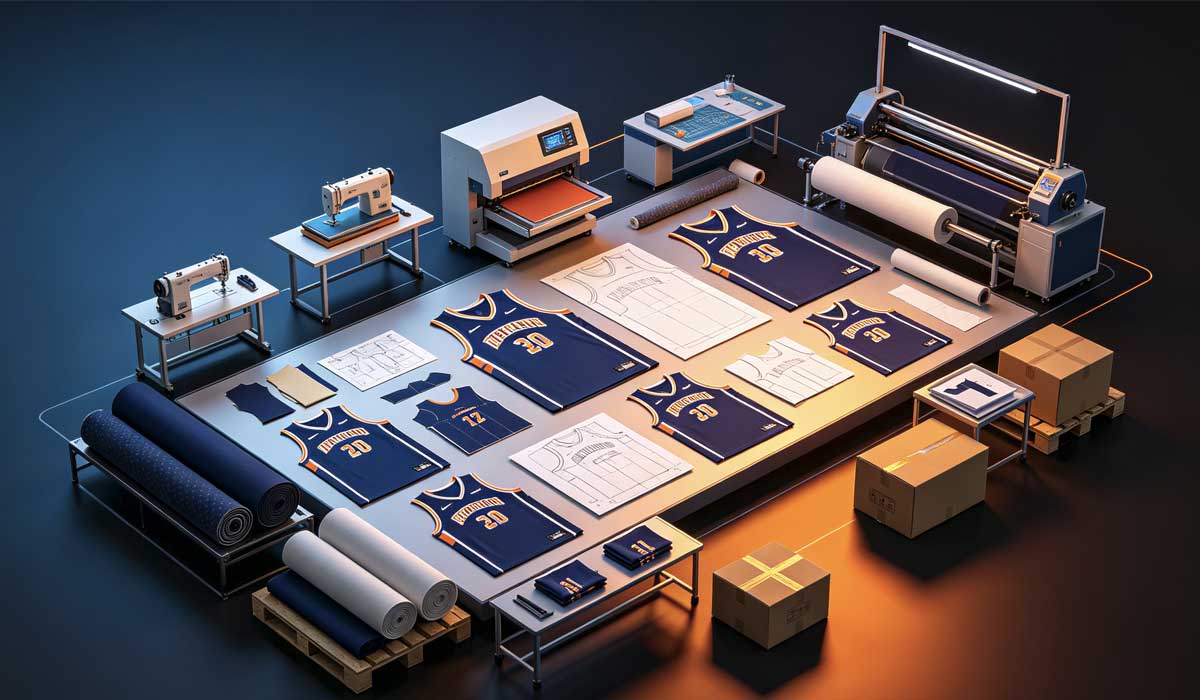
When you talk to a bulk basketball uniforms supplier, they’ll throw terms at you. “Double-knit.” “Pique.” “Mesh.” “Moisture-wicking.” Here’s what actually matters in plain English.
The Weight Question: 220gsm Is the Sweet Spot
GSM means grams per square meter. It’s how heavy the fabric is.
-
160–180gsm: Light, breathable, great for soccer or training. Too light for basketball. It’ll show sweat stains immediately and won’t survive the grabbing and pulling of defense.
-
220–240gsm: The standard for competitive basketball. Heavy enough to resist distortion and grabbing, light enough that players don’t overheat in a gym.
-
280gsm+: Heavyweight. Used for some fan replica jerseys or outdoor streetball. Too hot and bulky for indoor competitive play.
For most high school, AAU, and rec league programs, 220gsm double-knit polyester is where you want to live. It has the horizontal stability to resist pulling and the weight to drape properly on a moving body.
Double-Knit vs. Pique vs. Mesh
| Fabric Type | What It Feels Like | Best For | The Catch |
|---|---|---|---|
| Double-knit | Smooth, structured, substantial | Competitive indoor basketball | Slightly warmer; costs more |
| Pique | Textured, waffle-like, breathable | Golf, casual wear, warm-up shirts | Less stable for contact; shows wear faster |
| Mesh | Holey, airy, light | Practice jerseys, summer leagues | Not durable enough for game uniforms |
| Reversible double-knit | Two layers bonded together | Teams that need home/away in one jersey | Heavier (280–320gsm total); costs 30–40% more |
The bottom line: If you’re ordering game uniforms, insist on double-knit. If you’re ordering practice pinnies or warm-ups, mesh is fine. Don’t let a supplier sell you pique or mesh for game day and call it a “performance jersey.”
Stretch: Mechanical vs. Spandex
Basketball jerseys need to stretch. But how they stretch matters.
-
Mechanical stretch: The fabric is knitted in a way that naturally allows stretch without adding elastic fibers. It recovers well, lasts longer, and doesn’t bag out. This is the premium option.
-
Spandex blend (5–12% elastane): Adds stretch but degrades over time. The elastic fibers break down with heat and sweat. After a season, the jersey might be saggy where it used to be tight.
A good basketball jersey manufacturer will offer mechanical stretch as the default. If they only offer spandex blends, ask why. Sometimes it’s a cost-cutting move.
Decoration Methods: Making Numbers and Logos Survive the Season
This is where most bulk orders fall apart. The jersey looks great on day one. By the tournament, the numbers are hanging on for dear life.
Sublimation: The Modern Standard
Sublimation dyes the fabric itself. The design becomes part of the jersey. It can’t crack, peel, or fade. It allows unlimited colors, gradients, and all-over patterns. And it adds zero weight.
Best for: Teams with complex designs, multiple colors, or sponsors that need to be integrated into the design.
The catch: Sublimation only works on 100% white or light-colored polyester. If you want a black jersey with a bright white logo, you need a white base layer or a different decoration method.
Tackle Twill: The Old-School Tank
Tackle twill is layers of fabric sewn onto the jersey. It’s what you see on college and pro uniforms. It looks premium, lasts forever (200+ washes), and has a dimensional texture that pops on TV.
Best for: Varsity programs, travel teams, and schools with stable rosters that don’t change numbers every year.
The catch: It’s expensive. It adds 80–120 grams to the jersey. And it’s permanent—if a kid transfers and you need to reuse the jersey, you’re stuck with the old number.
Heat Transfer Vinyl (HTV): The Flexible Option
HTV is a film that’s cut into shapes and heat-pressed onto the jersey. It’s the most affordable option for individual names and numbers. Modern stretch HTV can survive 50+ washes if applied correctly.
Best for: Youth leagues, rec programs, and any team where rosters change seasonally.
The catch: Cheap HTV cracks. Non-stretch HTV will split at the shoulders after a few games. Make sure your basketball jersey wholesaler is using stretch-compatible TPU vinyl, not the cheap stuff from a craft store.
Embroidery: Skip It for Game Jerseys
Embroidery looks classy on a polo shirt. On a basketball jersey, it creates a stiff patch that can irritate skin during contact and restrict stretch. Save embroidery for coaches’ polos and travel gear.
Reversible vs. Single-Sided: The Great Debate
A lot of coaches ask about reversible jerseys. One jersey, two colors. Home and away in one garment. Sounds perfect, right?
Here’s the honest breakdown.
Reversible Pros:
-
You only buy one set instead of two.
-
Great for practice scrimmages (dark vs. light).
-
No more “we forgot the white jerseys” panic before tip-off.
Reversible Cons:
-
Weight: A reversible is essentially two jerseys sewn together. You’re looking at 280–320gsm total. That’s noticeably heavier than a single 220gsm jersey.
-
Heat: In a warm gym, that extra layer traps body heat.
-
Cost: Reversibles cost 30–40% more than single-sided jerseys.
-
Comfort: The inner seams need to be fully enclosed (blind-stitched), or the kids will complain about scratchy edges.
Our recommendation: If you’re a youth league with a tight budget and no laundry service, reversibles make sense. If you’re a competitive high school or AAU program, buy two separate sets (home and away). The players will perform better in lighter, purpose-built uniforms.
Sizing for Basketball: Why “Large” Means Nothing
Sizing is where emotions run high. Parents get upset. Kids get embarrassed. Coaches get headaches.
The Problem with Generic Size Charts
Most suppliers use a generic “adult unisex” or “youth” size chart that has nothing to do with basketball body types. A basketball player—especially at the high school level—has broader shoulders and longer arms than the average person in that weight range. A “large” from a standard chart might fit the chest but bind at the shoulders when the player shoots.
What to Ask For
When you talk to a bulk basketball uniforms supplier, ask these specific questions:
-
Do you have a basketball-specific block with a dropped armscye (deeper armhole)?
-
Is the back hem longer than the front (drop tail) to prevent the jersey from pulling out of shorts during defense?
-
Do you offer gender-specific grading? (Women’s and girls’ jerseys need different chest-to-waist ratios and shorter torso lengths.)
-
Can you send a size run (one of each size) before we place the bulk order?
If the answer to any of these is “no” or “what’s a block?”, find another supplier.
The “Size Up” Rule
For youth teams, always order one size larger than the player’s current measurement. Kids grow. A jersey that fits in November will be a belly shirt by February. For adult men’s leagues, true-to-size usually works, but ask your tallest player to try on the sample first.
Number Sizing: The Compliance Issue
If you’re ordering for NFHS (National Federation of State High School Associations) or NCAA-affiliated programs, there are rules:
-
Front numbers: minimum 4 inches tall
-
Back numbers: minimum 6 inches tall
-
Color must contrast with the jersey
A professional basketball jersey manufacturer should know these rules and build them into the design. If you have to remind them, that’s a red flag.
Pricing Reality: What Bulk Orders Actually Cost
Let’s talk numbers. When you contact a basketball jersey wholesaler, you’ll get quotes all over the map. Here’s what you should realistically expect for a standard 220gsm double-knit jersey with sublimation and HTV numbers.
Bulk Pricing Tiers
| Quantity | Price Per Jersey | Notes |
|---|---|---|
| 24–49 | $18–$24 | Small team minimum; higher per-unit cost |
| 50–99 | $14–$18 | Standard team order; most common range |
| 100–249 | $11–$14 | League or multi-team order; better value |
| 250–499 | $9–$12 | Club or retailer level; volume pricing kicks in |
| 500+ | $8–$10 | Large retailer or district-wide order; best rate |
What’s included in that price: The jersey, sublimation printing, and one HTV number on the back.
What’s usually extra: Individual names (+$1.50–$2.50 each), tackle twill (+$3–$5 each), custom fonts, shipping, and setup fees for small orders.
Hidden Costs to Watch For
-
Setup fees: Some suppliers charge $50–$100 per design for screen printing or sublimation setup. Ask upfront.
-
Shipping: For overseas suppliers, air freight can add $2–$4 per jersey. Sea freight is cheaper but takes 4–6 weeks.
-
Reorders: If you need five extra jerseys mid-season, you’ll pay a premium. Plan for 10–15% overage in your initial order.
-
Rush fees: Need them in two weeks? Add 20–30%.
The “too cheap” warning: If a supplier quotes you $6 per jersey for a fully customized sublimated uniform, something is wrong. They’re either using 160gsm lightweight fabric, skipping quality control, or planning to disappear after they cash your deposit.
How to Vet a Basketball Jersey Manufacturer Before You Pay
Not every supplier with a website and a catalog is a real manufacturer. Here’s how to separate the pros from the pretenders.
Ask to See the Cutting Room
A real basketball jersey manufacturer should be able to show you photos or video of their production floor. Look for:
-
Automated cutting tables (Gerber, Lectra, or similar). Hand-cutting is fine for small batches, but for bulk orders, automation ensures every jersey is identical.
-
Multi-head embroidery machines (Tajima, Barudan) if they offer tackle twill or embroidered logos.
-
Rotary heat presses for sublimation, not just clamshell presses.
Request Fabric Documentation
Ask for:
-
The exact GSM and fiber composition
-
The mill name where the fabric was produced
-
A fabric test report (shrinkage, color fastness, abrasion resistance)
If they can’t provide these, they’re buying mystery fabric from a trading market.
Check for Compliance Knowledge
If you’re in the US, ask about CPSIA compliance for youth jerseys. If you’re selling to schools, ask about NFHS number sizing rules. If you’re exporting to the EU, ask about REACH and OEKO-TEX.
A supplier who says “we can handle all that” without specifics is guessing. A supplier who asks you about your target market and regulations before quoting is a professional.
The Sample Test
Before you commit to a bulk order, get a physical sample. Not a photo. A real jersey. Then:
-
Wash it five times in hot water and dry it on high heat.
-
Have your biggest player stretch it over his shoulders.
-
Check if the numbers crack when you flex the fabric.
-
Hold it up to a light and see if it’s see-through.
If the sample fails any of these tests, the bulk order will fail too.
Frequently Asked Questions
Q1: What is a bulk basketball uniforms supplier, and how is it different from a retail store?
A: A bulk basketball uniforms supplier sells directly to teams, leagues, schools, and retailers in large quantities—typically 24 pieces or more—at wholesale pricing. Unlike a retail store that sells individual jerseys to consumers, a bulk supplier offers customization (team names, numbers, logos) and manufactures or sources garments specifically for team orders. They usually work directly with factories or operate their own production facility, which allows them to control quality, sizing, and decoration methods at scale.
Q2: What should I look for in a basketball jersey manufacturer?
A: Look for four key capabilities: (1) Basketball-specific patterns with dropped armscyes and extended back hems for shooting mobility; (2) 220gsm double-knit fabric as the standard game-weight material; (3) Sublimation expertise with proper heat press equipment (200°C rotary or vacuum presses); and (4) Compliance knowledge—they should understand NFHS/NCAA number sizing and CPSIA requirements for youth jerseys without you having to explain them. If they only offer generic “athletic fit” blanks, they are a decorator, not a manufacturer.
Q3: How much do bulk basketball jerseys cost?
A: For standard 220gsm double-knit polyester jerseys with sublimation printing and one HTV number on the back, expect $14–$18 per jersey at 50–100 pieces. At 100–250 pieces, prices drop to $11–$14. At 500+ pieces, $9–$12 is achievable. Tackle twill numbers add $3–$5 per jersey. Individual names add $1.50–$2.50 each. Prices below $10 for fully customized sublimated jerseys usually indicate inferior fabric, poor quality control, or hidden fees.
Q4: What is the best fabric for basketball uniforms?
A: For competitive indoor basketball, 220gsm double-knit polyester is the industry standard. It provides horizontal stability to resist grabbing during defense, enough weight to drape properly without clinging, and durability to survive a season of washing. For practice or warm-up shirts, lighter 180gsm pique or mesh is acceptable. For outdoor summer leagues, 200gsm with moisture-wicking treatment works well. Avoid 160gsm lightweight fabrics for game uniforms—they won’t survive the physical contact.
Q5: Should I order reversible basketball jerseys or two separate sets?
A: It depends on your budget and level of play. Reversible jerseys (one jersey with two colors) cost 30–40% more than a single-sided jersey and weigh significantly more (280–320gsm), which can cause overheating in warm gyms. They’re great for youth leagues and practice. For competitive high school, AAU, or college programs, two separate sets (home and away) are better because they’re lighter, more comfortable, and allow for mid-season roster changes without affecting both sides.
Q6: What is the difference between sublimation and tackle twill for basketball jersey numbers?
A: Sublimation dyes the number directly into the fabric as part of the overall design. It’s permanent, lightweight, and allows unlimited colors. But it’s also permanent—if a player changes numbers, you need a new jersey. Tackle twill is sewn fabric appliqué that creates a raised, textured number. It lasts 200+ washes and looks premium, but it’s expensive and heavy. For youth leagues with changing rosters, sublimation or HTV is more practical. For varsity and pro-level programs, tackle twill is the standard.
Q7: How do I make sure the jerseys fit my entire team?
A: First, measure your players—chest, length, and shoulder width. Don’t guess based on what they wear at the mall. Second, ask your basketball jersey wholesaler for a size run (one sample of each size) before placing the bulk order. Have your tallest, broadest, and smallest players try them on. Third, order one size up for youth teams to account for growth. Finally, make sure the supplier is using a basketball-specific pattern block, not a generic athletic cut.
Q8: What is the minimum order quantity (MOQ) for custom basketball jerseys?
A: Most dedicated basketball jersey manufacturers offer 24–50 pieces as a minimum for sublimated designs using their standard basketball block. Below that, you’re paying sample-rate pricing ($20–$30 per jersey). For fully custom patterns (your own fit specifications), expect MOQs of 100–200 pieces. Some suppliers offer “team packs” of 12–15 jerseys for very small rosters, but customization options are limited.
Q9: How long does it take to get bulk basketball uniforms delivered?
A: From sample approval to delivery, plan on 15–20 business days for production, plus shipping. Sampling itself takes 7–10 days. Air freight to the US adds 3–5 days. Sea freight adds 25–35 days but is much cheaper for large orders. For a typical team order of 50–100 jerseys, expect 4–6 weeks total from first contact to delivery. Rush orders in 2 weeks are possible but cost 20–30% more and limit your fabric choices.
Q10: What are the NFHS rules for basketball jersey numbers?
A: The National Federation of State High School Associations requires: front numbers at least 4 inches tall; back numbers at least 6 inches tall; numbers must be clearly visible and contrast with the jersey color. The home team wears white or light colors; the away team wears dark colors. A professional bulk basketball uniforms supplier should build these specifications into your design automatically. If you have to remind them, that’s a warning sign.
Q11: Can I get individual player names on bulk basketball jerseys?
A: Yes. Individual names are typically applied using heat transfer vinyl (HTV) at a cost of $1.50–$2.50 per name. They can be added to the back of the jersey above or below the number. For tackle twill names, expect to pay $4–$6 each. If your budget is tight, skip the names and use only numbers. Most youth leagues and high school programs don’t require names, and it saves significant cost on large rosters.
Q12: What red flags should I watch for when choosing a basketball jersey wholesaler?
A: Watch for these five warning signs: (1) No basketball-specific patterns—they try to sell you generic “athletic fit” blanks; (2) No fabric specs—they can’t tell you the GSM, knit structure, or mill source; (3) No sample policy—they want you to order bulk without seeing a physical jersey first; (4) Unrealistic timelines—they promise delivery in 7 days, which means rushed quality; and (5) Vague compliance answers—they say “don’t worry about it” when you ask about CPSIA or NFHS rules. Any of these means you’re dealing with a middleman, not a manufacturer.
Conclusion: The Jersey Is Part of the Experience
Here’s the thing nobody tells you: kids don’t remember the score of every game. But they remember how they felt in their uniform. They remember whether it fit right, whether it looked sharp in the team photo, and whether they were proud to put it on.
Parents remember whether the club delivered something professional or something embarrassing. They remember whether the numbers stayed on, whether the colors matched, and whether the jersey survived the season.
If you’re the person in charge of ordering bulk basketball uniforms for your team, league, or store, your job isn’t just procurement. It’s creating an experience. Get the fabric right. Get the fit right. Get the decoration right. And work with a basketball jersey manufacturer who treats your order like it matters—not like it’s just another number in a spreadsheet.
The cheapest option almost always costs more in the long run. The right option costs what it costs, and it delivers a jersey that lasts from the first practice to the final buzzer.
About the Author:
Team at a custom sportswear manufacturing facility with 17 years of experience producing basketball, soccer, and team uniforms for schools, clubs, and retailers across North America and Europe.
Team at a custom sportswear manufacturing facility with 17 years of experience producing basketball, soccer, and team uniforms for schools, clubs, and retailers across North America and Europe.
Last Updated: July 2026
Related Reading: