Introduction: The Instagram Brand That Almost Died in a Factory Lobby
Three years ago, a founder from Austin walked into our facility with a duffel bag full of samples from competitors. He had launched a “performance lifestyle” brand on Instagram, built a following of twelve thousand, and convinced a boutique gym chain to carry his line. The problem? His supplier—a trading company he found on a wholesale platform—had sent him hoodies that were two inches shorter than spec, joggers that pilled after three washes, and T-shirts that smelled like industrial solvent no matter how many times he aired them out.
He wasn’t out of money. He was out of credibility. The boutique gym canceled the order. The Instagram comments turned from “Where can I buy?” to “Quality sucks.” He had built a brand voice, a visual identity, and a community, but he had zero control over the product itself. He was selling someone else’s blanks with his logo heat-pressed on top. That isn’t a brand. That’s a sticker business.
OEM customization—Original Equipment Manufacturing where you control the design, materials, and construction—is the difference between a brand that owns its product and a brand that rents it from a catalog. This is especially true in custom sportswear, where the difference between a 160gsm birdseye mesh and a 180gsm pique knit isn’t a detail. It’s the entire user experience.
If you’re running a small apparel brand, or you’re about to launch one, here’s what actually happens when you move from buying blanks to running an OEM program with a sports jerseys manufacturer—and why it matters more than your marketing budget.
What OEM Actually Means on a Factory Floor
Let’s clear up the jargon first. In the apparel industry, OEM means the factory manufactures product to your design, your tech pack, and your material specifications. You own the product identity. The factory owns the machinery and the labor.
This is different from ODM (Original Design Manufacturing), where the factory shows you their catalog, you pick a style, and they slap your label on it. ODM is faster. It’s also a race to the bottom, because the same factory is selling that exact style to forty other brands with different labels.
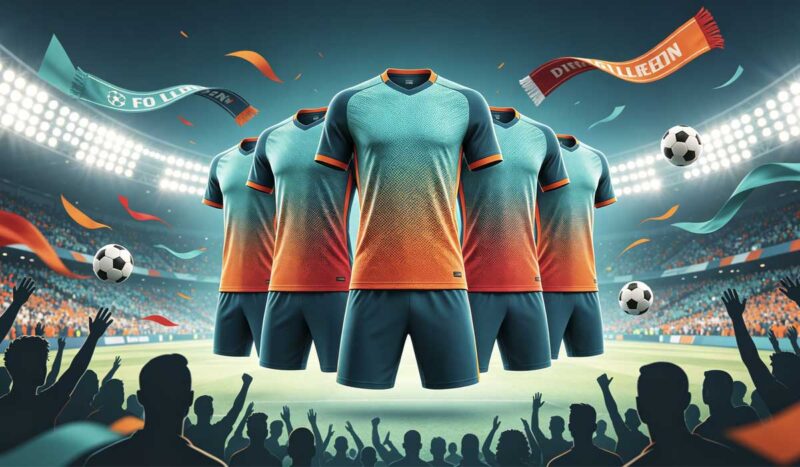
If you’re selling custom soccer jerseys or training gear, ODM means you’re offering the same jersey cut as the team three towns over, just with a different logo. OEM means you’re specifying the armscye depth, the hem length, the exact Pantone of the side stripe, and the 220gsm double-knit fabric that holds up to three seasons of slide tackles.
The brands that survive past year three are almost always the ones that made the jump to OEM early.
The Margin Argument: Why OEM Protects Your Profit
Small brands usually avoid OEM because they’re afraid of minimum order quantities. They hear “MOQ 500” and they run back to the print-on-demand platform that lets them buy one piece at a time.
That math is wrong. It’s not unit cost that kills small brands. It’s return rates and brand dilution.
When you buy blanks from a catalog, you’re paying retail markup for a wholesale product that was designed for nobody in particular. A standard athletic blank costs you $8–$12 before decoration. It fits like a tent on some customers and like a sausage casing on others. Your customers return it. They leave reviews saying “sizing is weird.” They don’t come back.
When you run an OEM program with a custom sportswear factory, your unit cost at 200 pieces might be $14 instead of $10. But your return rate drops from 18% to under 3%. Your customers post fit pics instead of complaint tickets. Your lifetime value per customer triples because the product actually fits the body and survives the wash.
In sportswear specifically, fit is function. A basketball jersey that rides up during a defensive stance isn’t just annoying—it’s unusable. A yoga legging that goes sheer in a downward dog isn’t just embarrassing—it’s a liability. OEM lets you engineer those problems out before your first customer ever touches the garment.
Technical Control: The Details Your Customers Feel But Can’t Name
Most consumers can’t tell you why they prefer one brand’s hoodie over another. They just know that one “feels right.” That feeling is engineering. And engineering is only available through OEM.
Fabric Specification
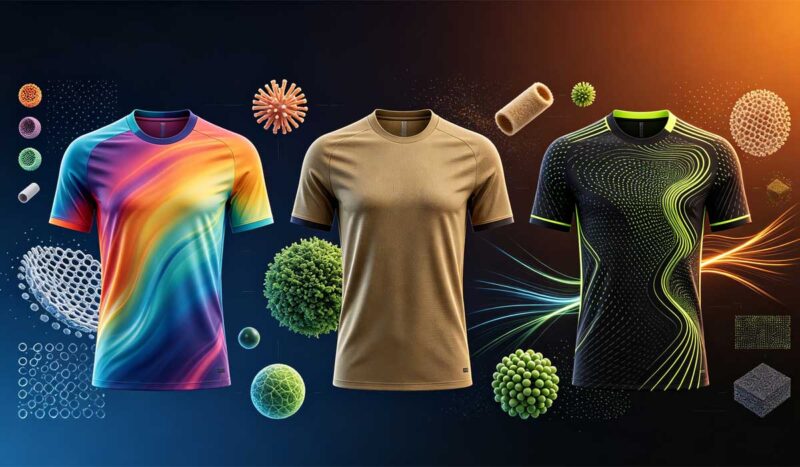
In an OEM relationship, you choose the fiber, the knit structure, and the finishing treatment. You’re not accepting “100% polyester” as a sufficient answer. You’re specifying 75D/72F warp-knitted birdseye mesh with a moisture-wicking finish that survives 50 industrial washes. You’re deciding whether the basketball shorts need 12% spandex for compression or mechanical stretch for durability.
If you’re sourcing custom soccer jerseys, this matters enormously. Sublimation printing requires specific polyester construction to achieve proper dye penetration. A factory that understands your decoration method will recommend the right greige goods before you waste money on fabric that won’t hold color.
Pattern and Grading
Catalog blanks are graded for a theoretical average body. Your customers are not average. If your brand targets powerlifters, you need larger chest measurements and shorter torso lengths relative to standard grading. If you target female CrossFit athletes, you need hip measurements that account for athletic quads and glutes, not a generic women’s size chart.
OEM means the factory cuts patterns to your grade rules. Not theirs. Yours.
Construction and Seams
A four-needle-six-thread flatlock seam costs more than a standard overlock. But on a compression legging, it’s the difference between a seam that lies flat against skin and a seam that leaves a welt after a two-hour workout. OEM lets you mandate construction details that align with your brand promise.
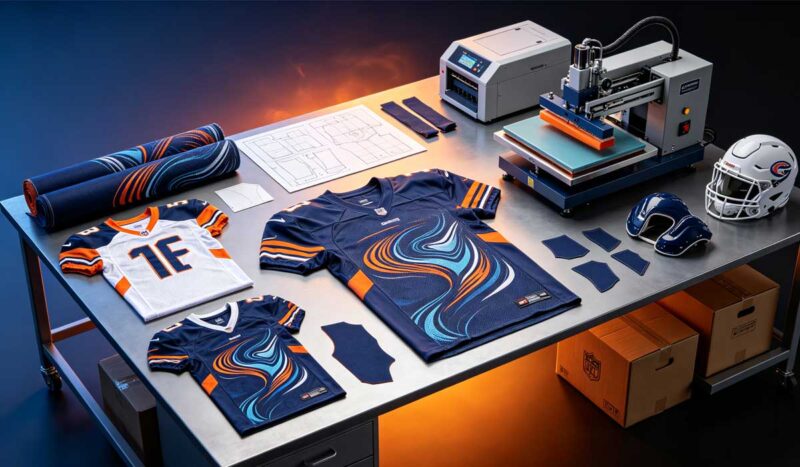
If you’re selling sports jerseys for contact sports, you might specify reinforced shoulder seams and bar-tacked stress points. If you’re selling yoga wear, you might specify cover-stitch hems and gusseted crotches. These aren’t options on a blank. They’re decisions you make in an OEM program.
Brand Equity: Why OEM Is a Marketing Asset
Small brands often think of manufacturing as a cost center and marketing as a growth engine. That’s backwards. In apparel, your product is your marketing.
The Story You Can Tell
When you buy blanks, your brand story stops at “we put a cool logo on a shirt.” When you run OEM, your story includes:
-
“We developed this fabric with a mill in Fujian after testing twelve variants.”
-
“This fit is based on feedback from three hundred athletes in our community.”
-
“We specified a 220gsm double-knit because lighter jerseys don’t survive our customers’ training volume.”
That story sells. It sells to wholesale buyers who need to justify carrying your line. It sells to end consumers who are tired of fast fashion landfill. It sells to investors if you ever raise capital, because it proves you have a moat.
Pricing Power
Brands that run OEM programs can command 30–50% higher retail prices than brands that print on blanks. Why? Because the product is demonstrably different. The fit is proprietary. The fabric is exclusive. The construction is visible.
If you’re a custom sportswear brand selling to teams, this is critical. A coach can buy a generic jersey for $12. But they’ll pay $28 for a jersey that fits correctly, wicks sweat properly, and doesn’t shrink after the first wash. OEM gives you the product quality to justify that price.
Differentiation in Saturated Markets
The athletic apparel market is crowded. There are a thousand brands selling black leggings and grey hoodies. The ones that survive are the ones that offer something specific: a particular fit for a particular body type, a fabric treatment for a particular climate, a design detail for a particular subculture.
OEM is the only way to achieve that specificity. You can’t differentiate on a blank that everyone else is using.
Supply Chain Resilience: The Hidden OEM Advantage
Small brands learned a hard lesson in 2020–2022. When you rely on a trading company or a dropshipper, you don’t have a supply chain. You have a phone number. When port congestion hits, or when a factory decides to prioritize a larger client, your stock disappears and you have no recourse.
OEM relationships, when structured correctly, give you:
-
Production visibility: You know where your fabric is, what stage the cutting room is at, and when your carton ships.
-
Priority allocation: Factories prioritize clients who have invested in pattern development and repeat orders. A one-off blank buyer is replaceable. An OEM partner is not.
-
Quality consistency: Because your product is built to your spec, batch-to-batch variation is minimized. The factory isn’t guessing what you want. They have your tech pack.
If you’re building a brand that plans to exist in year three, four, and five, you need that stability. Social media algorithms change. Ad costs rise. The only thing you can control is whether your product shows up on time and performs as promised.
How to Start an OEM Program Without Going Bankrupt
The fear of MOQ is real. But it’s often overstated by factories who don’t want to deal with small clients, or misunderstood by brands who think OEM means ordering ten thousand units on day one.
Here’s how it actually works in 2026:
Phase 1: Sampling (1–50 units) You pay for pattern development, a tech pack, and physical samples. This costs $500–$2,000 depending on complexity. You test the fit on real bodies. You wash the sample ten times. You make adjustments.
Phase 2: Pilot Run (50–200 units) Many sports jerseys manufacturers now offer pilot runs at 50–100 pieces for brands with growth potential. This is your first real order. You sell it, you get feedback, you refine.
Phase 3: Production Run (200–500 units) Once you have sell-through data, you order your first production run. At 200 units, your unit cost is usually 15–20% higher than at 500 units, but you’re not sitting on dead inventory.
Phase 4: Scaling (500+ units) As your reorder history builds, you negotiate better terms, faster turns, and exclusive fabric reservations.
The brands that fail are the ones that skip Phase 1 and Phase 2. They order 1,000 units of a product they’ve never tested, then wonder why 40% of it is still sitting in a warehouse.
What to Look for in an OEM Partner
Not every factory that says “OEM” is actually equipped for it. Here’s the due diligence checklist we recommend to brands that contact us:
-
Do they ask for a tech pack? If they quote you a price without seeing construction details, they’re quoting a blank.
-
Do they have in-house pattern makers? A factory that outsources pattern work to a third party adds cost and communication risk.
-
Do they offer graded size sets? If they can’t produce a sample in every size for fitting, they don’t understand fit.
-
Do they document fabric lots? This matters for color consistency on reorders.
-
Can they show you their cutting room? CNC cutting tables (Gerber, Lectra) indicate precision. Hand-cutting tables indicate inconsistency.
If you’re sourcing custom soccer jerseys specifically, ask to see their sublimation setup. If they don’t have heat presses calibrated to 200°C with pressure gauges, they’re not a technical sportswear factory. They’re a decorator.
Frequently Asked Questions
Q1: What is the difference between OEM and private label in apparel manufacturing?
A: OEM means the factory manufactures to your design, specifications, and patterns. You own the product identity. Private label usually means you select from the factory’s existing catalog and add your label. The product is not unique to you. OEM gives you technical control; private label gives you speed and lower MOQs.
Q2: What is a realistic MOQ for a small brand starting OEM custom sportswear?
A: For standard cut-and-sew activewear, 100–200 pieces per style is increasingly common among factories that specialize in small brands. For technical products like custom soccer jerseys with sublimation, 50 pieces is achievable if the factory has digital printing capabilities and flexible cutting. Anything below 50 pieces usually requires paying a sample-rate price per unit.
Q3: How much does it cost to develop an OEM sample?
A: Pattern development and a physical prototype typically cost $300–$800 per style for simple garments (T-shirts, shorts). For complex garments with multiple panels, linings, or specialized construction (compression wear, padded gear), expect $800–$1,500. This cost is usually credited against your first bulk order of 200+ units.
Q4: Can I use OEM to create custom soccer jerseys for my team or brand?
A: Yes. OEM soccer jersey programs allow you to specify the exact fabric weight (160–220gsm), the knit structure (birdseye mesh for breathability, interlock for stability), the fit (slim vs. athletic), and the decoration method (sublimation for all-over prints, tackle twill for durable numbers, or heat transfer vinyl for roster changes). You can also engineer the pattern for league compliance on number size and placement.
Q5: What is a tech pack, and do I need one for OEM?
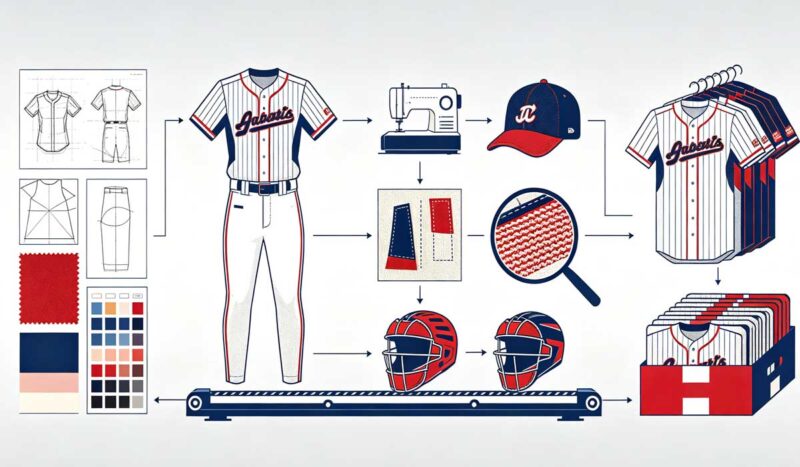
A: A tech pack is the technical blueprint for your garment. It includes flat sketches, measurement specs, fabric and trim details, construction callouts, and decoration placements. For OEM, it is essential. Without it, the factory is guessing. If you don’t have one, an experienced sports jerseys manufacturer can help you develop it, but you should own the final document.
Q6: How long does an OEM production cycle take from sample to delivery?
A: Sampling takes 7–10 days. Revisions take another 5–7 days. Once the pre-production sample is approved, bulk production takes 15–20 days for orders of 200–500 pieces. Shipping adds 3–5 days (air express) or 25–30 days (sea freight). Total timeline from first contact to delivery is typically 6–8 weeks for a new style.
Q7: What if I don’t know anything about fabric? Can I still do OEM?
A: Yes, but you need a factory partner that offers technical consultation rather than just taking orders. A good custom sportswear manufacturer will ask about your end user’s sport, climate, and intensity level, then recommend fabric specifications based on performance requirements. You don’t need to be a textile engineer; you need to be clear about who is wearing the product and what they’re doing in it.
Q8: Is OEM worth it if I’m only selling online and don’t have wholesale accounts?
A: Yes. In fact, direct-to-consumer brands often benefit more from OEM than wholesale brands because they live and die by return rates and customer reviews. A DTC brand with an 18% return rate because of poor fit will bleed cash on shipping and restocking. An OEM program that engineers the fit correctly can drop that return rate to 3%, which is often the difference between profitability and insolvency.
Q9: Can I switch from blanks/print-on-demand to OEM later, or do I need to start with OEM?
A: Many successful brands start with blanks or POD to validate demand, then transition to OEM once they have sales data and customer feedback. The transition is smoother if you plan for it—collect fit feedback, note quality complaints, and document what your customers actually want. That data becomes your first OEM tech pack.
Q10: How do I protect my designs when working with an overseas OEM factory?
A: Use a manufacturing agreement (NCA/NNN agreement) that covers your patterns, tech packs, and any proprietary fabric treatments. Register your trademarks in your target markets. Work with factories that have a reputation for ethical conduct (BSCI or WRAP certification is a good indicator). And build a relationship, not just a transaction. Factories protect partners, not one-off buyers.
Conclusion: The Product Is the Brand
Small apparel brands spend thousands of dollars on Instagram ads, influencer seeding, and packaging design. Those things matter. But they matter less than the moment a customer pulls the garment out of the bag and puts it on.
If the fit is wrong, the fabric is cheap, and the seams irritate the skin, no amount of marketing budget will save the second purchase. If the fit is right, the fabric performs, and the construction holds up, that customer becomes an advocate.
OEM customization is the infrastructure that makes the second scenario possible. It’s not just a manufacturing choice. It’s a brand strategy. And for small apparel brands competing in a market dominated by billion-dollar giants, it might be the only strategy that actually levels the playing field.
About the Author:
Production team at a custom sportswear manufacturing facility with 17 years of OEM experience for emerging athletic brands, team suppliers, and private-label retailers. Facility certifications: ISO 9001, BSCI, OEKO-TEX Standard 100.
Production team at a custom sportswear manufacturing facility with 17 years of OEM experience for emerging athletic brands, team suppliers, and private-label retailers. Facility certifications: ISO 9001, BSCI, OEKO-TEX Standard 100.
Last Updated: June 2026
Related Reading:
-
How to Read a Tech Pack for Apparel Manufacturing
-
Small-Batch Manufacturing: From 50 to 500 Units